
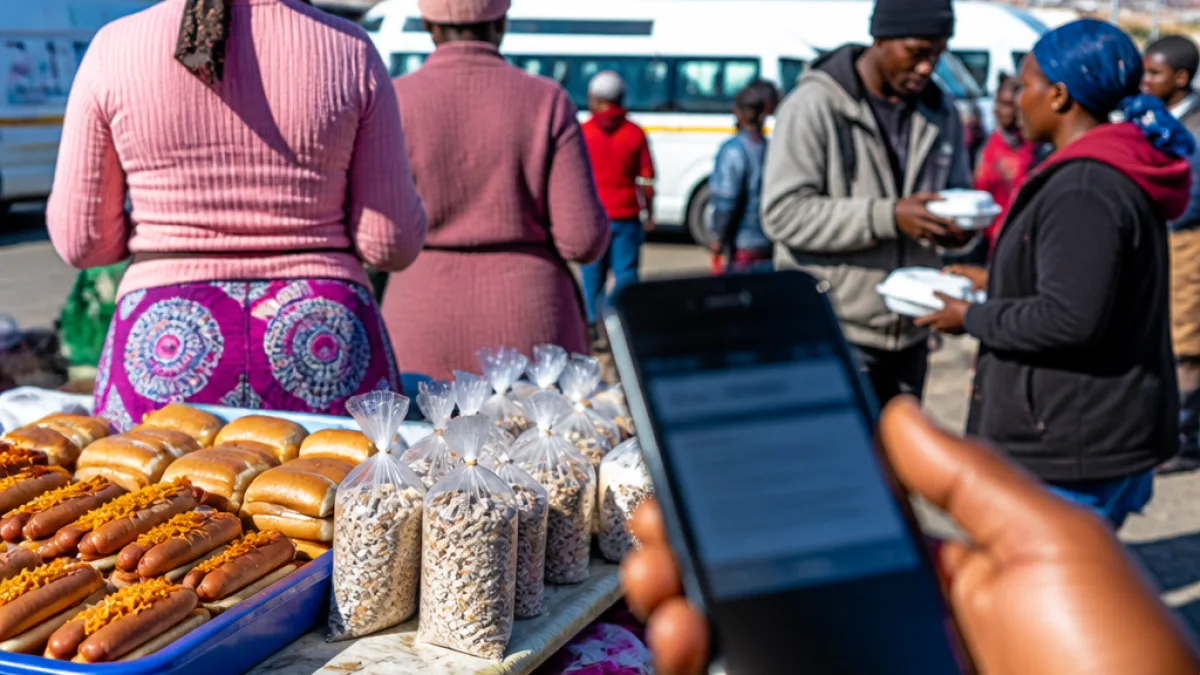
Small traders at Site C rank given direct support
At the Site C taxi rank in Khayelitsha, the daily life of informal traders was briefly transformed when Codeta and a digital taxi fare company delivered a Women’s Day initiative that put cash and meals directly into the hands of women who sell food to commuters.
For more than five years Nobubele Ntanjana has stood at the rank selling russians, depending on the flow of passengers to provide a livelihood. Saturday trade is typically quiet and bad weather makes trading even harder, she said. The arrival of the initiative on Saturday, 8 August, was therefore notable.
“We were surprised because most people don’t normally think about us when they are having events and programmes. It was a surprise, and we felt special. We appreciate that they bought from us.”
The presence of Codeta and the digital fare operator meant that food and drinks were purchased directly from four women traders at the rank. In practical terms the programme bought lunch for 12 people, loaded R70 into the digital wallets of 20 women and provided a muesli-and-russian combo to 31 passengers.
| Item | Number / Value |
|---|---|
| Lunches purchased | 12 |
| Women who received R70 each | 20 |
| Passengers given muesli + russian | 31 |
| Traders who benefitted directly | 4 |
Visible benefit, but limited and short-term
Codeta chairperson Nceba Enge described the project as an opportunity to give back to commuters and to support the informal economy operating at the taxi rank. He said the association hoped similar events involving commuters and partners could be organised in future.
The initiative provided an immediate boost for the traders involved. Ntanjana framed the intervention as more than a transaction: it was recognition in a public space where small traders are often overlooked. For traders whose daily income is unpredictable, small injections of demand or digital credit can make a tangible difference for groceries or transport costs.
What this means for Khayelitsha’s informal economy
Informal traders in Khayelitsha form part of a complex, often precarious local economy tied to commuter patterns, weather and local events. Interventions such as Codeta’s can temporarily increase turnover and raise awareness of traders’ needs, but they do not address underlying vulnerabilities such as insecure trading spaces, lack of formal financial services for small vendors, or competition with formal caterers at events.
- Direct purchase from traders can increase daily revenues quickly, but is dependent on occasional programmes.
- Small digital top-ups help cover immediate household or transport expenses for women traders, but are not a substitute for regular earnings or access to savings and credit.
- Visibility matters: when organisations include informal vendors in events, those traders report feeling recognised and more confident about their trade.
While Codeta and its partner focused on a short-term Women’s Day gesture, the episode highlights opportunities for longer-term collaboration between taxi associations, digital payment providers and local traders. Municipal and provincial plans that aim to support informal traders typically include trading permits, market infrastructure and training in business practises and digital payments. Projects that combine immediate cashflow relief with access to information and services could convert occasional interventions into more sustained improvement for traders.
For now, at Site C the benefit was clear to the women who sold food that day: they were seen, paid and able to meet the demands of a single, brighter trade day. Whether that recognition translates into ongoing support or policy attention will depend on whether similar programmes are repeated and whether stakeholders use these moments to engage on longer-term needs for Khayelitsha’s informal economy.














