School turns science into a practical, confidence‑building day
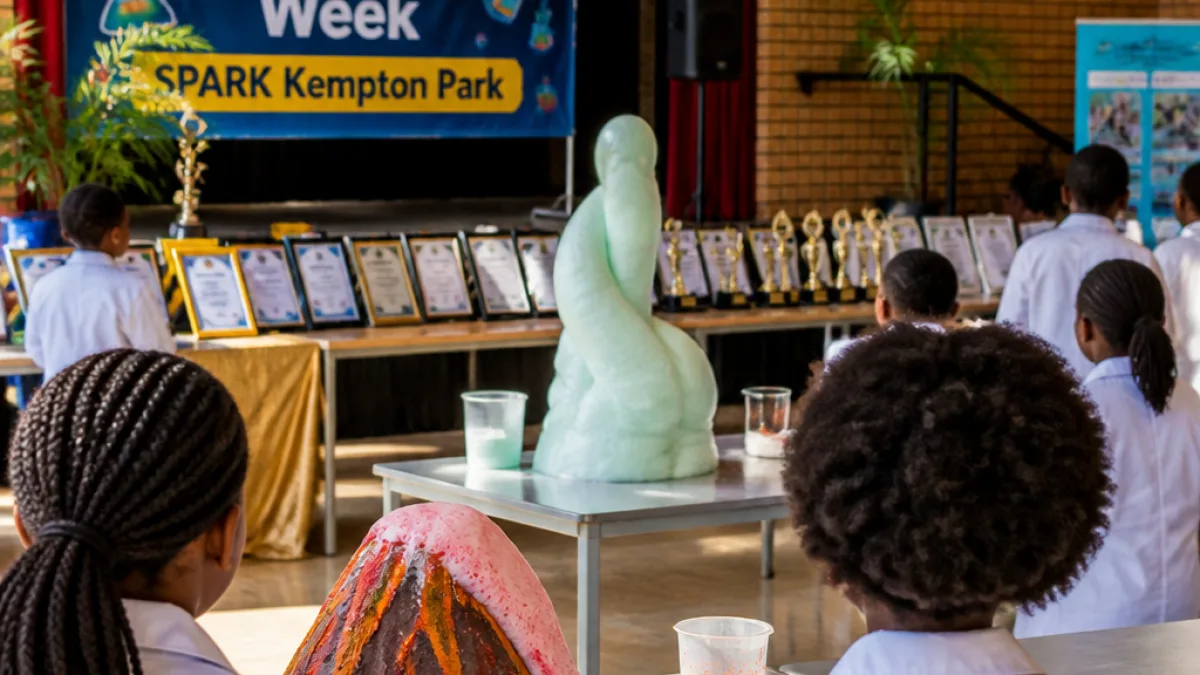
On 6 August, learners at SPARK Kempton Park swapped textbooks for lab coats as the school marked National Science Week with a programme of hands‑on experiments, STEM career awareness activities and an awards ceremony for Term Two high achievers.
Principal Desiree Naidoo said the event formed part of the school’s drive to make science accessible and enjoyable, and to build a foundation of scientific literacy among learners. According to the school, activities included a clay volcano demonstration, a popular “elephant‑based explosion” experiment and classroom sessions aimed at linking practical experiments to possible future careers in science, technology, engineering and mathematics (STEM).
“By showcasing how different experiments are conducted, we show them what science is all about and create a love for science. It shows children that we care about them thriving in different faculties and brings back the fun element,” Naidoo said.
Teachers led the practical work and encouraged learners to take part directly in experiments, a method the school described as part of an integrated approach to teaching science. Educators Londiwe Buthelezi and Thandeka Notshikila guided pupils through activities designed to demystify scientific concepts and strengthen classroom confidence.
Notshikila said hands‑on activities help learners see science as something practical rather than intimidating. According to her, many scholars associate science with abstract mathematics and feel intimidated before they try experiments themselves. She said involving learners in experiments helps them understand concepts better and enjoy learning.
Grade Five learner Neo Ezenwa described the day as bringing science to life, saying the experiments were fun and memorable. Neo singled out the activity that mixed baking soda, toothpaste and vinegar — the “elephant‑based explosion” — as a favourite.
- Interactive experiments: clay volcano, elephant‑based explosion and other practical demonstrations.
- STEM awareness: sessions linking experiments to possible careers and subject choices.
- Awards ceremony: recognition of Term Two top achievers across subjects, including mathematics.
The school highlighted that showcasing experiments serves several aims: it encourages curiosity, makes science less threatening, and helps learners consider STEM pathways earlier. Naidoo said building learners’ confidence could nudge them towards careers related to science and maths.
Beyond the classroom, events such as this sit within a broader push in Gauteng and nationally to strengthen STEM skills among young learners. Educators at SPARK Kempton Park said they hope the interactive model will be repeated and expanded so that more pupils can benefit from practical exposure to scientific methods.
| Role | Name |
|---|---|
| Principal | Desiree Naidoo |
| Educators leading experiments | Londiwe Buthelezi, Thandeka Notshikila |
| Highlighted learner | Neo Ezenwa (Grade Five) |
Parents and community members often point to extra‑curricular initiatives as vital in schools where many learners lack access to informal science experiences outside school. By making experiments visible and enjoyable, SPARK Kempton Park aims to help learners see the relevance of classroom science to everyday life and to future careers.
School staff said the awards component of the day also aimed to celebrate academic progress in core subjects such as mathematics, reinforcing the message that practical engagement and scholastic effort are complementary. According to the school, recognising top achievers helps motivate learners and affirms the importance of study alongside experiential learning.
SPARK Kempton Park’s event is the latest in a series of local school activities intended to widen participation in STEM. Educators at the school said they will continue using interactive sessions to strengthen learners’ understanding and to help them approach science with curiosity rather than fear.