
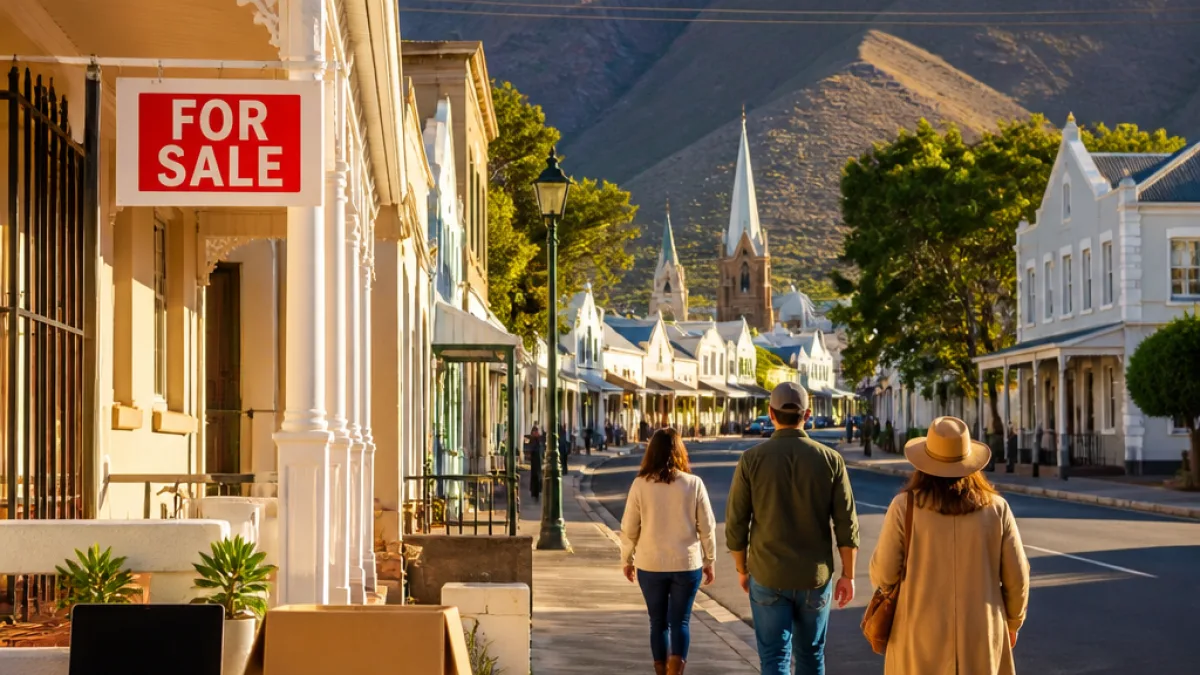
Small towns across the Eastern Cape’s Karoo and coastal belt are showing renewed appeal for property buyers, driven by semigration, retirement decisions and the growth of remote working, according to Seeff Country.
Growing interest in affordable lifestyle towns
Seeff Country highlighted a cluster of towns benefiting from a mix of agriculture, tourism, decent infrastructure and access to regional centres. These factors are attracting a wide range of buyers — from investors and retirees to young families and entrepreneurs seeking more affordable property and lifestyle change.
In particular, Graaff-Reinet is singled out as a focal point. The agency reports that the town recorded R145 million in residential and commercial sales over the past 12 months, with Seeff Country facilitating 52% of those transactions. Activity has concentrated in the R1.2 million–R2 million price bracket, where homes remain affordable compared with many other lifestyle destinations.
Why buyers are choosing these towns
Several local advantages are driving the market:
- Value for money: Properties in the R1.2m–R2m bracket offer lower entry points than coastal metros or major centres.
- Rental potential: Tourism growth is supporting demand for short- and long-term accommodation, making buy-to-let an attractive option.
- Quality of life: Heritage, community stability and municipal management in towns such as Graaff-Reinet boost confidence among retirees and semigrants.
- Limited stock: Low availability of well-maintained homes, particularly those with historic character or modern upgrades, has intensified competition among buyers.
Local investment and confidence
The Seeff Country account notes investment by the Rupert family and other high-net-worth individuals has reinforced confidence in Graaff-Reinet’s prospects. While that investment is not quantified in the report, the presence of such investors is framed as increasing the town’s profile and signalling belief in its long-term appeal.
Seeff Country’s licensee, Jaco Badenhorst, described the town as an established destination for those seeking the Karoo lifestyle combined with solid municipal management and heritage architecture. He said demand is coming from a mix of investors, semigration buyers, retirees and remote-working professionals.
| Indicator | Value |
|---|---|
| Gross local sales (12 months) | R145m |
| Share facilitated by Seeff Country | 52% |
| Most active price bracket | R1.2m–R2m |
Implications for sellers, investors and local economies
For sellers, limited stock and rising interest can translate into stronger offers, particularly for properties that blend historic character with contemporary comforts. For investors, the report points to robust rental prospects linked to tourism — both long-term lets for workers and short-term holiday accommodation.
At municipal level, sustained interest places new responsibilities on local authorities: managing infrastructure, maintaining municipal services and ensuring town planning keeps pace with demand. For towns dependent on agriculture and tourism, better-maintained municipal services and reliable amenities are crucial to converting interest into sustainable long-term growth.
What buyers should consider
Prospective buyers and semigrants should approach purchases with typical due diligence. Key considerations include:
- Confirming property condition and the cost of necessary upgrades;
- Assessing local service delivery and municipal rates and taxes;
- Understanding seasonal tourism patterns that affect rental income;
- Examining access to regional centres and schools if relocating with family.
Real-estate agents active in these markets say the combination of affordability, lifestyle appeal and rental potential is making towns across the Karoo and Sunshine Coast attractive alternatives to larger centres. How that translates into long-term capital growth will depend on continued demand, maintenance of local services and the balance between supply and new listings.
As interest in semigration and remote working continues nationally, smaller Eastern Cape towns that can offer good infrastructure, heritage appeal and tourism amenities may find themselves at the sharp end of a provincial property shift. The immediate picture is one of tight stock, competitive buying and an emergent market that both challenges and creates opportunities for local economies.














