
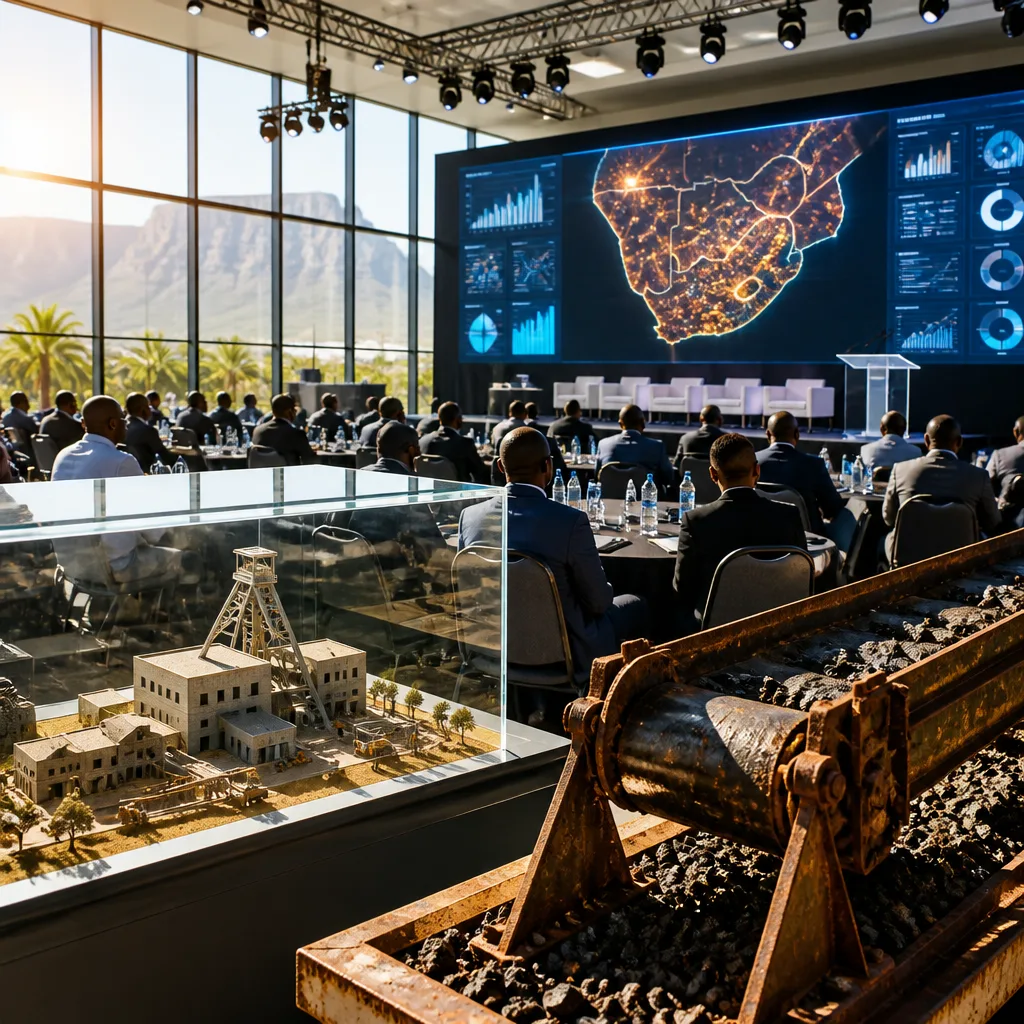
South Africa must speed up the modernisation of its mining sector or risk losing investment and market share, industry and research partners said following a comprehensive benchmarking exercise. The study, presented at a Modernisation Showcase, described digitisation, automation and beneficiation as urgent priorities that require closer collaboration between the private sector and government.
Why modernisation cannot wait
Speakers at the event argued that although the country has abundant mineral resources and deep institutional knowledge, those advantages are being eroded by outdated infrastructure, a shortage of suitably skilled workers and sluggish uptake of new technologies. The benchmarking work compared South Africa with other mining jurisdictions to identify practical lessons and approaches that can be adapted rather than copied wholesale.
“We see that our competitors are investing heavily in digitisation and automation, as well as critical minerals and beneficiation. They’re moving really quickly, and because they’re moving really quickly, they’re able to attract a lot of investment,” said Ashleigh Muller, a consultant with the Research Institute for Innovation and Sustainability (RIIS).
RIIS presented the study alongside a network of industry and public partners, underscoring that both sectors must drive reform. The team highlighted the need to close regulatory, skills and technological gaps with urgency and improved coordination to sustain mining’s contribution to the national economy.
Partners and priorities
The Modernisation Showcase brought together a mix of private and public organisations that contributed to or sponsored the benchmarking work. Key participants included:
- Minerals Council South Africa
- The Centre for Science, Technology and Innovation Indicators (CSTII), a specialised research unit within the Human Sciences Research Council
- PwC Smart Mining
- The Department of Science, Technology and Innovation
- The National Advisory Council on Innovation
These partners framed modernisation not merely as equipment upgrades but as a systemic shift involving:
- investment in digital platforms and automation technologies;
- skills development across technical and data disciplines;
- policy and regulatory reform to enable faster adoption; and
- local beneficiation to extract greater value from raw minerals.
| Stakeholder | Role in modernisation |
|---|---|
| Industry (Minerals Council) | Drive investment and implement technology on operations |
| Research (CSTII, RIIS) | Benchmarking, policy recommendations and evidence |
| Government (DST, National Advisory Council) | Policy alignment, incentives and skills programmes |
| Consultants (PwC Smart Mining) | Technical support and best-practice transfer |
Implications for jobs and investment
The presenters warned that delays in modernisation could undermine efforts to attract foreign and domestic capital. Competitor countries that adopt automation and downstream beneficiation more rapidly are better placed to capture investment tied to critical minerals and advanced manufacturing chains.
At the same time, transitioning to more automated, digitally enabled operations will change the labour profile of the sector. The report emphasised that South Africa’s existing workforce experience is an asset, but that realising its value depends on reskilling and upskilling programmes targeted at operators, technicians and engineers who will work with new systems.
Speakers recommended practical, coordinated steps rather than fragmented pilots. These included clearer incentives for technology adoption, public‑private skills partnerships, and targeted support for local beneficiation projects that add value within South Africa instead of exporting raw ores.
Next steps
The benchmarking exercise sought to identify transferrable lessons rather than one‑size‑fits‑all solutions. Presenters urged rapid implementation of the study’s recommendations and closer alignment between industry plans and government policy. They said the window to retain a competitive edge is narrowing as global peers accelerate investment in modern mining methods.
For policy makers and industry leaders, the task is straightforward in principle but demanding in practice: coordinate resources, invest in people, and adopt technology at scale to secure the sector’s future contribution to economic growth.










