ANACORTES, Washington — Scientists and tribal biologists from the Samish Indian Nation and the University of Washington have resumed returning hand-reared sunflower sea stars to waters around the San Juan Islands after an outbreak of the disease that devastated the species forced them to postpone an earlier release.
Tribal leadership at the centre of recovery work
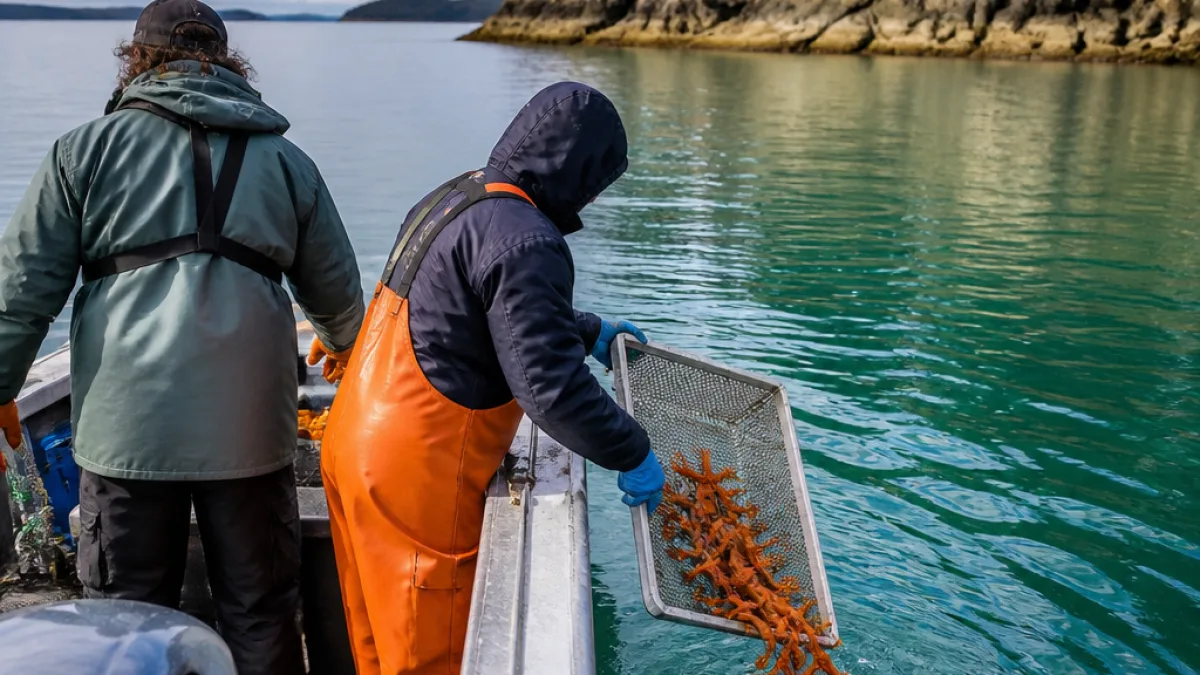
A small Samish research vessel, the Chinook (Yómech), carried 20 juvenile sea stars raised at a laboratory in Friday Harbor into Rosario Strait for reintroduction. The cohort, nicknamed the “snack pack,” carries informal names such as Cheeto and Noodles, a practice the project team uses to monitor individuals and build community interest.
Samish Nation biologist Sam Strauss described the emotional weight of the operation. “
I've had dreams about this day. I've had nightmares about this day,” Strauss said, noting the project has faced setbacks that were hard to predict.
What threatened the sunflower stars
Sunflower stars are large, fast-moving predators with as many as 24 arms. They once exerted strong control on sea urchin populations and other benthic species, and their decline has been linked to shifts in kelp forest ecosystems.
Over recent years a wasting disease swept through Pacific sea-star populations, killing billions and leaving sunflower stars critically endangered. The team reported that divers found the disease spreading through the San Juan Islands, prompting them to halt a planned release last October. After monitoring and further preparations, the reintroduction was resumed about six months later.
The project highlights two intersecting strands of work: hands-on husbandry in laboratory settings and Indigenous-led stewardship of traditional marine territory. The lab at Friday Harbor raised the juveniles by hand to boost numbers and immunity before release into the wild.
Local and broader ecological implications
Sunflower stars are considered a keystone species: their predation helps maintain kelp forests by keeping urchin numbers in check. The near-loss of this species has consequences for the structure and resilience of coastal ecosystems — changes that can cascade through food webs and affect fisheries, carbon storage in kelp habitats and shoreline protection.
- Species involved: Sunflower sea star (up to 24 arms)
- Conservation partners: Samish Indian Nation, University of Washington
- Intervention: Hand-rearing juveniles in Friday Harbor laboratory; staged release into Rosario Strait
Timeline of the recent operation
| Stage | Noted timing |
|---|---|
| Planned release | Last October (postponed) |
| Detection of disease in release area | Prior to postponement |
| Resumption of release | About six months later |
Scientific uncertainties and the path ahead
Researchers have spent years investigating the cause of the mass mortality, and it took roughly a decade to isolate the agents and mechanisms involved. The precise dynamics of disease persistence and transmission in the wild remain areas of active study, which is why the team pursues cautious, staged releases rather than large-scale reintroductions.
For the Samish Nation, returning sunflower stars is also a cultural and ecological restoration project. The work is carried out in Samish traditional territory and reflects the Nation’s interest in restoring species that once played a role in local marine systems.
Why this matters beyond Washington
Although the project is on the opposite side of the globe from South Africa, it carries lessons for coastal communities and conservation programmes here. The combination of Indigenous leadership, close collaboration with university researchers, careful biosecurity measures and incremental releases illustrates an approach that can be relevant where keystone species decline or diseases threaten wild populations.
Returning predators to ecosystems is complex and long-term. The sunflower-star effort will continue to be monitored for survivorship, disease recurrence and ecological effects on kelp communities. For now, the carefully named cohort provides a tangible sign that recovery efforts can proceed despite setbacks, when communities and scientists work together.
Reporting from Anacortes and Friday Harbor with details provided by project teams and public reports.