
The Western Cape High Court on 5 September 2026 granted an interdict in favour of retailer Cape Union Mart, restraining pro‑Palestine activists from making certain allegations that linked the company and its chairperson, Philip Krawitz, to Israel’s military actions and to genocide in Gaza.
What the court ordered
The judgment found there was no factual basis for claims that the retailer or its chairperson were responsible for the killing of children or engaged in genocide. The order therefore bars activists from repeating those specific allegations in public statements and at demonstrations.
The court also made clear that the ruling did not amount to a broad ban on protest. It emphasised that legitimate criticism of Israel and lawful boycotts remain within the protection of the constitutional right to protest and freedom of expression.
Reaction from activists and community groups
The Palestine Solidarity Campaign (PSC) said it would continue its boycott and protest campaign against Cape Union Mart while complying with the limits set by the court. PSC co‑ordinator Usuf Chikte said the interdict did not stop lawful protest action.
"The protest and boycott of Cape Union Mart is protected by law and will continue," said Chikte.
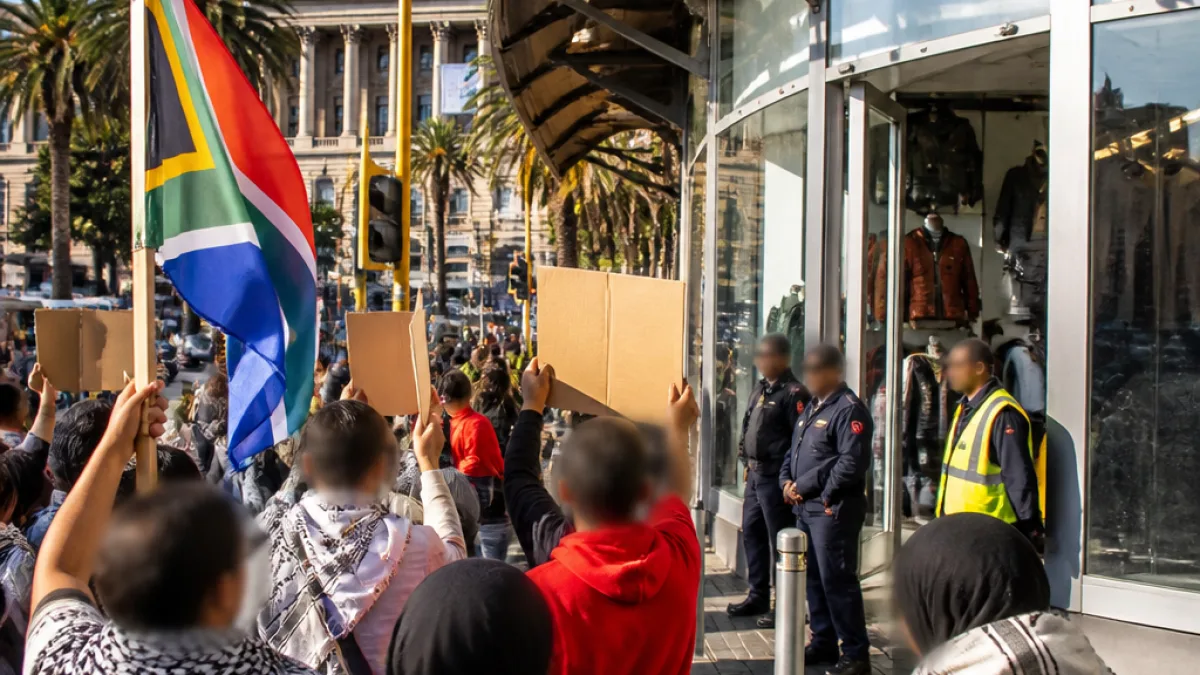
Outside the High Court on the day of the hearing tensions flared as supporters of the retailer and pro‑Palestine activists gathered near the courthouse, the scene underscoring how polarising the dispute has become in Cape Town.
Responses from other stakeholders
The South African Jewish Board of Deputies welcomed the ruling. Director Daniel Bloch described the outcome as an affirmation that the right to protest does not extend to harassment or intimidation.
Cape Union Mart had approached the court seeking to stop what it described as defamatory statements that, it argued, had caused reputational harm. The High Court’s order addressed those specific allegations while preserving space for lawful expression and dissent.
Why the judgment matters locally
The dispute sits at the intersection of corporate reputation, international politics and civic protest. For Cape Town — a city where protest is a frequent feature of public life — the ruling clarifies the legal boundary between robust political speech and statements that the court considers defamatory and unsupported by evidence.
Practical implications include:
- Protesters may continue to picket and call for a boycott, provided they avoid the prohibited specific allegations named by the court.
- Organisers should review messaging and signage to ensure compliance with the interdict to avoid further legal action.
- Retail staff and shoppers may continue to encounter demonstrations at some store locations, but the law requires that protests remain peaceful and non‑defamatory.
| Issue | Court ruling |
|---|---|
| Allegations linking retailer to genocide or killing of children | Prohibited — no factual basis found |
| Calls to boycott Cape Union Mart | Allowed — protected as lawful protest |
| General criticism of Israel | Allowed — within freedom of expression |
What to expect next
The PSC has indicated it will continue its campaign while avoiding the precise claims the court forbade. Cape Union Mart is likely to monitor demonstrations and may pursue further legal remedies if the interdict is breached.
Legal experts and civil‑society groups will be watching how the ruling is applied in practice: whether protest organisers change their messaging, and how law enforcement and the courts respond to any future incidents. The case highlights the delicate balance courts must strike between protecting reputations and safeguarding constitutional rights.
For Capetonians, the episode is a reminder that international conflicts often play out on local streets, and that the law will determine the contours of acceptable public expression in those debates.
Reporting from Cape Town.














