
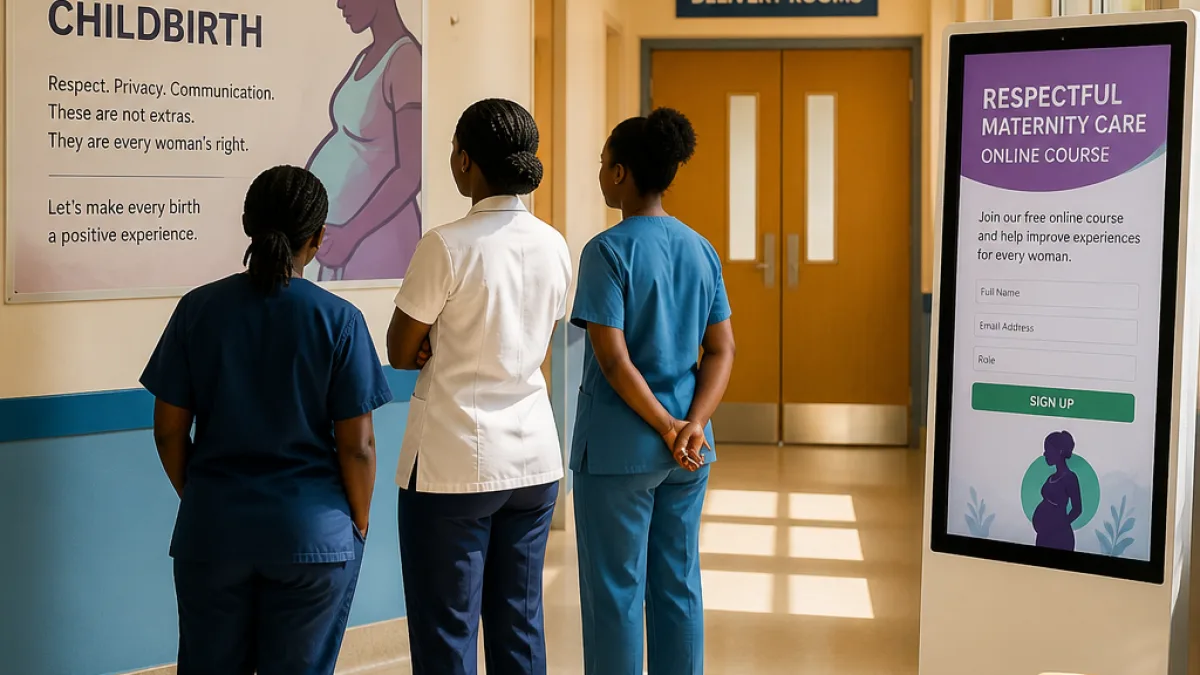
The national Department of Health will launch an online course on respectful maternity care on 22 September on its Knowledge Hub platform, following a landmark survey that found high levels of mistreatment of women during labour in Gauteng and KwaZulu‑Natal.
The short course, which the department says consists of three lessons and takes about 3.5 hours to complete, is aimed at all staff who work with pregnant women. Fikile Ndlovu, deputy director‑general for maternal health, said the department wants the training to become mandatory not only for midwives and doctors but for the full range of staff who interact with labouring women — from security guards at facility gates to assistant nurses and cleaners.
“We wish to make it a mandatory course for not only midwives but all health service providers working in maternity settings because respectful care starts with attitude from all officials, whether a security at the gate, assistant nurses or cleaners in the wards up to midwives and doctors.”
What the survey found
Commissioned by the DG Murray Trust and Embrace and conducted by Social Surveys Africa earlier this year, the birthing survey covered Gauteng and KwaZulu‑Natal. Its headline findings are stark:
- 1.79 million women — about 60% of those who gave birth in the two provinces over the past decade — experienced some form of mistreatment by health workers during labour.
- Only 7% of women who were mistreated reported the incidents.
- Only about one in three women who experienced mistreatment recognised that the behaviour was wrong.
- Three‑quarters said they were not permitted to have a companion present during birth.
- Four out of 10 reported there were no curtains separating them from other patients.
Although the survey was limited to the two most populous provinces, researchers said the results offer a window into practices that may be widespread, given the mix of urban and rural settings represented.
Why the training matters
Health officials argue that a standardised online module could help shift attitudes and practice across a wide range of staff, especially if it becomes compulsory. The Knowledge Hub course will include embedded videos and allow staff to complete the lessons at their own pace.
Observers and maternal‑health advocates have for years highlighted disrespectful and abusive care during childbirth as a barrier to safe, dignified maternity services. Past research from institutions including the South African Medical Research Council has investigated potential drivers of such behaviour, including staff stress, resource constraints and institutional culture. The department’s move places emphasis on training as one corrective measure.
Practical details and the wider picture
The department has not yet set an implementation timeline for making the course mandatory. It also has not published monitoring plans to measure whether the training reduces reported incidents of mistreatment or improves patient experience in maternity wards.
| Course | Platform | Length | Lessons |
|---|---|---|---|
| Respectful maternity care | Knowledge Hub | 3.5 hours | 3 |
For women and families, the most immediate concerns remain access to dignified care and practical protections in facilities. The survey’s finding that companions were frequently barred from births runs counter to evidence that support persons can improve outcomes and experience for labouring women.
Accountability is another practical issue. With only 7% of mistreatment cases reported, many incidents go unrecorded. The department will need to pair training with clear reporting channels, confidentiality guarantees and follow‑up mechanisms if behaviour change is to be sustained.
What to watch for next
- Whether the department moves to make the Knowledge Hub course compulsory for maternity staff, and if so, the timeline for implementation.
- Publication of monitoring and evaluation plans to measure outcomes after training.
- Any facility‑level measures to allow companions during labour and to improve privacy in wards.
The launch of the course is a policy response to a troubling set of findings. Transforming maternity care will require not only training but also investment in staffing, infrastructure and systems that give women the voice and protections they need when they give birth.












