
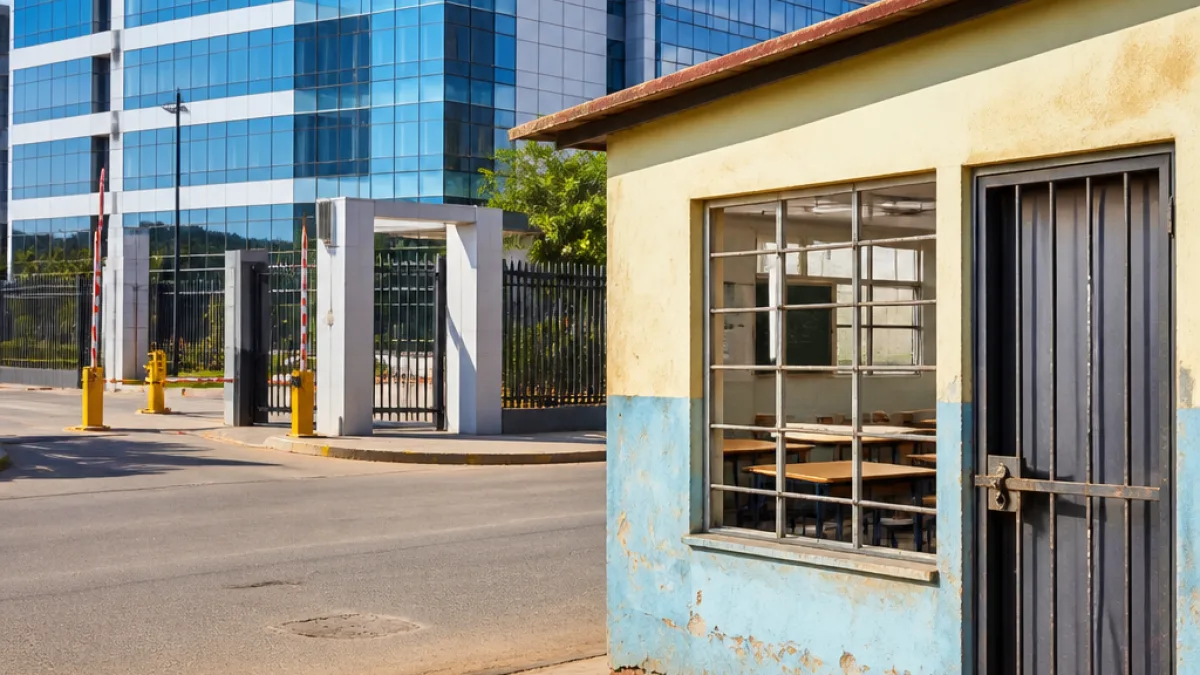
Gauteng — Public schools across the province are feeling the squeeze from budget cuts and declining fee income while the provincial education department continues to spend more than R230-million a year on leased district offices, according to figures tabled in the Gauteng Provincial Legislature.
Leases while learners tighten belts
The figure — disclosed in a written reply by Gauteng MEC for Education, Sport, Arts, Culture and Recreation Lebogang Maile to questions from the Democratic Alliance — shows the department pays R15.27-million a month in rentals for district offices located in privately owned buildings. That amounts to R183.2-million a year in rental payments, with an additional R47.2-million annually for municipal services, bringing the total to more than R230-million before other operating costs are added.
The reply states that 10 of the department’s 15 district offices are accommodated in privately owned buildings. It also notes that rental expenses for the department’s head office are handled by the Gauteng Department of Infrastructure Development and do not form part of the education budget figures provided.
“The Gauteng Department of Education is responsible for rental payments relating to leased district office accommodation, while rental costs associated with the Department’s Head Office accommodation are borne by the Gauteng Department of Infrastructure Development and do not constitute expenditure incurred by the Gauteng Department of Education,”
The disclosure comes amid mounting complaints from school principals and parent bodies who say they are having to stretch stretched allocations for textbooks, learner support and maintenance as fee collection falls in some communities.
Opposition reaction and priorities
DA Gauteng education spokesperson Michael Waters told the media the province cannot claim it lacks funds while continuing to spend hundreds of millions on office rentals. He said the money could be redirected to frontline education needs — such as supporting schools, paying for learner materials and easing pressure on under-resourced institutions.
The published reply does not say whether the department has approached the Department of Infrastructure Development to identify vacant or underused government-owned buildings as alternatives for district offices. Daily Maverick reported the department was asked on 4 August about whether such engagements had taken place and about the criteria used to justify continued leasing, but the reply included in the legislature records does not contain those answers.
Breakdown of disclosed costs
| Item | Monthly / Annual |
|---|---|
| Rental payments for district offices | R15.27-million / R183.2-million |
| Municipal services for those offices | — / R47.2-million |
| Total disclosed (excluding security, cleaning, maintenance) | — / More than R230-million |
What this means for schools and parents
School governing bodies and principals are likely to press for clarity on whether the leasing arrangements are cost-effective. If rental and municipal costs could be cut by moving district functions into state-owned premises, more resources could be available locally — though any such move would require careful planning, adherence to procurement rules and likely refurbishment costs.
- Immediate impact: Schools continuing to manage constrained budgets for teaching materials, maintenance and support programmes.
- Potential savings: Replacing leased district offices with government-owned space could free funds for education delivery, but would require assessment.
- Oversight questions: The legislature can seek details on lease durations, tender processes and whether value-for-money reviews have been completed.
Education officials have a duty to balance operational needs with the pressure on schools, particularly as provincial departments prepare for the new local government term and heightened public scrutiny. The department’s written response provides headline figures but leaves unanswered questions about efforts to identify and move into underused government buildings.
Parents, governing bodies and councillors may now push for further transparency: details of lease agreements, how long the department has been paying these rentals, and whether alternative accommodation options were explored. The cost figures underline a broader challenge for provincial departments in demonstrating that administrative overheads do not detract from frontline service delivery in a province where education is a top public priority.
Gauteng education officials were contacted for further comment on whether there are plans to reduce reliance on private leases and to quantify additional operational costs such as security and cleaning, but the published reply in the legislature record is the primary source of the figures reported here.
Reporting from Johannesburg.











