
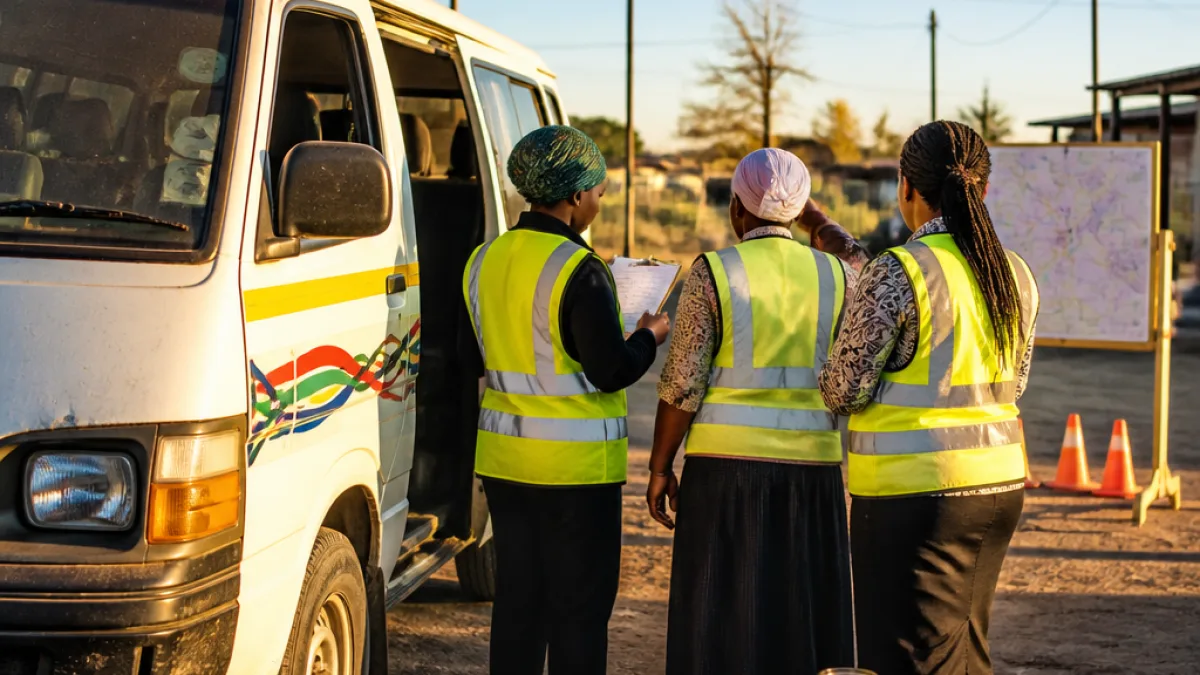
Kuruman — Evelyn Onalenna Direng’s route into the taxi industry began in hardship and small-scale enterprise. Orphaned at nine and raised by her grandmother, she sold sweets at school and later worked in a hair salon while rewriting matric. Her perseverance, local contracts and a second-hand vehicle purchase in the late 2010s laid the groundwork for a transport business that now trains and employs residents in the Northern Cape.
Early adversity and the making of an entrepreneur
The outline of her story is reported by News24: Evelyn was raised by a single mother who worked as a domestic worker and died after a long illness when Evelyn was nine. She moved to Deurham in Kuruman to live with her grandmother and complete school. To support herself, she started selling sweets to classmates and later took a job as a hairdresser while redoing matric. She passed matric in 2013.
Those small earnings were a foundation for later steps. According to the report, a pivotal moment came in 2017 when Evelyn secured a R30 000 tender from a police station to build a roof for a dog-bathing area. She combined that income with other savings and, a few years later, bought her first second-hand taxi for R50 000, founding the company Mogorosi Direng, which is based in Kuruman.
Turning a taxi into local opportunity
The business now employs and trains locals and has made the deliberate choice to promote women into roles in a sector that remains predominantly male, the article reported. That local focus — hiring and upskilling people from Kuruman and surrounding towns — is central to how the company measures its success.
“It was hard for me to accept that my mother had passed away. We were very close, and she was the only relative I lived with.”
The quote, included in the News24 profile, underlines the personal motivation behind Evelyn’s drive to secure an income and create opportunities. Another passage records her resolve during the period after failing matric the first time: “I wanted to give up and give in. I did not have anyone anchoring me, anyone to live for or make proud. But my teachers spoke to me, and I decided to register for matric again.”
Why it matters in the Northern Cape
The Northern Cape is South Africa’s largest and most sparsely populated province. Transport links and local employment matter for social and economic resilience in towns such as Kuruman and Kathu. Small, locally rooted enterprises in the minibus taxi sector can provide flexible work and practical training where formal job alternatives are limited.
Promoting women in this sector also has broader implications: it challenges gender norms and can influence how taxis operate in communities, from passenger safety to company governance. The profile of Mogorosi Direng shows how a single vehicle, when managed with an eye to training and inclusion, can become an engine of local opportunity.
Practical details and takeaways
Readers looking for practical lessons from Evelyn’s experience can note several concrete steps that the report highlights:
- Start small and reinvest earnings: Evelyn’s first ventures were modest — selling sweets and working as a hairdresser — which helped accumulate early capital.
- Secure local contracts where possible: the R30 000 tender from a police station provided a meaningful boost to her capital base.
- Focus on training and local hires: the business emphasises employing and training people from the area, with an emphasis on women.
| Year | Event |
|---|---|
| 2013 | Passed matric |
| 2017 | Secured R30 000 tender for police dog-bathing area roof |
| Late 2010s | Bought first second-hand taxi for R50 000 and founded Mogorosi Direng |
The profile, as reported, does not set out passenger routes, fleet size or revenue for Mogorosi Direng; it focuses on the personal journey and the company’s social impact in Kuruman and surrounding communities. For residents considering their own business plans, the story is a reminder that modest contracts and disciplined saving can seed a small transport enterprise.
As towns across the Northern Cape seek more equitable local economies, cases like Evelyn’s are closely watched for what they reveal about opportunity, gender and the practical mechanics of starting and sustaining a business in a province where distances are long and formal employment is limited.
Report according to News24.













