
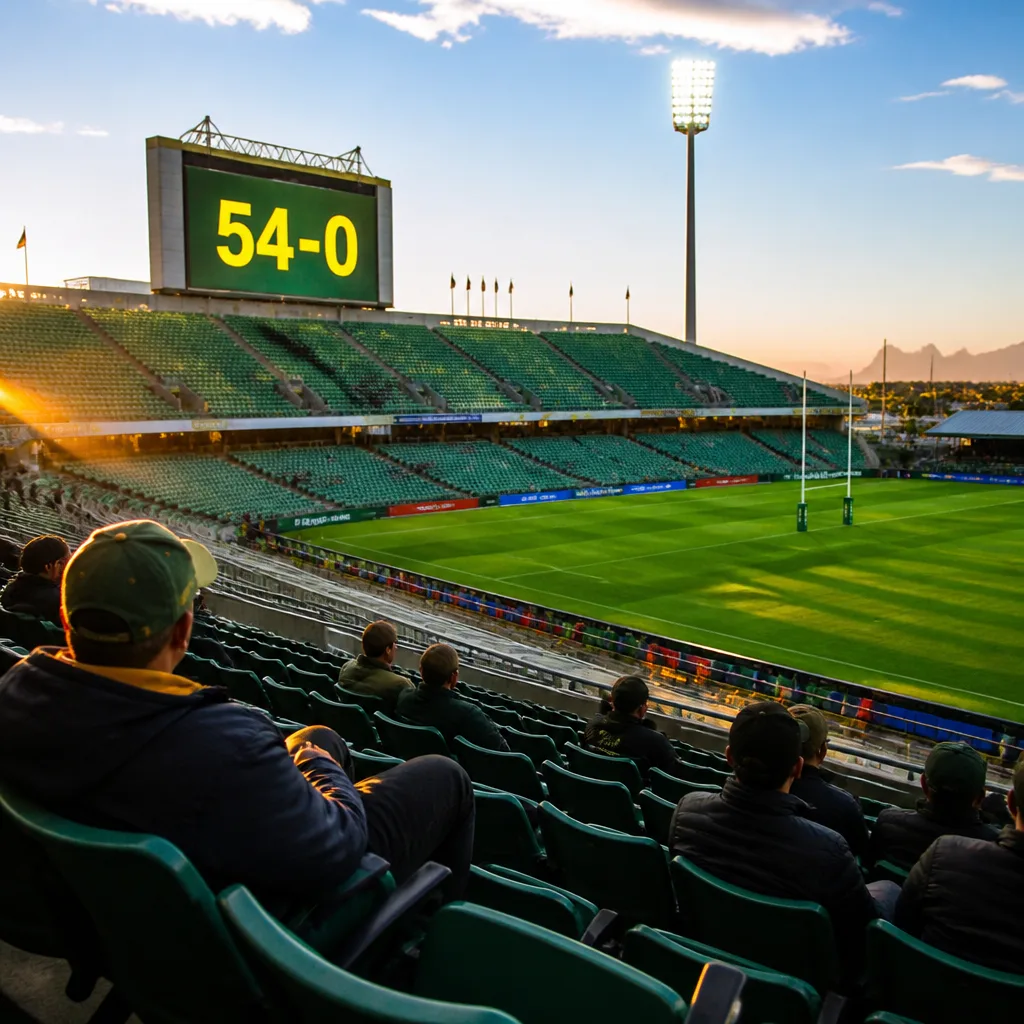
When the All Blacks thrashed the Sharks 54-0 in Durban this week, the scoreboard was emphatic and the performance, for a spell, looked like the team the marketing has promised. What jarred, though, was the crowd: just 14,759 people in a 52,000-seat Kings Park, a figure that underlined a growing ambivalence among South African supporters toward a fixture that once carried near-religious significance.
Results on the field, questions off it
The match in Durban offered two clear truths. First, New Zealand produced a devastating second half — adding 40 points after the break — and crossed for eight tries in all, a clinical finish to what had been an even contest for much of the first 65 minutes. Second, the potent commercial machine behind the eight-match tour, which culminates in four Tests and includes one scheduled in the United States, is not a substitute for the intangible passion that sustained this rivalry for decades.
Tour organisers, including the two unions, will point to commercial logic: taking a Test to Baltimore is expected to yield between $4m and $6m more than staging a further match in South Africa. That is cold arithmetic with real consequences for the professional game. But sport is not only accounting; it is memory, identity and atmosphere — and the image of a thin crowd in Durban made plain that branding and balance sheets cannot manufacture reverence.
Attendance, history and shifting fortunes
There are further markers in the week’s fixtures. The All Blacks' opening tour game drew a larger crowd in Cape Town — roughly 47,000 — where they beat the Stormers 38-21. Yet even there, the narrative suggested respect rather than rapture: the contest remained level deep into the second half, the visitors’ dominance only taking shape late on.
For a long stretch in South African rugby history, New Zealand arrived with a fearsome record on these shores. Between the 1995 Rugby World Cup final and the appointment of Rassie Erasmus in 2018, New Zealand’s win rate in South Africa sat at about 68.2%. Those numbers help explain why previous generations treated the All Blacks’ visits as events of almost sacred import. The current pattern — competitive Tests punctuated by emphatic displays and variable attendances — shows that reverence can ebb even when the on-field product is excellent.
- Attendance, Durban: 14,759 (Kings Park capacity 52,000)
- Durban scoreline: Sharks 0–54 New Zealand (eight tries; 40 points after half-time)
- Cape Town opening match: 47,000 attendance; All Blacks 38–21 Stormers
| Fixture | Attendance | Score |
|---|---|---|
| Kings Park, Durban | 14,759 | Sharks 0–54 All Blacks |
| Cape Town (opening) | ~47,000 | Stormers 21–38 All Blacks |
“vintage class”
The phrase above, used in a local assessment of Tuesday’s performance, captures the tension neatly: an elite display from New Zealand that still failed to stir the full national imagination.
Where to from here?
South African rugby must reconcile two realities. On the one hand, the Springboks and their supporters can take comfort from recent results: South Africa have had the upper hand in a number of key meetings, including the 2023 World Cup final and later matches that shifted the balance of recent history. On the other hand, if stadiums remain underpopulated for marquee visits, organisers and unions face a long-term question about how to sustain interest without hollowing out the fixture’s identity.
Commercial deals and globalisation are part of modern rugby’s life, and they bring money that funds players and programmes. Yet the Kings Park picture in Durban was a reminder that atmosphere is earned at grassroots level, in schools and clubs, and by preserving the narratives that connect fans to a fixture. The All Blacks tour will continue to produce high-quality rugby; the real test for South African rugby is whether it can keep the rivalry alive in the stands as well as on the scoreboard.
For now, the All Blacks’ tour is a success on the field. The question is whether the relationship between teams, supporters and the market will adapt in a way that keeps historic encounters feeling like more than a well-marketed product.














