
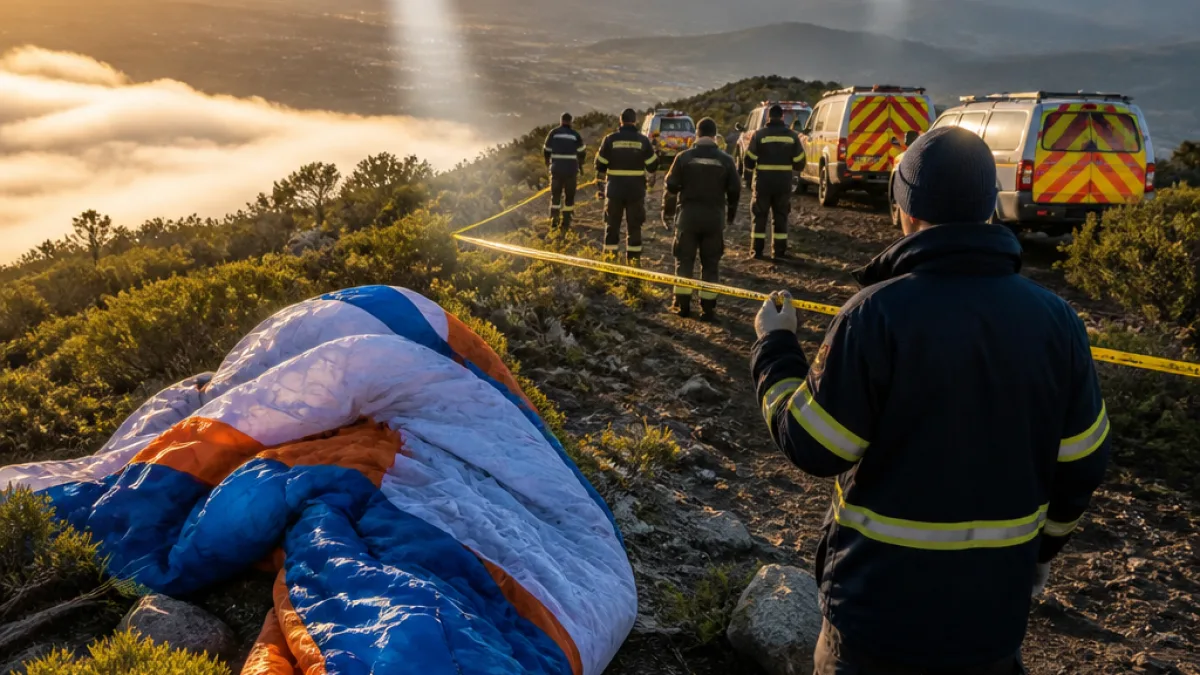
A 68-year-old paraglider who failed to return to his designated landing zone was found deceased in the Porterville mountains after an extensive search-and-rescue operation that began late on 17 August 2026 and resumed at first light on 18 August 2026.
Coordinated response after late alert
The Aeronautical Rescue Coordination Centre (ARCC) received an alert late on 17 August and mobilised resources to locate the missing pilot, according to ARCC Chief Operations Gregory Critchley. The Western Cape Early Warning Network was notified and the province’s emergency services activated a staged response.
Teams that joined the operation included the Western Cape Metro Emergency Medical Services (EMS) West Coast Metro Rescue Teams, the Western Cape EMS Drone Unit, the South African Police Service (SAPS) Search and Rescue and Diving Unit, the SAPS Air Wing and the K9 Search and Rescue Association (K9SARA). Members of the paragliding community also assisted in overnight searches.
"We also express sincere appreciation to all responding agencies and personnel for their professionalism, dedication, and unwavering commitment throughout the operation,"
Critchley extended condolences to the family, friends and loved ones of the deceased and confirmed an official investigation into the circumstances of the accident.
Weather and terrain complicated efforts
Heavy cloud cover and adverse weather forced a temporary suspension of overnight operations. Search activity resumed at first light on 18 August when improved conditions allowed aerial support to return to the effort. The pilot was located within the operation’s designated search zone and was found to have sustained fatal injuries during the accident.
- Alert received by ARCC late on 17 August 2026
- Night-time search constrained by heavy cloud cover
- Ground, aerial, drone and K9 units deployed
- Body located within the pre-defined search area on 18 August
Who responded
The search drew personnel from several state and volunteer bodies. Their combined deployment highlights the layered approach to aviation distress in remote terrain.
| Agency | Role |
|---|---|
| ARCC | Alert coordination and mobilisation |
| Western Cape EMS West Coast Metro Rescue Teams | Ground search and medical support |
| Western Cape EMS Drone Unit | Area reconnaissance and aerial imagery |
| SAPS Search and Rescue & Diving Unit | Technical search and recovery |
| SAPS Air Wing | Aerial search support |
| K9SARA | Canine tracking assistance |
Broader safety and community implications
Paragliding is a regulated recreational activity that relies on weather awareness, terrain knowledge and prompt emergency reporting. While the precise circumstances of this incident remain under investigation, the sequence of events highlights common risks: rapidly changing conditions in mountainous coastal areas and the difficulty of conducting searches after dark.
Local paragliding groups assisted authorities during the night phase of the operation, offering knowledge of likely landing sites and terrain — a reminder of the value of community involvement in remote-area searches.
What we know and what comes next
Authorities confirmed the pilot was flying solo and did not return to his planned landing site, prompting the alert. The South African Police Service will continue with an inquiry into the cause of the accident, while the ARCC will remain involved in any aviation-related aspects of the investigation.
Family members have been notified and Critchley conveyed condolences on behalf of the responding teams.
Anyone with further information about the incident or who may have been in the area on the night of 17–18 August is asked to contact SAPS or the ARCC through official channels.
Note: No further personal details about the deceased were released by authorities at the time of reporting.














