
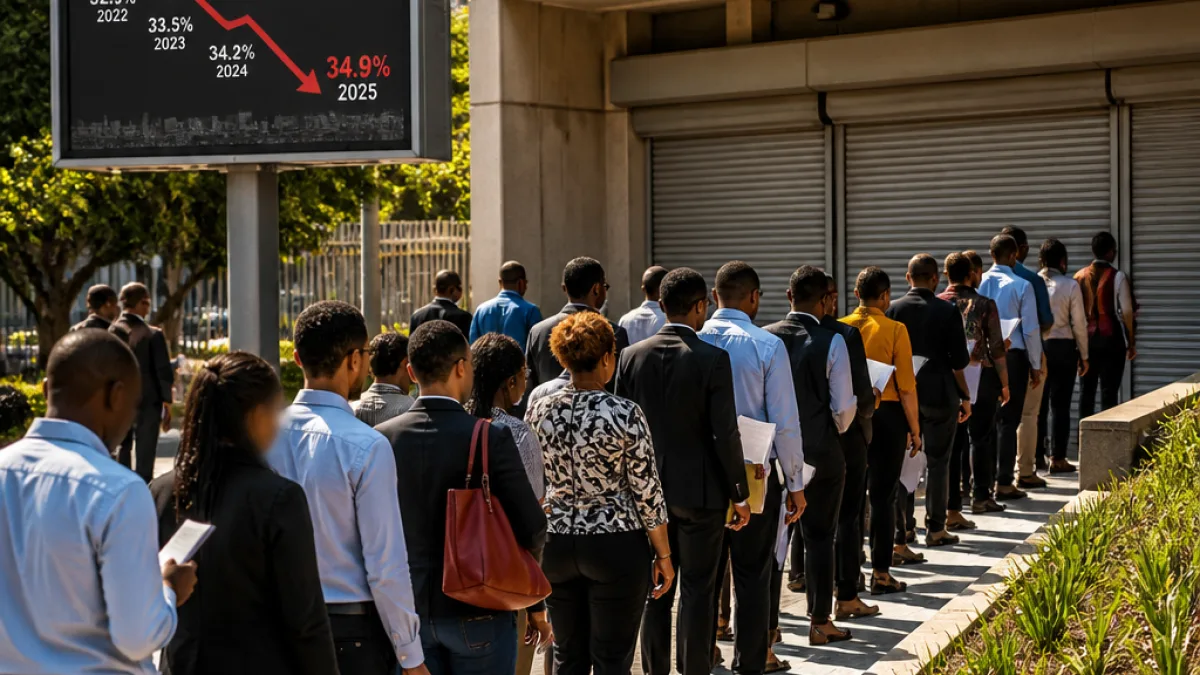
Unemployment in the Eastern Cape rose to 47.5% in the second quarter of 2026, the highest rate among provinces, after the economy lost 116,000 jobs over the past year, Statistics South Africa (Stats SA) data show. The figures underline mounting pressure on households and on provincial leaders to arrest rising joblessness.
Numbers, districts and the structural problem
The Eastern Cape’s unemployment rate climbed from 44.6% in the first quarter to 47.5% in the second, even though the absolute number of employed people increased slightly by 13,000 over the same quarter. The apparent contradiction reflects a large influx of people into the labour market: the province’s labour force expanded by about 160,000 to reach 2.565-million, overwhelming modest employment gains.
The impact is visible across metros. Nelson Mandela Bay recorded 371,000 people in employment in Q2 — an increase of 7,000 on the previous quarter but still 49,000 fewer than a year earlier. Buffalo City’s unemployment rate rose from 28.7% to 30.5% between quarters.
| Indicator | Q1 2026 | Q2 2026 |
|---|---|---|
| Unemployment rate (Eastern Cape) | 44.6% | 47.5% |
| Labour force size | (previous) | 2.565 million |
| Net jobs lost (year) | 116,000 | |
Sectoral pressures and government response
Premier Oscar Mabuyane acknowledged the scale of the challenge, pointing to problems in the automotive sector — historically a backbone of the province’s industrial employment — as a major contributor to the deterioration.
“Unemployment reflects the challenges of development… We’ve been hit hard by the problems facing the automotive sector, which has been the backbone of our province,” Mabuyane said.
He noted that while the services sector has offered some support to employment, the gains have been insufficient to offset widespread job losses. Mabuyane urged efforts to attract investment, speed up government procurement and fill funded vacant posts so public spending can help catalyse private-sector hiring.
What this means for households and local economies
A near-50% unemployment rate has immediate and longer-term consequences. Households face reduced incomes and greater reliance on social grants, which intensifies demand for municipal and social services. Local businesses confront shrinking consumer spending, while municipalities and provincial departments encounter higher service-delivery pressures.
- Higher unemployment increases demand for social assistance and heightens food insecurity risks.
- Reduced consumer spending undermines small businesses and service-sector jobs.
- Persistent joblessness risks long-term detachment of working-age people from the labour market.
Where recovery could come from — and obstacles
Investment in manufacturing, particularly reviving capacity in the automotive value chain, would help. So too would targeted support for small enterprises and agri-processing in rural parts of the province whose value chains were also hit by recent floods and infrastructure damage.
However, the province faces multiple constraints: weak economic growth nationally, disruptions to exports, and delays in government procurement that Premier Mabuyane identified as a drag on job creation. He said mobilising investors and performing better as government were essential to creating a more conducive environment for private-sector hiring.
Immediate policy and practical implications
For residents and local leaders the Stats SA snapshot suggests three immediate priorities:
- Speed up implementation of labour-intensive public projects and fill budgeted posts to stimulate demand for goods and services.
- Support small, township and rural enterprises with procurement access and working capital to prevent further closures.
- Work with industry partners to address bottlenecks in key sectors such as automotive and agri-processing.
The new figures will increase pressure on provincial government to translate pledges to attract investment into tangible projects, and to tighten coordination with national departments and the private sector to arrest the slide in employment. For now, the scale of joblessness in the Eastern Cape adds to national concerns about a slow and unequal recovery from recent economic shocks.
Reporting from Gqeberha.














