
City to capture Waterfall and Seaforth troops amid contest over permanent captivity
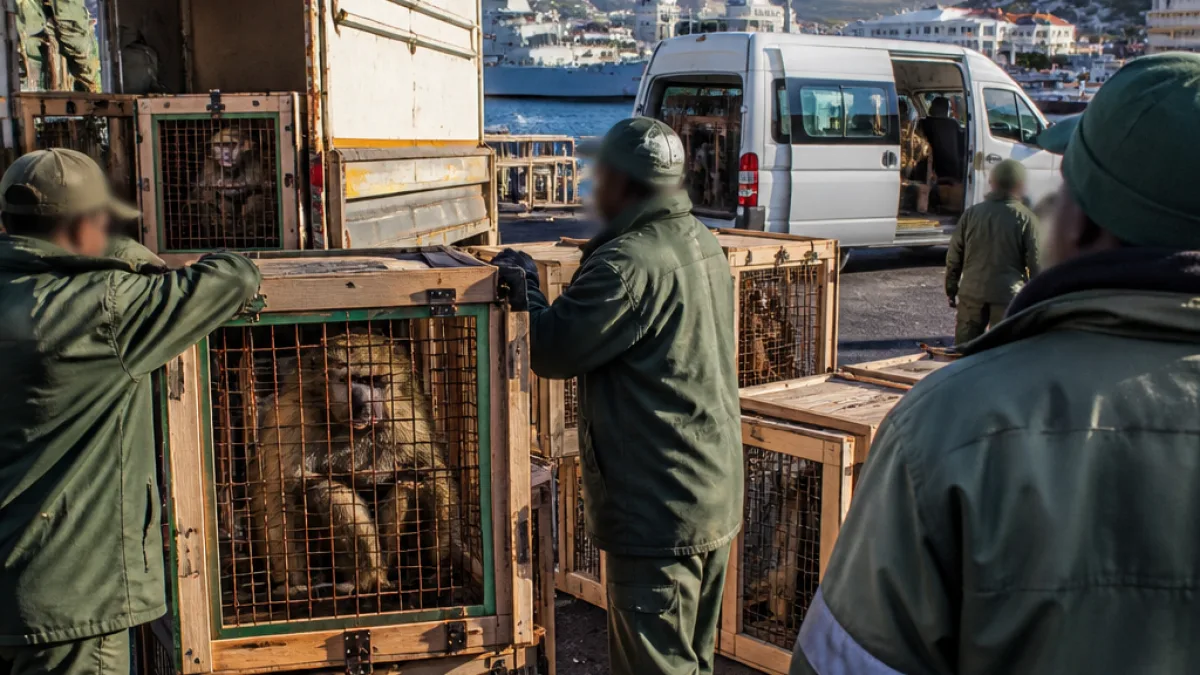
The City of Cape Town is preparing to capture about 60 chacma baboons from the Waterfall and Seaforth troops in Simon’s Town and move them into permanent enclosures at the Urban Wildlife Centre in Kogelfontein near Scarborough, according to the city’s action plan shared with stakeholders.
The plan outlines that captured animals will be assessed and relocated to specially equipped enclosures. The city also intends that healthy males will undergo vasectomies to curb future population growth in captivity.
Not all stakeholders are in agreement. Several conservation and animal-welfare organisations have expressed strong reservations about the proposed long-term confinement of wild animals. One advisory member, Francesca de Gasparis, is reported as opposing the removals, saying:
“This approach indicates an insufficient understanding of the role baboons play in the functioning of the fynbos ecosystem.”
The Wildlife Animal Protection Forum South Africa (WAPFSA) network has called for a different sequence of actions: introduce and assess measures that enable human–animal coexistence first, with transparent monitoring before considering permanent captivity. WAPFSA and others list several non-capturing management options.
- Secure waste-management systems to remove food attractants;
- Restricting baboons' access to specific residential and commercial areas;
- Non-lethal behavioural modification and habitat interventions;
- Community measures to limit interactions and reinforce deterrents.
The Cape of Good Hope SPCA has also expressed concerns, reiterating a previously stated position that keeping wild-caught baboons in a shelter should not be used as a long-term management method.
City links conflict to accessible food; container rollout continues
Critics of the capture plan point to the availability of food waste in residential areas as a significant driver of baboon–human conflict. The city has begun distributing baboon-proof waste containers as part of its mitigation measures: 2,200 of the planned 6,000 containers were announced for distribution earlier in September. Simon’s Town was not included in that initial phase because the city intends to remove the Waterfall and Seaforth troops.
| Item | Figure |
|---|---|
| Estimated baboons to be captured | ~60 |
| Containers distributed so far | 2,200 of 6,000 |
| Holding facility | Urban Wildlife Centre, Kogelfontein (near Scarborough) |
The dispute has also affected the composition and engagement of the Cape Peninsula Baboon Advisory Group: the Green Group Simonstown NPC has withdrawn, saying it cannot support a decision that would, in its view, effectively turn the holding facility into a zoo.
Local consequences and the debate ahead
For residents of Simon’s Town and surrounding suburbs the policy carries immediate practical and ethical questions. If the city proceeds with captures and long‑term enclosure, it will reduce the number of local troops but also remove animals that play ecological roles in the fynbos. If instead the municipality focuses on preventing attractants and changing human behaviour, the pressure on troops could fall without removing animals from the wild.
Where the city sits between those options will determine costs, the shape of future human–wildlife interaction, and whether Simon’s Town becomes a testing ground for a broader Cape Town strategy. The issue also tests municipal capacity: the city will need to implement effective waste systems, community education, monitoring and humane handling should captures proceed.
The debate is likely to continue as conservation bodies, animal‑welfare organisations and local residents press the city for clarity on long‑term plans, monitoring protocols and how ecological consequences will be weighed against neighbourhood safety and property protection.
City officials have framed the actions as part of an overall management plan; opponents want mitigation measures tried and evaluated first with transparent reporting before wholesale removals and permanent captivity are pursued.














