
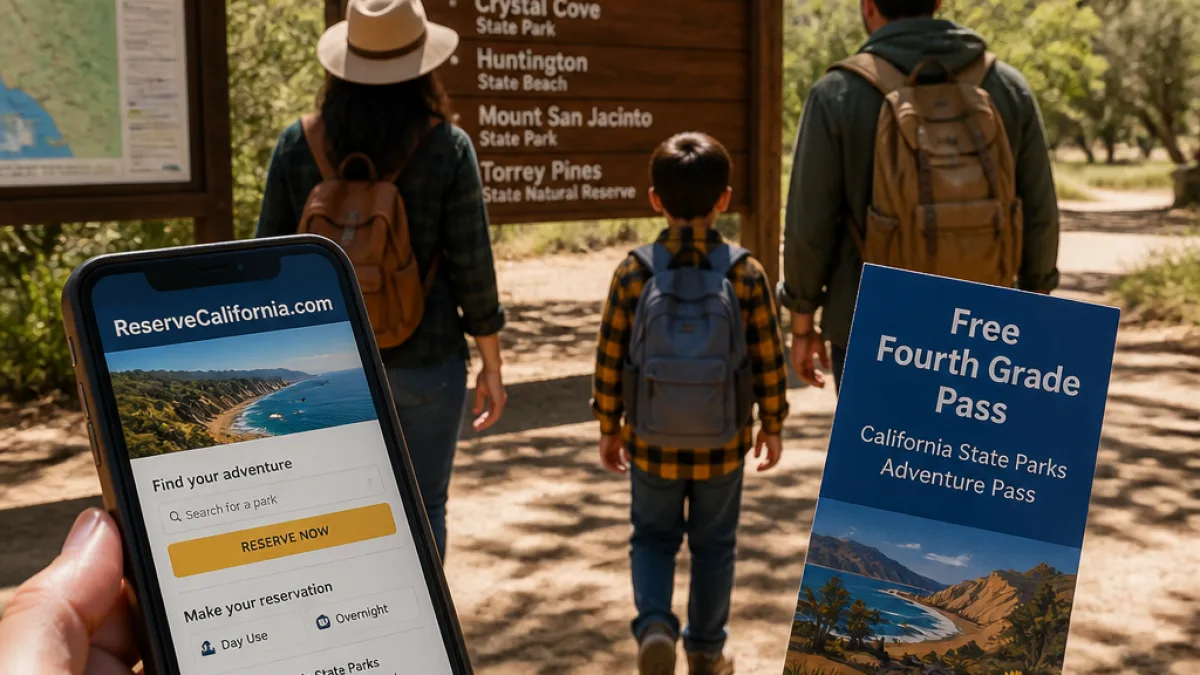
SACRAMENTO — California has launched its Free Fourth Grade Pass for the 2026/27 school year, giving incoming fourth graders and their families unlimited free admission to 54 participating state parks, the Governor’s office reported.
Programme, sign-up and purpose
The pass is available for download at ReserveCalifornia.com and has been simplified and renamed for the coming year. The state’s announcement said the initiative targets children around 10 years old, the typical age for fourth graders, citing research that children aged 9–11 are at a developmental stage when they become more likely to engage with nature and the environment.
The programme was described as part of a wider effort — the Outdoors for All Initiative — led by the First Partner and the California Natural Resources Agency to improve equitable access to parks and open spaces, regardless of ZIP code or income.
"Fostering a lifelong connection with nature and the outdoors starts at a young age. With California’s Free Fourth Grade Passes for fourth graders and their families, we are giving more school kids the opportunity to experience all the natural wonders of the Golden State," the Governor said in the release.
What the pass offers and who it covers
The Free Fourth Grade Pass permits unlimited free visits to the 54 listed state parks for the enrolled child and their family. The announcement emphasised learning, cultural exposure and access to natural resources as central aims, highlighting fourth grade as a formative year for civic and environmental education.
The First Partner, who formally introduced the programme at the California State Railroad Museum, framed the pass as part of a legacy of expanding outdoor opportunities for children. A statement in the announcement described the pass as enabling families to "immerse themselves in our state’s incredible beauty, culture, and history".
Practical information for families
- Where to sign up: ReserveCalifornia.com (look for the “4th Grade Pass — 2026/27 School Year” listing).
- Who is eligible: incoming fourth graders, typically around 10 years old, and their families.
- Coverage: unlimited visits to the 54 participating state parks for the 2026/27 school year.
The release did not list the 54 participating parks in full. Families are able to order the pass online ahead of the school year and are advised to check the ReserveCalifornia site for the pass name and the specific parks included.
Background and policy context
The Free Fourth Grade Pass was originally established in 2021 and has been renewed and adjusted over successive years. The state framed the 2026/27 update as a simplification and a renewed effort to reach children at an age when environmental engagement is likely to have lasting impact.
Officials said the programme forms a part of broader efforts to encourage equitable access to outdoor education and cultural resources, though the announcement did not detail budgetary, administrative or performance metrics for the scheme.
What to watch for
Parents and guardians preparing for the year ahead should verify the pass name on ReserveCalifornia and sign up if eligible. Schools and community groups that arrange outings will need to check whether particular parks on their itinerary are among the 54 listed.
| Item | Detail |
|---|---|
| Programme name (2026/27) | Free Fourth Grade Pass / "4th Grade Pass — 2026/27 School Year" on ReserveCalifornia |
| Participating parks | 54 state parks |
| Target age | Approximately 10 years (typical fourth grader) |
The announcement was issued by the Governor’s office and accompanied by remarks from the First Partner at a public event. For precise lists of parks, dates of validity, and any terms and conditions, the state directed families to the ReserveCalifornia website.
Local organisers, school officials and community programmes that rely on state parks for curriculum-linked outings should review the ReserveCalifornia registration process and the parks list to make logistical arrangements before the school year begins.
Reporting draws on the official state announcement and the public remarks delivered at the California State Railroad Museum.












