
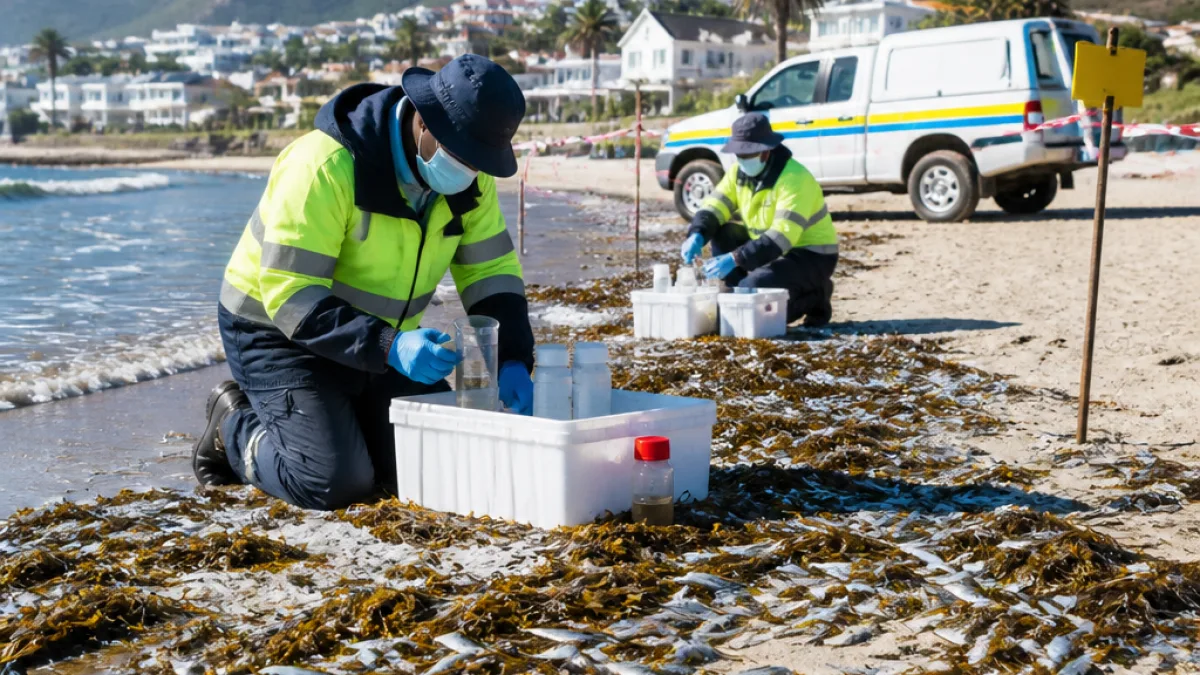
The Department of Forestry, Fisheries and the Environment (DFFE) has opened broad investigations into reports of dead sardines washing up at several points along the Western Cape coast between Saldanha Bay and Gansbaai. Specialists are screening samples for marine biotoxins and testing water for harmful algae as officials try to establish the cause of the die-off.
Where and when the strandings were reported
Department spokesperson Zolile Nqayi said the die-offs included reports more than a week ago of dead and dying sardines near Hout Bay. According to the department, there have been no further reports since Thursday.
| Location | Reported status |
|---|---|
| Saldanha Bay to Gansbaai (general stretch) | Water samples under examination |
| Hout Bay | Dead and dying sardines reported (more than a week ago) |
What officials are doing
The DFFE has said that marine biotoxin screening is under way and that teams are analysing water for evidence of harmful algal blooms – a common driver of sudden fish kills worldwide. The department released a public advisory urging people not to collect, handle or consume dead or dying fish found on beaches.
"They have not received any reports since Thursday," the department said, and residents were advised not to collect, handle or consume dead or dying fish found on beaches.
Samples taken from stranded fish and adjacent seawater will help determine whether a biotoxin, algal bloom, hypoxia (low oxygen) or another cause is to blame. The DFFE’s early public messaging focuses on reducing any risk to people who might otherwise pick up or eat fish washed ashore.
Local impact and context
The stretch between Saldanha Bay and Gansbaai encompasses significant fishing grounds and numerous small coastal communities. Even limited strandings can unsettle local fishers and residents who rely on coastal resources for livelihood or subsistence. Although the department has not linked the strandings to commercial catches, officials’ testing will be closely watched by the fishing sector and public-health authorities.
Harmful algal blooms and marine biotoxins are well-known risks in South African waters. When algae produce toxins, shellfish and fish can accumulate them and pose a threat to people who eat contaminated seafood. Even without a confirmed toxin, large numbers of dead fish can indicate ecological stress such as oxygen depletion or abrupt water‑temperature shifts.
- Public safety: Do not touch, collect or eat dead or dying fish found on beaches.
- Reporting: Report strandings to the DFFE or local authorities so samples can be taken promptly.
- Commercial fishers: Monitor official advisories before landing or selling catches from affected areas.
What to expect next
Laboratory results from biotoxin screens and algal assessments should indicate whether a toxic bloom is present. If tests detect toxins, authorities typically issue more specific consumption advisories and may close affected shellfish areas until they are deemed safe. If tests point to non-toxic causes such as hypoxia, investigators will seek to identify environmental drivers, which can include temperature changes or nutrient inputs.
The DFFE’s statement was amplified on social media by broadcasters reporting the department’s ongoing work. The department has not provided a timeline for results, nor has it released laboratory findings at this stage.
For residents and visitors to Cape Town and the broader Western Cape coastline, the message is pragmatic: avoid handling stranded fish and follow official updates. Coastal communities already familiar with the region’s seasonal shifts will be watching laboratory results closely for any implications for local fishing and recreation.
WE NEWS will continue to follow developments and publish official findings as they become available.














