
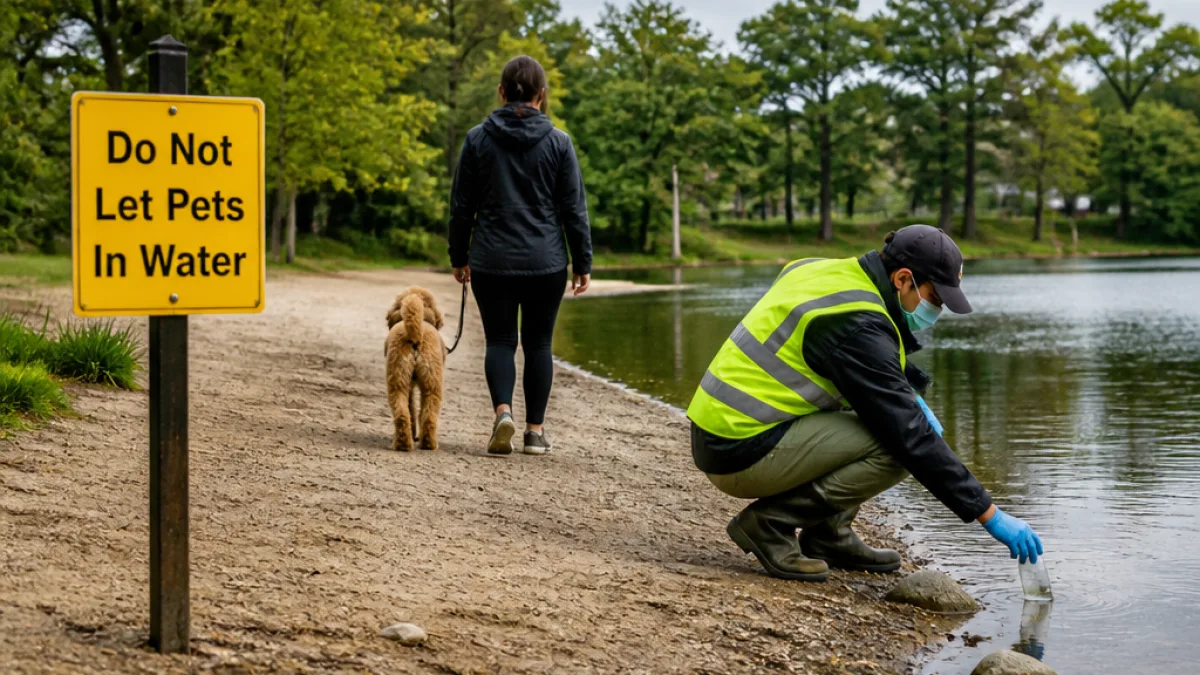
Stoughton officials have launched an investigation after a dog died following a swim at Ames Pond, and they are urging residents to keep pets out of the water while inquiries proceed.
Town issues immediate advisory for pet owners
The town’s Board of Health and environmental health agents are reviewing the circumstances surrounding the canine’s death, according to local reporting. While laboratory results and the full investigation are pending, officials asked residents not to allow pets into Ames Pond.
"The Town of Stoughton is saddened to hear the news regarding the passing of a canine who swam at Ames Pond this week."
Officials noted that routine weekly testing for recreational water is continuing and that, so far this season, tests have not shown elevated Escherichia coli (E. coli) levels at the town beach. Nevertheless, health experts caution that water conditions can deteriorate quickly and create hazards that standard weekly tests may not immediately detect.
Why officials are concerned
Public-health authorities are particularly concerned about harmful algal blooms, also known as blue-green algae or cyanobacteria blooms. These blooms can produce toxins that pose risks to people and animals, especially in ponds and lakes used for swimming or recreation.
Federal guidance cited by local reporting emphasizes that pets are at heightened risk because they can ingest contaminated water while swimming and may also become exposed after leaving the water if they lick toxin residue from their fur.
Health officials warned, "Algae blooms can happen very quickly under the right conditions and can make a body of water hazardous even if earlier testing appeared normal."
What Stoughton is doing now
Town environmental health staff continue to conduct the weekly water-quality tests required under Massachusetts regulations. To date, those routine tests have not recorded any E. coli exceedances this season at Ames Pond.
Municipal officials did not provide additional details about the dog, including breed, age or the exact timing of the animal’s illness and death. The investigation will determine whether toxins, bacteria or another cause are responsible.
Practical advice for pet owners
Health authorities recommend that pet owners take several precautions while the inquiry continues and during summer months when algal blooms are more likely:
- Keep pets out of water that appears scummy, discolored, or has visible algal mats.
- Rinse and dry pets thoroughly after any water exposure and avoid letting them lick their fur if you suspect contamination.
- Watch animals closely for signs of illness after swimming, such as vomiting, diarrhea, seizures, lethargy or disorientation, and seek veterinary care immediately if symptoms appear.
- Follow local advisories and closures for beaches, ponds or other recreational waters.
Context: testing and limitations
Massachusetts requires routine testing of designated recreational beaches and bathing areas for E. coli as an indicator of fecal contamination. Those tests are conducted on a set schedule — in Stoughton’s case, weekly — but they do not directly measure cyanotoxins produced by algal blooms and can miss rapidly developing hazards.
| Measure | Stoughton status |
|---|---|
| Weekly E. coli testing | Ongoing; no exceedances this season |
| Algal bloom monitoring | Under review during investigation |
The Centers for Disease Control and Prevention notes that cyanobacterial blooms can be intermittent and localized, forming under favorable conditions such as warm temperatures, still water and excess nutrients. Because of this, a waterbody that tested clean one day can develop hazardous conditions the next.
Next steps and community impact
Stoughton officials said they will provide updates as the investigation proceeds and as any laboratory findings become available. For now, the town’s advisory is a precaution intended to protect both animals and residents who use Ames Pond and nearby recreational areas.
Local veterinarians and animal-welfare groups recommend that pet owners err on the side of caution when a nearby waterbody reports unusual odors, discoloration or dead fish, or when municipal authorities issue warnings. The loss of a pet can be traumatic for families and underscores how quickly environmental risks can affect communities.
Residents with concerns or observations about Ames Pond — including reports of discolored water, fish kills or sick animals — are encouraged to contact the Stoughton Board of Health to assist investigators as they work to determine the cause of the incident.
Reporting and follow-up from municipal officials and testing agencies will be necessary to determine whether this was an isolated tragedy or the sign of a broader hazard requiring longer-term precautions.

















