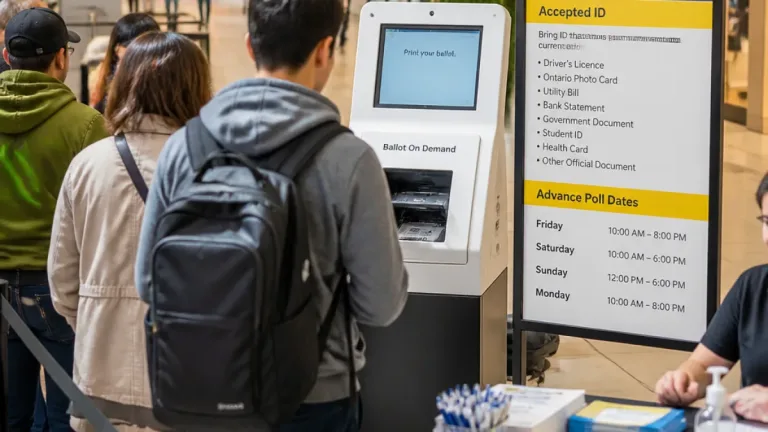

State Sen. Nick Collins secured renomination Tuesday in the Democratic primary for the First Suffolk District, defeating challenger Latoya Gayle, a newcomer to electoral politics endorsed by Boston Mayor Michelle Wu. Collins claimed nearly 60 percent of the vote just before 11 p.m., according to returns reported on election night, as Gayle conceded the race.
Result reflected in vote totals
| Candidate | Approx. share |
|---|---|
| Nick Collins | ~60% |
| Latoya Gayle | ~40% |
Collins, a South Boston Democrat and an incumbent who has sparred publicly with Wu during the campaign, framed the victory as a validation of his record and coalition-building across the district. In a statement to supporters he said,
“We are grateful for the support we received across the district thanks to our coalition of colleagues and labor and union leaders helping us communicate our vision to prioritize the needs of working people to assure a strong independent voice represents the First Suffolk District where we will continue to bring solutions to the Massachusetts Senate.”
The contest drew attention well beyond the district because it was one of two state Senate races in recent weeks where Mayor Wu actively campaigned against incumbent senators. The mayor’s push followed a public dispute dating to late 2024, when Collins and Sen. William Brownsberger led efforts in the Senate that resulted in killing Wu’s signature tax-shift legislation. That proposal would have shifted more of Boston’s property tax burden from homeowners to businesses and was intended to blunt rising residential tax bills; opponents argued it would harm the local economy.
Broader stakes and spending
Wu’s involvement in the primaries signaled an aggressive attempt to reshape Boston’s delegation at the State House. A Super PAC aligned with the mayor spent more than $84,000 supporting Gayle and another challenger, Daniel Lander, who took on Brownsberger in a neighboring contest.
- Collins defeated Gayle with roughly 60% of the vote.
- Mayor Wu campaigned for challengers in at least two Senate districts after the 2024 tax fight.
- That same Super PAC poured over $84,000 into the bids backing Gayle and Lander.
In the other marquee race, Sen. Brownsberger, the Senate president pro tempore, was reported to be leading his opponent Daniel Lander by about 55% to 45% just before 11 p.m., though that race’s final outcome remained unsettled at the same reporting time.
What the outcome means for Boston
For Boston residents, Collins’ victory means continued representation by a legislator who opposed Wu’s tax proposal and who has been an ally to labor and certain business interests that criticized the mayor’s plan. It also diminishes, at least for now, the mayor’s immediate influence in changing the city’s delegation through primary challenges.
Political analysts say primary challenges backed by high-profile figures often sharpen debates over policy direction, but incumbency and local networks remain powerful. Collins’ campaign emphasized labor and union endorsements, arguing that his approach better protects working families in the district.
With the general election ahead, Democrats in heavily Democratic districts like the First Suffolk are likely to see the primary winner advance to the November ballot with significant structural advantages. Collins’ renomination preserves his platform in the Senate, where he and others have pushed alternative tax relief measures that differ from Wu’s plan.
The contest underscores a larger dynamic between Boston’s municipal leadership and its state lawmakers: disagreements over policy can translate into direct electoral conflict, but voter response can hinge as much on local alliances and ground organization as on high-profile endorsements or outside spending.