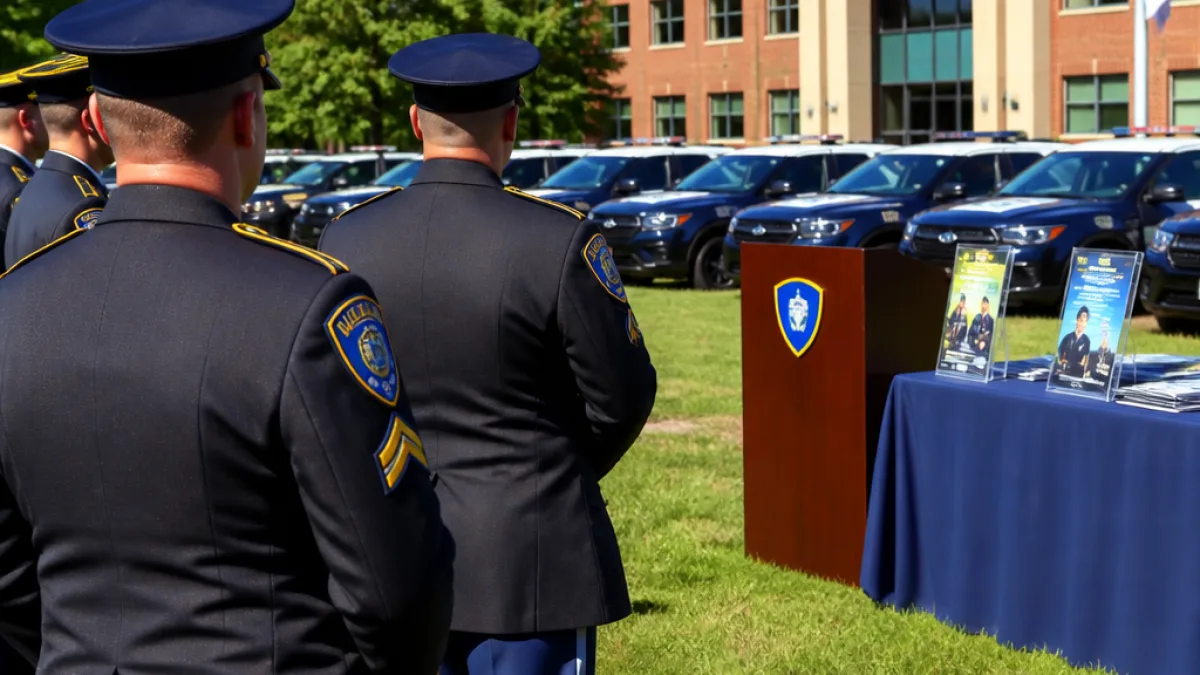
The Massachusetts State Police announced this week that it has put in place 22 priority recommendations aimed at changing how troopers are trained, a move the agency says is designed to modernize instruction and prioritize safety ahead of the next recruit class entering the academy on Monday.
Leadership and structural changes at the academy
Colonel Geoffrey Noble, head of the State Police, said the academy has a distinct duty to prepare trainees with the knowledge and judgment required for contemporary policing. In May, Noble delayed the start of the 93rd recruit class until the agency could carry out the most critical recommendations from an independent review by the International Association of Chiefs of Police (IACP).
"The Massachusetts State Police Academy has a unique responsibility to impart the knowledge, skills, judgment, and leadership trainees need to meet the demands of modern policing and serve the public with honor and professionalism," said Colonel Geoffrey Noble.
Among the changes announced are new academy leadership appointments and a shift away from some long-standing training titles and practices. The agency named Andrea Nardone as the civilian director of training. Nardone formerly served as chief of training at the Massachusetts Municipal Police Training Committee, where she oversaw instruction across 15 municipal academies in the commonwealth. Captain Michael Blanchette was appointed academy commandant; Blanchette began his law enforcement career with the Chicopee Police Department before joining the State Police as a member of the 76th Recruit Training Troop.
Instructional model and stress framework
One central change is the elimination of the title "drill instructor" in favor of an "instructional approach" that emphasizes individualized, instructor-led training in several core areas. The State Police listed specialized instruction in:
- defensive tactics
- emergency vehicle operation
- firearms
- patrol procedure
- criminal law
The agency also said it developed a new stress framework with input from medical stress training expert Dr. Jennifer Prohaska. The framework is intended to ensure that stress is used purposefully in training to meet clear objectives while supporting recruit development, safety and readiness for policing duties.
Standards and accountability for graduation
Officials said the academy has implemented tightened graduation standards designed to clarify expectations for trainees and to strengthen how readiness to graduate and serve as a trooper is evaluated. The State Police emphasized the changes are part of a broader plan to create a consistent, safety-forward training culture.
| Reform | What it changes |
|---|---|
| 22 priority recommendations | Implementation of top recommendations from the IACP report |
| Instructional approach | Removes "drill instructor" title; expands individualized instructor-led training |
| Stress framework | New medical-informed approach to how stress is applied in training |
| Graduation standards | Revised criteria for evaluating readiness to graduate as a trooper |
| New leadership | Civilian director of training and an academy commandant appointed |
Officials framed the reforms as an effort to modernize the culture and pedagogy of the State Police Academy, moving away from practices critics have said can emphasize toughness over measured instruction and safety. The department described the changes as intended to support trainees’ development while reducing unnecessary risk during training scenarios.
Context and next steps
The IACP review earlier this year produced a set of recommendations that encouraged structural and cultural reform at the academy. Following Noble’s decision in May to delay the 93rd recruit class, the State Police has said it would not begin that intake until leadership was confident the most important reforms were in place.
As the new class prepares to enter the academy Monday, the State Police say the updated curriculum, leadership structure and evaluation standards will be in force. The agency characterized the changes as immediate and operational, while technical details and the full scope of the 22 recommendations were described as the result of the IACP report and internal implementation work.
Community and municipal law enforcement leaders who worked with Nardone in the past highlighted her experience overseeing training across the commonwealth’s municipal academies, noting that a civilian training director can bring broader perspective on standards and pedagogy.
The State Police said the reforms aim to produce troopers who are better prepared for the demands of modern law enforcement while prioritizing safety for trainees and the communities they will serve.