
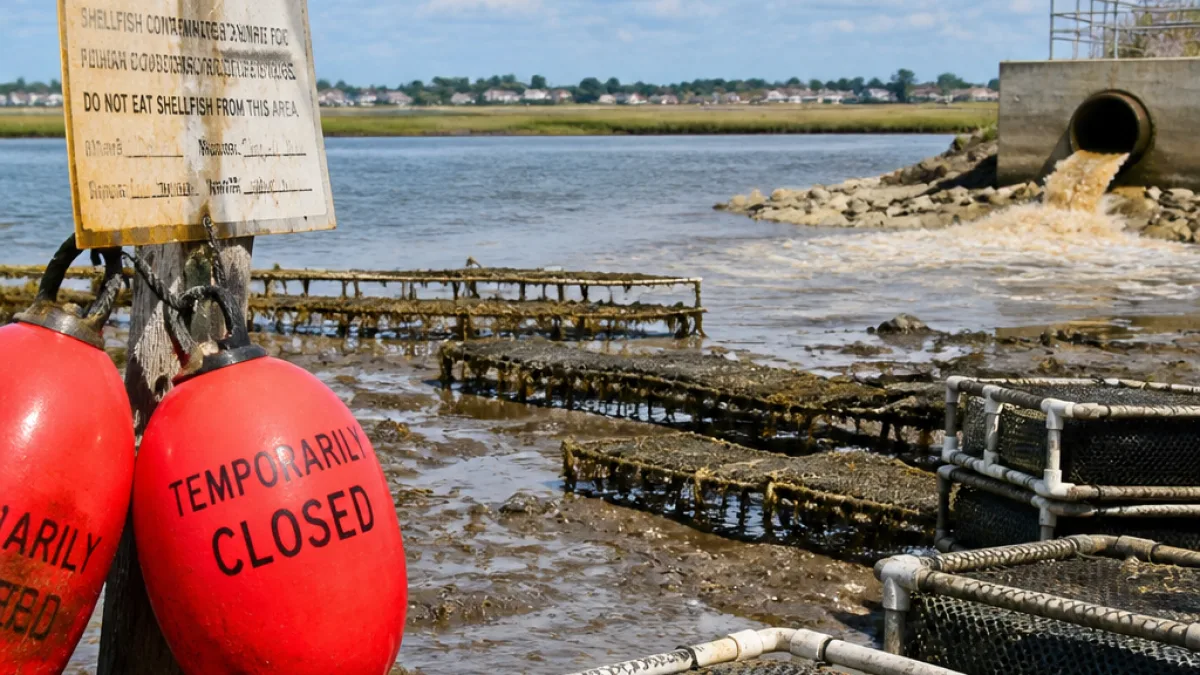
Oyster growers along Massachusetts’ South Coast are sounding the alarm as a wave of shellfish bed closures tied to sewage, stormwater and combined sewer overflows (CSOs) increasingly disrupts harvests and sales. Farmers say the interruptions are pushing some operations to the brink and imperiling one of the state’s signature coastal industries.
Repeated shutdowns squeeze cash flow
Operators on the South Coast contend that closures triggered after heavy rainfall have become a recurring business risk since 2024. A potential sewage release following downpours can prompt an automatic 21-day shutdown of affected shellfish areas while state officials monitor for bacterial contamination. The state may retest and reopen areas sooner if conditions are safe, but when storms are frequent one closure can be followed quickly by another.
Massachusetts oyster farms produce about 54 million oysters a year, according to industry reporting, and large operations such as Fairhaven’s West Island Oysters span roughly 47 acres. For growers who rely on steady harvests and predictable market access, being cut off for extended periods can be crippling.
“We’ve already lost one farm in Nasketucket Bay, and we’re probably going to lose another one very shortly,”
The comment came from Dale Leavitt, co-owner of West Island Oysters and a retired marine scientist, who described closures as a direct hit to cash flow when farms are closed up to half the year.
Why closures happen and what regulators do
Closures are instituted because stormwater and sewer overflows can carry fecal bacteria into bays and estuaries where shellfish are grown. Public health officials can test shellfish after a week and clear beds if results are acceptable, but persistent rain and subsequent overflows can prolong restrictions or trigger new ones.
The closures represent a regulatory balance: protecting consumers from contaminated shellfish while trying to avoid unnecessary economic harm to harvesters. Farmers say that balance has shifted against them as extreme precipitation events become more frequent.
Local impact and industry consequences
Beyond farm gate losses, closures ripple through the local economy. Shellfish aquaculture supports jobs, seasonal labor, processing and wholesale supply chains that feed restaurants and retail markets. Smaller operators without diversified income or large cash reserves are among those most at risk of failing when closures interrupt revenue for weeks at a time.
One farm in Nasketucket Bay has already closed, and growers fear more closures will follow if current patterns continue. The industry point to aging sewer infrastructure that can be overwhelmed by heavy downpours as a key driver of the problem.
What farmers and communities are asking for
Growers and advocates want state and municipal action to reduce the frequency of CSOs and to prioritize investments that limit the release of untreated sewage during storms. They also say more predictable, transparent testing and reopening timelines could help operations plan around closures.
- Immediate concern: repeated 21-day shutdowns after suspected sewage events.
- Industry scale: roughly 54 million oysters produced annually in Massachusetts.
- Notable operation: West Island Oysters, about 47 acres, faces severe financial pressure.
Broader context: weather, infrastructure and public health
Growers say heavier rainfall events, linked by scientists to a changing climate, are more likely to overwhelm old sewer systems and cause CSOs. Those overflows risk contaminating shellfish beds and prompting precautionary closures. Regulators must weigh the risk of foodborne illness against the economic survival of small coastal businesses.
State testing protocols allow for retesting after a week, but when storms continue, reopening may be delayed. For now, the industry is left grappling with an uncertain season-to-season financial picture and seeking policy and infrastructure fixes that would reduce closures and stabilize local economies.
As the South Coast industry presses its case, communities and policymakers face a choice about investing in upgrades and monitoring systems that could lower the frequency of sewage-related closures — and preserve an industry that supports jobs, tourism and the character of the coast.
| Metric | Figure |
|---|---|
| Annual oyster production (MA) | ~54 million |
| Area of West Island Oysters | 47 acres |
| Standard precautionary closure | 21 days |
This situation remains fluid as growers, public health officials and municipal leaders navigate competing priorities of safety, economic stability and investment in infrastructure. Reporting will continue as more data on closures and proposed remedies becomes available.
















