HUNTINGTON BEACH, Calif. — Southern California beaches have seen a striking rise in stingray injuries this year, with lifeguard agencies reporting thousands of incidents as a persistent marine heat wave alters nearshore conditions.
More stingray encounters, more victims
At Bolsa Chica State Beach and other popular shorelines, lifeguards have treated a notable uptick in people stung by the serrated barbs on stingray tails. State and local data show more than 3,100 such incidents so far this year at Bolsa Chica and Huntington State Beaches combined — roughly double the total for all of 2025.
The city of Huntington Beach’s 3.5-mile stretch of coastline alone has reported more than 2,000 stingray incidents so far this year, exceeding the full count for the previous year. San Diego County logged more than 900 stings during the first half of 2026, the most for that period in at least five years, according to lifeguard records.
“We’re definitely seeing an increase,” said Bryan R. Etnyre, state park superintendent in northern Orange County. “A lot of it is due to warming ocean temperatures that are consistently staying in the 60s.”
Why warmer water matters
Marine scientists and park officials point to elevated sea temperatures as a key factor. Warmer nearshore waters attract round stingrays closer to shallow beaches, and at the same time more people are entering the water to swim, surf and recreate. The overlapping presence of rays and beachgoers increases the chance of accidental contact with the animals’ caudal barbs.
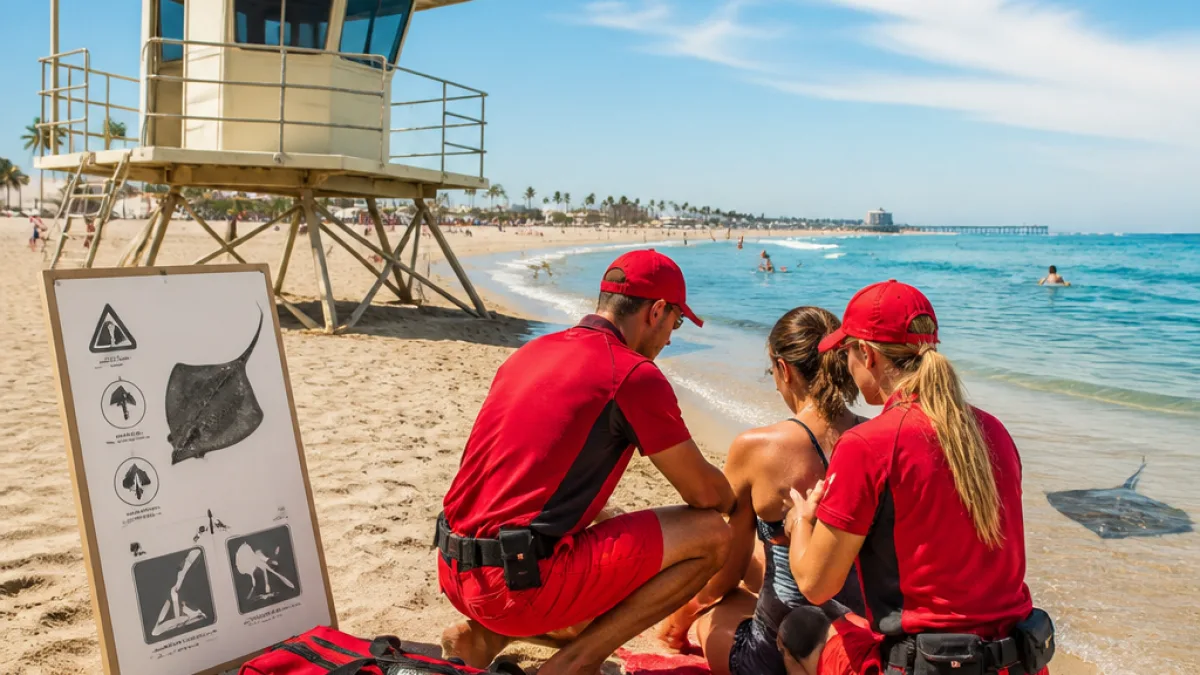
At Bolsa Chica and Huntington beaches, lifeguard stations have treated both residents and tourists. One recent patient, a 31-year-old visitor practicing surfing, said he stepped off his board and landed on what felt like a sharp stick, then soaked his injured foot in hot water at the lifeguard station to ease the pain.
Local response and public safety actions
Lifeguards and state park staff are responding with typical first-aid measures and public education. Hot-water immersion is commonly recommended to reduce pain from stingray envenomation and to help denature venom proteins while awaiting further medical care when needed. Agencies are also increasing warnings and messaging at busy access points.
- Carry basic first-aid supplies or know where lifeguard stations are located.
- Shuffle feet when walking in shallow water to warn stingrays and reduce the risk of stepping on them.
- Seek professional medical attention for puncture wounds or if symptoms worsen.
Data at a glance
| Location | Incidents reported (2026) |
|---|---|
| Bolsa Chica & Huntington State Beaches | 3,100+ |
| Huntington Beach city shoreline | 2,000+ |
| San Diego beaches (first half 2026) | 900+ |
What this means for beachgoers
Public-safety officials stress practical steps beach visitors can take to reduce risk. Shuffling feet along the sand in shallow water can alert benthic species like stingrays and give them time to swim away. Wearing protective footwear is another precaution for those wading or learning to surf near the shoreline.
For most stingray injuries, prompt first aid, including hot-water immersion and wound cleaning, can mitigate pain and reduce infection risk, but deeper punctures or signs of systemic reaction require emergency care. Lifeguard stations remain the first point of contact at crowded beaches and have been busier than usual with stingray-related treatments.
Broader implications
The increase in stingray encounters is one visible symptom of shifting marine conditions that officials attribute to a persistent warming trend in nearshore waters. Those changes affect not only wildlife distributions but also how coastal communities manage recreation and safety during peak beach seasons.
As lifeguards continue to document incidents and park managers expand outreach, officials urge beach users to stay informed about local advisories and to follow simple precautions to minimize encounters.
Reporting from Huntington Beach.