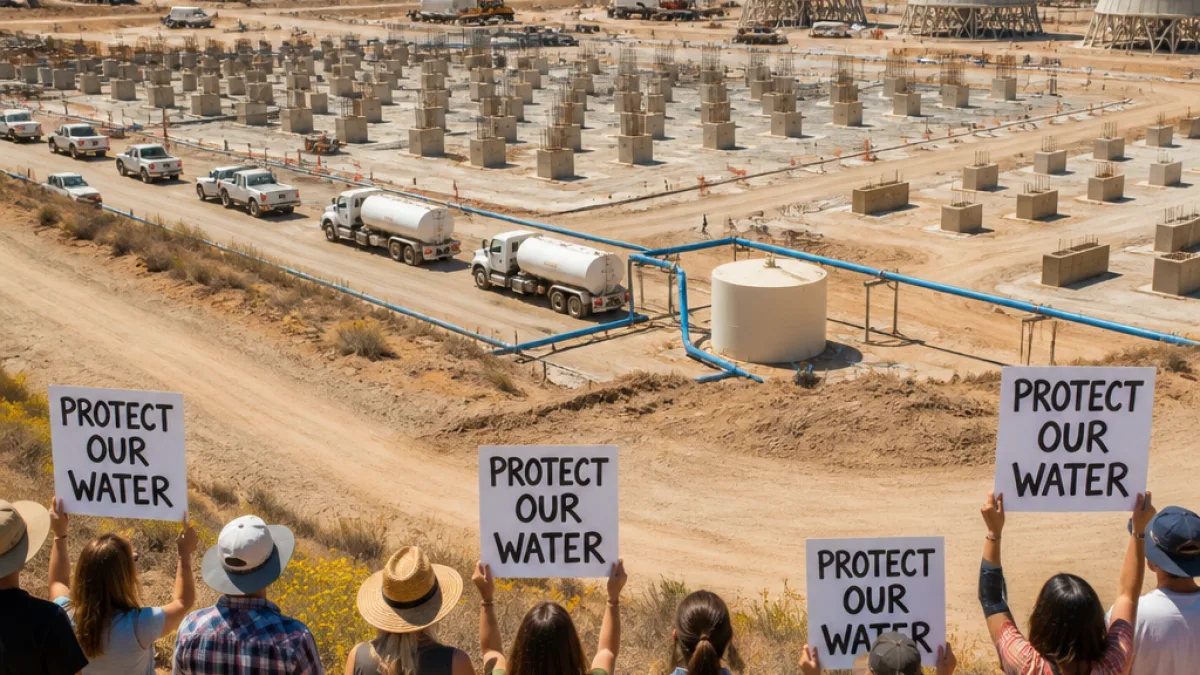
U.S. Rep. Melanie Stansbury on Wednesday pressed state authorities to open an immediate investigation into the water use tied to Project Jupiter, the proposed 1,400-acre data center campus near Santa Teresa. Her demand adds to mounting scrutiny over how the massive project is sourcing water in the drought-stricken Lower Rio Grande Basin.
Lawmakers and neighbors want answers
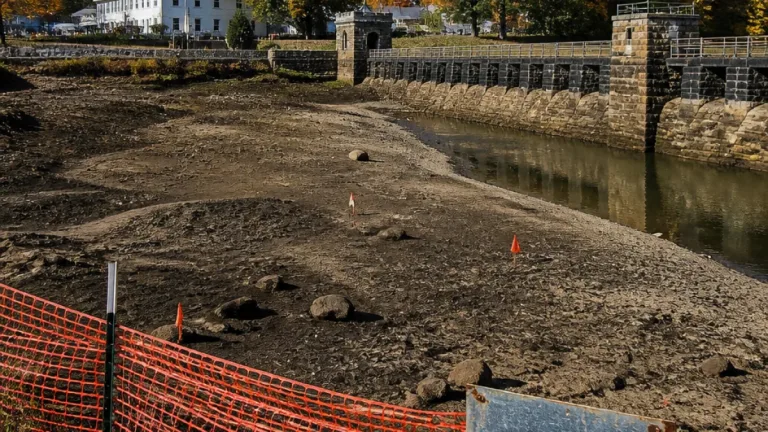
Stansbury said questions remain about how much water has been and will be needed — not only during construction but over the long term — and whether that use could affect other water rights holders in a region already grappling with scarcity.
"We are demanding answers about this project, about its water use, about its impacts,"
The project’s developer has said its data centers would use closed-loop cooling and therefore would require only minimal water after initial fills. Critics, however, contend those projections deserve a formal, public review and that current construction withdrawals need clearer accounting.
How the water is being sourced
Construction water for Project Jupiter has been purchased from the holder of an existing water right identified by the Office of the State Engineer as LRG-3150-E. That water right authorizes up to 2,400 acre-feet annually for irrigation, municipal, industrial, commercial and recreational purposes and covers roughly 32,000 acres in the Santa Teresa area, including the Project Jupiter parcel.
State records show the right had been used historically for a sod farm and other construction projects. Over about 20 years, annual reported use under that right has ranged from 130 to 2,500 acre-feet. Since November 2025, the state reported that approximately 1,445 acre-feet have been diverted under the right, a figure that remains below the stated annual limit.
| Item | Figure |
|---|---|
| Project size | 1,400 acres |
| Water right | LRG-3150-E |
| Authorized annual volume | 2,400 acre-feet |
| Recent diversions (since Nov. 2025) | ~1,445 acre-feet |
Dispute centers on replacement well and protests
The current controversy focuses in part on an emergency replacement well that was authorized after the existing well experienced a casing and screen failure. After notice of the replacement-well application was published, more than 30 protests were filed, according to state records.
Those protests reflect concerns from local water users and stakeholders worried about how drilling a replacement well and diverting water under the LRG-3150-E right might affect their supplies, particularly during prolonged drought and amid competing demands for municipal, agricultural and industrial uses.
Public opposition and political stakes
The scrutiny comes as public sentiment appears to lean against large-scale data center development in the state. A recent Albuquerque Journal poll by Research & Polling Inc. found that 65% of respondents oppose large-scale data center projects in New Mexico, while 20% support them; the remainder were undecided or contingent on circumstances.
Stansbury’s call for a state-level probe adds federal political weight to local objections and could prompt more formal review of the water right’s recent uses, the emergency replacement-well authorization and the developer’s long-term water modeling.
What happens next
The state Office of the State Engineer, which oversees water-right administration, would be the likely agency to examine compliance with permitting and diversion limits. Any formal investigation could include review of historical use, documentation of the replacement-well emergency, and assessment of potential impacts to other rights holders in the Lower Rio Grande Basin.
- Project Jupiter asserts it will rely on closed-loop cooling and need minimal ongoing water after initial fills.
- State records show about 1,445 acre-feet diverted under LRG-3150-E since November 2025.
- Over 30 protests were filed after publication of the replacement-well notice.
As state and federal officials weigh the next steps, residents and water users in and around Santa Teresa will be watching how regulators reconcile infrastructure development with scarce regional water resources.
Diego Salazar, WE NEWS.