Federal proposal prompts local debates over forest health, recreation and wildfire risk
HELENA — A federal proposal to rescind the 2001 Roadless Rule has prompted a flurry of concern and activism in Montana, where more than 6 million acres of inventoried roadless National Forest lands could be affected.
The U.S. Department of Agriculture, which oversees the Forest Service, announced last month that it plans to remove the rule that has limited road construction and timber harvesting in designated inventoried roadless areas for a quarter-century. The agency says the rule is a “one-size-fits-all” approach that prevents local managers from using treatments to reduce forest fuels and manage insect and disease outbreaks.
“For too long, outdated restrictions have kept tens of millions of forested acres off-limits to the very treatments that improve forest health and reduce wildfire risk to our communities.”
The statement came from U.S. Agriculture Secretary Brooke Rollins, who argued that lifting the rule would allow more local flexibility to treat overgrown stands and address insect outbreaks and disease.
Montana contains more than a third of its National Forest lands classified as inventoried roadless areas. Those lands vary in size and character: some are small parcels adjacent to existing wilderness near reservoirs and lakes, while others are large, relatively remote tracts such as portions of the Crazy Mountains.
Local action and concern
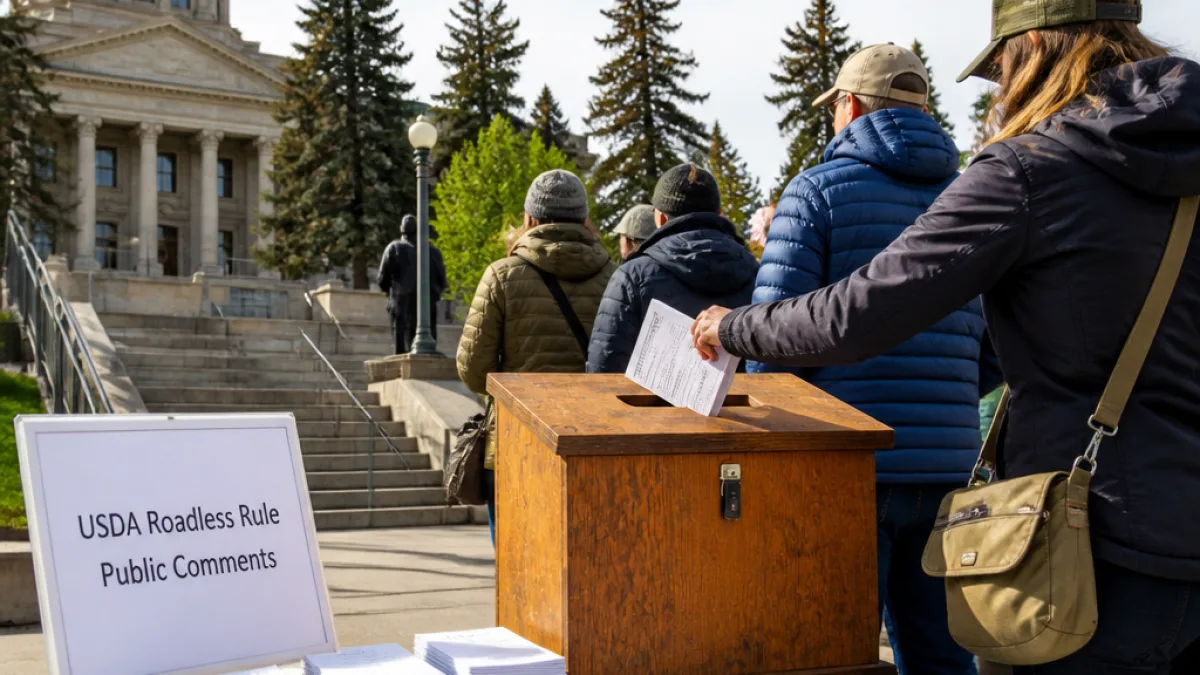
Conservation groups and local residents in Bozeman and Helena have staged events this week encouraging opposition to the repeal. The Greater Yellowstone Coalition held postcard-writing drives to deliver public comments opposing the change to federal officials.
Robert Ray, who attended the Helena event with his wife Fran, said he felt frustrated but compelled to act. "I feel very much like they're not listening, but I don't know what else I can do that makes a difference," he said.
Organizers said the postcards are intended to add local voices to the administrative record before the close of the public comment period, which the USDA set to allow a limited window for responses.
What’s at stake in Montana
Supporters of rescinding the Roadless Rule contend that allowing more active management — including limited roadbuilding to access stands for thinning and controlled burns — would reduce hazardous fuels and the risk of high-severity wildfire near communities. Opponents counter that new roads and increased logging could fragment habitat, harm water quality and increase the chance of human-caused ignitions.
Those competing views play out differently across Montana’s roadless lands. In some places, such as smaller parcels abutting designated Wilderness or existing trails, opponents worry about impacts to backcountry recreation and habitat connectivity. In larger, more accessible landscapes, proponents say treatments may be needed to restore forest resilience.
- Scale: Montana has more than 6 million acres of inventoried roadless areas.
- Concerns: Wildlife habitat, clean water, wildfire risk and recreational access.
- Agency argument: Greater local authority to treat forests for health and wildfire mitigation.
| Metric | Montana |
|---|---|
| Inventoried roadless acres | 6,000,000+ |
| Share of state National Forest land | ~1/3 |
How Montanans can weigh in
The USDA has opened a public comment period that will determine whether the agency moves forward with the repeal. Federal officials have argued the rule prevents necessary treatments in overgrown forests. Conservation organizations, outdoor-recreation businesses and many residents have urged people to submit comments opposing the change.
Local organizers in Helena and Bozeman have focused on collecting written comments and postcards to ensure voices from communities that live near and use these lands are included in the administrative record. Those who oppose the repeal say they are concerned not only about immediate impacts but about long-term management precedents.
What’s next
The comment period provides the public a limited window to register positions with the USDA. After the comment period closes, federal officials will review the feedback before issuing any final decision or moving to implement changes. Regardless of the ultimate outcome, the issue is likely to remain contentious as state and local stakeholders press for influence in how public lands are managed.
For Montanans, the debate over the Roadless Rule is both practical and symbolic: it touches daily life — from access to backcountry trails to the safety of communities at the wildland-urban interface — and reflects broader tensions over how to balance conservation and active forest management across the West.
Travis Wheeler, State Correspondent