
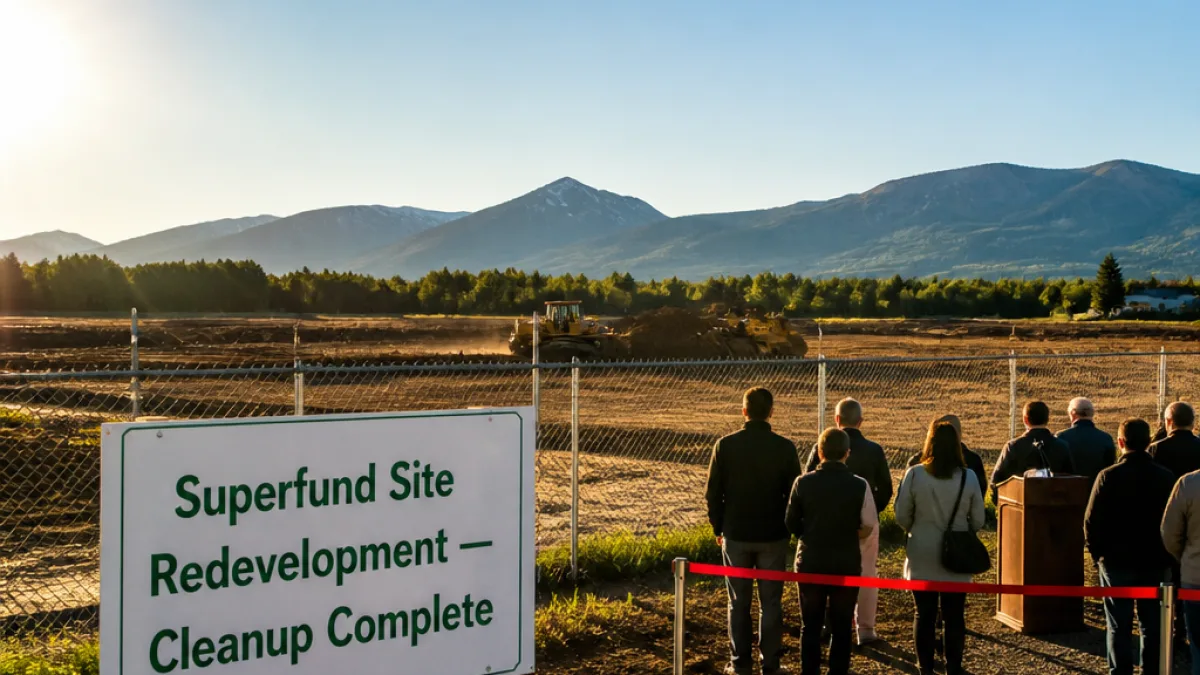
COLUMBIA FALLS — A major residential project is moving forward on the long-vacant Columbia Falls Aluminum Company property, marking the first substantial reuse of the federal Superfund site since the plant closed in 2009.
The planned development, a 78-acre subdivision purchased by developer Mick Ruis, is expected to include more than 400 housing units and later phases that could add commercial space. Officials from state and federal agencies joined local leaders Thursday to tour the property and describe the project as a milestone in cleaning up the blighted industrial parcel.
Officials highlight cleanup milestone
At a press event, Environmental Protection Agency Administrator Lee Zeldin and Gov. Greg Gianforte praised the work completed at the site and the transition to redevelopment. Zeldin characterized the moment as part of the Superfund process reaching one of its primary goals: returning contaminated land to productive use.
“One of the most exciting steps of the Superfund process is being able to delist a project at the end of it, to be able to get an important vision not just started, but completed,” Zeldin said.
Officials pointed to a recent agreement resolving responsibilities for remediation. In 2016, the site received formal Superfund designation after decades of industrial operations. According to the announcement, this year a $57 million cleanup agreement was reached between the former site owner — Columbia Falls Aluminum Company, now held by Swiss commodities firm Glencore Ltd. — and the federal government.
From industry hub to redevelopment
The CFAC plant began operating in the 1950s, processing imported alumina into aluminum and supporting thousands of local jobs during its productive years. The smelting process also produced hazardous byproducts that ultimately prompted the EPA’s Superfund designation.
Environmental records cited in local reporting list contaminants associated with the plant’s operations, including cyanide, fluoride and arsenic, among others. Those pollutants were deposited in on-site repositories during the plant’s decades of operation.
Local concerns persist despite approvals
Even with federal and state sign-offs and city approval for the subdivision, the development has drawn criticism from some residents and officials. Concerns raised in public meetings and local reporting include:
- Potential impacts to a wildlife corridor adjoining the site.
- Increased demand on city services and infrastructure.
- Lingering worries about long-term health and safety given the property’s Superfund history.
City officials have approved the project, and both the EPA and the Montana Department of Environmental Quality have indicated portions of the site are cleared for redevelopment, according to local reporting referenced at the tour. Supporters say redevelopment will generate housing supply and economic activity after years of underuse.
What the agreement covers
The cleanup agreement outlines responsibilities for completing remediation measures required under Superfund protocols. City and federal officials framed the deal as a necessary step to make the land safe for housing and commercial use, and to remove public blight created by the derelict plant.
| Item | Detail |
|---|---|
| Site | Former Columbia Falls Aluminum Company (CFAC) |
| Property size | 78 acres |
| Planned housing | More than 400 units |
| Cleanup agreement | $57 million (reached this year) |
| Superfund designation | 2016 |
Developers and officials say the remediation and redevelopment will be staged to meet regulatory requirements. The property’s reuse would mark the first time the CFAC site has hosted new construction since the plant’s closure in 2009.
Balancing growth and environmental safeguards
For residents of the Flathead Valley, the project represents a complex choice between addressing a long-standing blight and the desire to protect environmental and community values. Supporters emphasize economic revitalization and an expanded housing supply, while critics urge continued scrutiny of environmental controls and wildlife impacts.
As construction progresses, community members and officials will watch both the physical cleanup and the developer’s plans for infrastructure, wildlife mitigation and public services. The outcome in Columbia Falls will be closely observed as an example of how Superfund properties can transition to new uses when remediation and redevelopment intersect.
State and federal officials say more work lies ahead before the site could be formally delisted from the Superfund program, and they framed the current activity as part of that multi-step process.


















