BOZEMAN, Mont. — Montana Fish, Wildlife and Parks has moved forward with plans for a new advisory panel to study mountain lion biology, gather public input and help inform future recommendations on mountain lion population management across the state.
Panel aims to bring diverse viewpoints into quota discussions
The agency closed applications for the panel on Aug. 28, saying it sought members who represent a wide range of perspectives on mountain lion policy. The group is intended to help the department and the Fish and Wildlife Commission develop a clearer sense of public values and scientific context when considering harvest quotas and other management actions.
Brian Wakeling, Montana FWP’s game management bureau chief, said the panel’s role is advisory: it will study biological information, hear public comment and produce recommendations that the department can forward to the Fish and Wildlife Commission.
“What we're hoping that we can get them to help us with is kind of a consensus from that cross section that will help us inform our quota recommendations moving into the future,”
Wakeling emphasized that the commission retains final authority. The commission “is the actual decision-making body,” he said, and it is not bound to adopt the panel’s recommendations or the department’s guidance, but will consider them along with other information.
How the panel will work and the data it will use
FWP officials said the panel will study mountain lion biology and consider public comment on population sizes and management strategies. The department also described the technical tools it uses to monitor lions, including a statewide integrative population model.
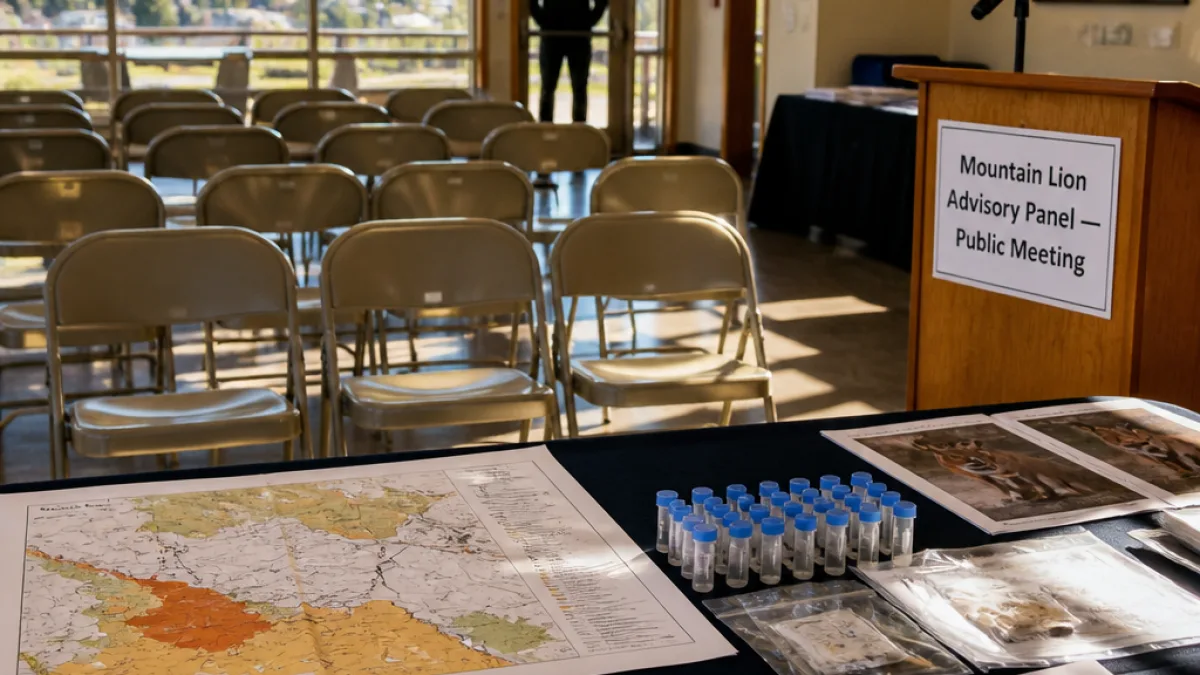
The integrative population model is used to track trends over time — whether populations are increasing, decreasing or stable — and to provide context for management decisions. Wakeling described one specific method used to assess population dynamics: genetic sampling collected via biopsy darts.
“Put mountain lions up a tree, allow us to use a biopsy dart that lets us get a genetic sample from the animal, and what we're able to do is look at that genetic sample and compare that basically across two years, and look at the frequency with which we encounter the same animal,”
Those genetic data help wildlife managers estimate encounter rates, individual survival and other metrics that inform population models. FWP said those models, combined with field data and public input, will feed into recommendations the panel produces.
What the panel could mean for Montanans
Mountain lion management touches a variety of constituents across Montana, from hunters and trappers to livestock producers and recreationists who may encounter large carnivores. By convening a panel that includes a cross section of views, FWP aims to find common ground and clarify trade-offs inherent in any management system.
For residents and stakeholders, key practical outcomes could include:
- Recommendations on harvest quotas and season frameworks
- Guidance on monitoring priorities and field sampling methods
- Suggestions for public outreach and education efforts about coexistence
FWP will accept the panel’s findings and recommendations as one input among many. The agency reiterated that commission members will weigh the panel’s work along with department analyses, public testimony and other scientific evidence before making policy decisions.
Next steps and timeline
Officials did not provide specific dates for when the panel will begin meeting or when its recommendations might reach the Fish and Wildlife Commission. Selection of members is underway following the application deadline.
| Step | Role |
|---|---|
| Panel study and public comments | Develop recommendations based on biology and stakeholder input |
| Department review | Assess panel findings and forward formal recommendations |
| Fish and Wildlife Commission | Final decision-making authority on quotas and policy |
The department has previously used similar advisory processes for other species and management issues, and officials said this panel is intended to improve transparency and public involvement in mountain lion decisions.
As the panel is formed and begins work, I will monitor meetings, public comment opportunities and any recommendations that emerge, and report developments to readers across Montana.