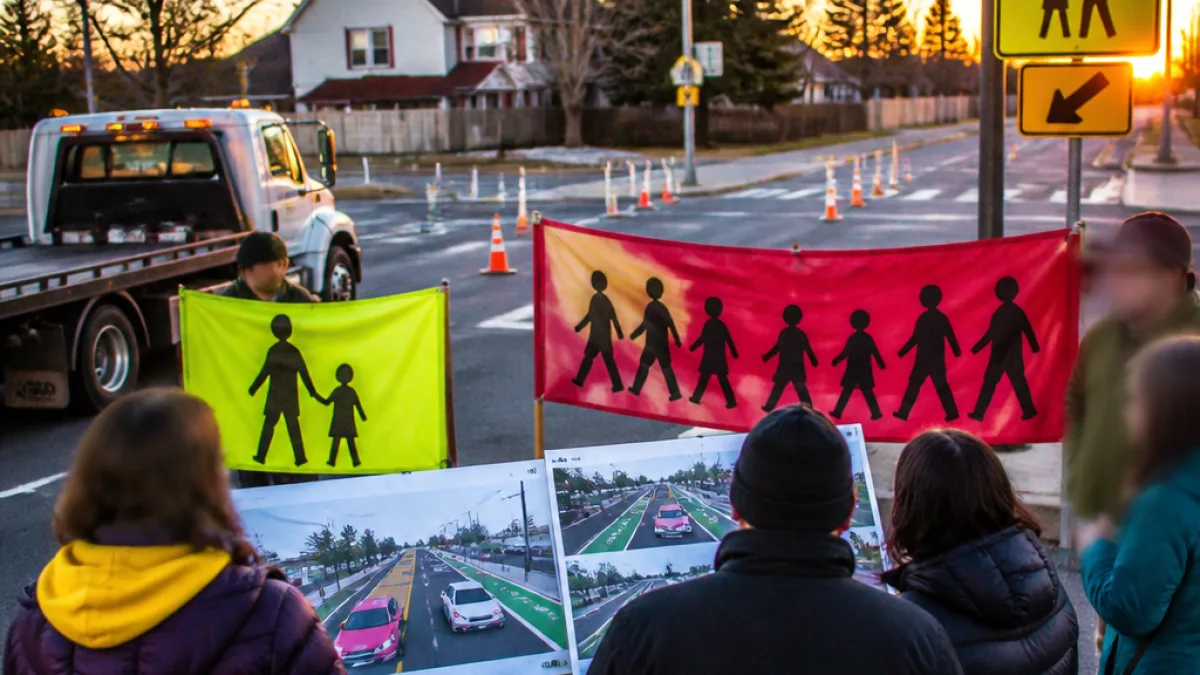
Calls for engineering changes follow fatal crash
BILLINGS — The September death of 13-year-old Chase Lantz at the intersection of Rehberg Lane and Grand Avenue has intensified local calls to redesign streets, adjust school zones and improve pedestrian crossings to prevent future tragedies.
Community groups, neighborhood leaders and at least one local business have stepped forward with measures aimed at making walking and biking safer for children. Those efforts arrive against a statewide backdrop that shows pedestrian safety as an ongoing concern: according to Montana’s Comprehensive Highway Safety Plan, 161 pedestrians were killed and 302 seriously injured in crashes from 2014 through 2023.
Local response: visibility, advocacy and broader fixes
J and H Motors, a Billings towing company, began handing out high-visibility vests and backpacks after Lantz’s death to help children be more visible when walking or biking to school. “Kind of like us. We want to go home and we want everyone’s kids to go home, too,” said Jake Dewitt of J and H Motors.
While those donations aim to reduce immediate risk through better visibility, neighborhood advocates say visibility alone is insufficient without changes to road design and speed management.
“Simply asking for more traffic enforcement isn’t going to happen because the police only have so many people,” said Leslie Cooke, chair of the Rimrock Neighborhoods Task Force. “And asking people to drive safer is very temporary, very transient transit, and it’s not going to help. We also believe that there are some streets that need some redesign.”
Cooke noted that injuries to children have occurred near Rimrock Road and cited a family fatality from a few years ago as part of the reason for pushing for engineering solutions rather than relying primarily on enforcement or driver behavior changes.
- Immediate community measures: high-visibility gear distribution, awareness campaigns.
- Advocated engineering fixes: lower speed limits, redesigned intersections, improved crosswalks and enhanced school-zone protections.
- Broader context: other fatal pedestrian crashes in Montana this year, including a 9-year-old in Bozeman (June) and a pedestrian killed while crossing in Missoula (February).
Statewide numbers and local stakes
Montana’s statewide numbers underline the stakes for Billings. The decade-long tally in the safety plan demonstrates that pedestrian fatalities and serious injuries are not isolated events. Local officials and residents say that incidents such as Lantz’s death make clear the need for coordinated action among traffic engineers, city leaders and law enforcement.
| Measure | Figure |
|---|---|
| Pedestrian deaths (2014–2023) | 161 |
| Pedestrians seriously injured (2014–2023) | 302 |
Residents and neighborhood groups are urging the city to examine specific corridors and intersections for redesign, to consider lowering speed limits in residential and school areas, and to expand marked crossings and traffic-calming infrastructure.
What change might look like in Billings
Advocates say a mix of short-term and long-term actions will be necessary. Short-term efforts include increased visibility for students, targeted education campaigns and focused enforcement in school zones. Long-term strategies emphasized by neighborhood leaders include:
- Engineering changes to intersections and road cross-sections to reduce vehicle speeds and shorten pedestrian crossing distances.
- Review and adjustment of speed limits around schools and residential areas.
- Installation of additional marked crosswalks, pedestrian signals and physical traffic-calming features.
City traffic planners and officials have not yet announced a comprehensive schedule of changes tied specifically to Lantz’s death. But the mix of community-organized efforts and calls for structural transportation changes reflect a shift in focus from individual behavior to systemic prevention.
As the conversation continues, families, neighborhood organizations and local businesses say they will press for concrete steps that make it safer for children to walk and bike to school and for all pedestrians to travel Billings streets without fear of deadly crashes.