
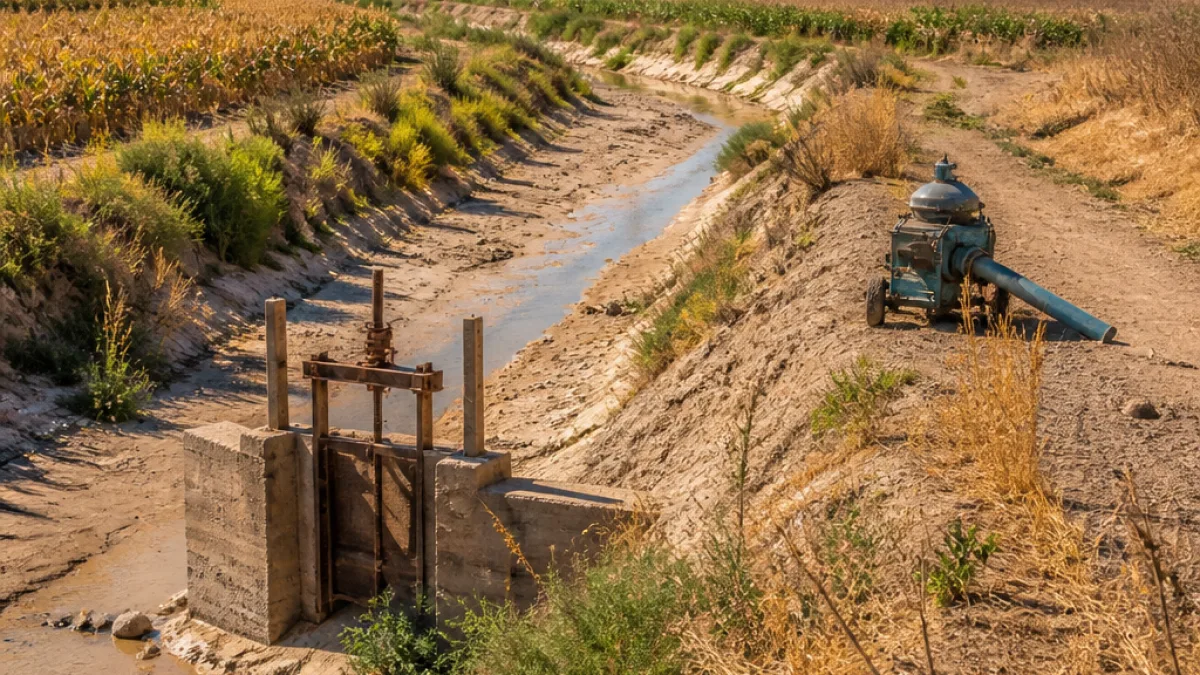
The Middle Rio Grande is facing its most severe water shortage in a century, officials said, as low winter snowpack, prolonged extreme heat and limited monsoon precipitation have combined to dry river reaches and strain farms, communities and ecosystems across central New Mexico.
What’s happening in the valley
The Middle Rio Grande Conservancy District, which manages irrigation for parts of Sandoval, Bernalillo, Valencia and Socorro counties, has stopped water deliveries to most nontribal farmers because supplies have dropped to critically low levels. The district said the six Middle Rio Grande pueblos — which hold senior "prior and paramount" water rights — continue to receive water stored for those lands.
Farmers in the affected counties have reported extended gaps between irrigations; some growers have gone more than 100 days without water. The interruptions have immediate consequences for row crops, pasture, and the local food economy that depends on reliable irrigation.
Officials call for long-term policy changes
Jason Kasuga, CEO and chief engineer of the conservancy district, framed the current emergency as evidence that New Mexico must adapt its water policies to a more variable climate. He urged improvements in the state’s ability to store water during wetter years and to create more flexible management practices for when water is scarce.
"I do think years like this show us that there are flexible things that we need to be doing within policy, and the way that we move water and the decisions that we need to make to get back to storing water," Kasuga said.
Kasuga also noted that a strong El Niño pattern could increase the chance of winter snowfall, potentially helping replenish supplies. However, he cautioned that a single wet season would not solve long-term water challenges: "Drought is a reality," Kasuga said. "We need to put those flexible policies and processes in place for when the water arrives or when the water doesn’t arrive."
Local impact and immediate effects
The suspension of deliveries to nontribal farms has put many producers in a precarious position. Without irrigation, yields for crops that depend on regular watering are at risk; pasture and forage production for livestock are threatened; and the local agricultural economy faces higher costs and uncertainty.
- Who is still receiving water: The six Middle Rio Grande pueblos, under senior water rights, continue to get stored water.
- Who is impacted: Most nontribal farmers in Sandoval, Bernalillo, Valencia and Socorro counties.
- Duration of shortages: Some irrigators have gone more than 100 days without water.
Data snapshot
| Metric | Reported condition |
|---|---|
| Historical comparison | Worst water year in a century (agency statement) |
| Primary causes | Low snowpack, extreme heat, limited monsoon rainfall |
| Geographic scope | Sandoval, Bernalillo, Valencia, Socorro counties; Middle Rio Grande reaches |
What officials say about solutions
District leadership emphasized the need for policy reforms that increase storage and flexibility. The comments reflect growing recognition among managers and elected officials that adaptation — including investments in infrastructure, water banking and updated allocation rules — will be necessary as the region experiences more frequent climate extremes.
While an El Niño could improve the odds of a snowy winter, district officials stressed that one wetter season will not erase systemic vulnerabilities created by long-term drought and changing hydrology. The conservancy district's actions this year — including halting deliveries to most nontribal irrigators — are intended to protect senior rights and stored supplies for federally recognized pueblos.
Looking ahead
For farmers and communities along the Middle Rio Grande, the immediate focus will be managing scarce water, assessing crop and pasture losses, and adapting operations to uncertain supplies. For policymakers and water managers, the crisis serves as a prompt to accelerate planning and investments aimed at ensuring the valley can capture and conserve water when it is available and equitably allocate scarce supplies when it is not.
As the region moves into fall and a potentially variable winter season, officials will be watching snowpack and runoff closely while continuing to coordinate with tribal leaders, local governments and irrigators about operations and resources.
Diego Salazar, State Correspondent

















