ALBUQUERQUE — Archbishop John Wester warned Saturday that New Mexico faces not only a meteorological drought but a moral one in how communities steward water, urging residents and leaders to protect the Rio Grande and local water systems.
Wester gathered religious and community leaders at Tingley Beach to release a letter titled “Uniting for Our Sacred Waters.” The statement frames water as a communal gift threatened by climate-driven scarcity, rising wildfire risk and unequal access to safe drinking water.
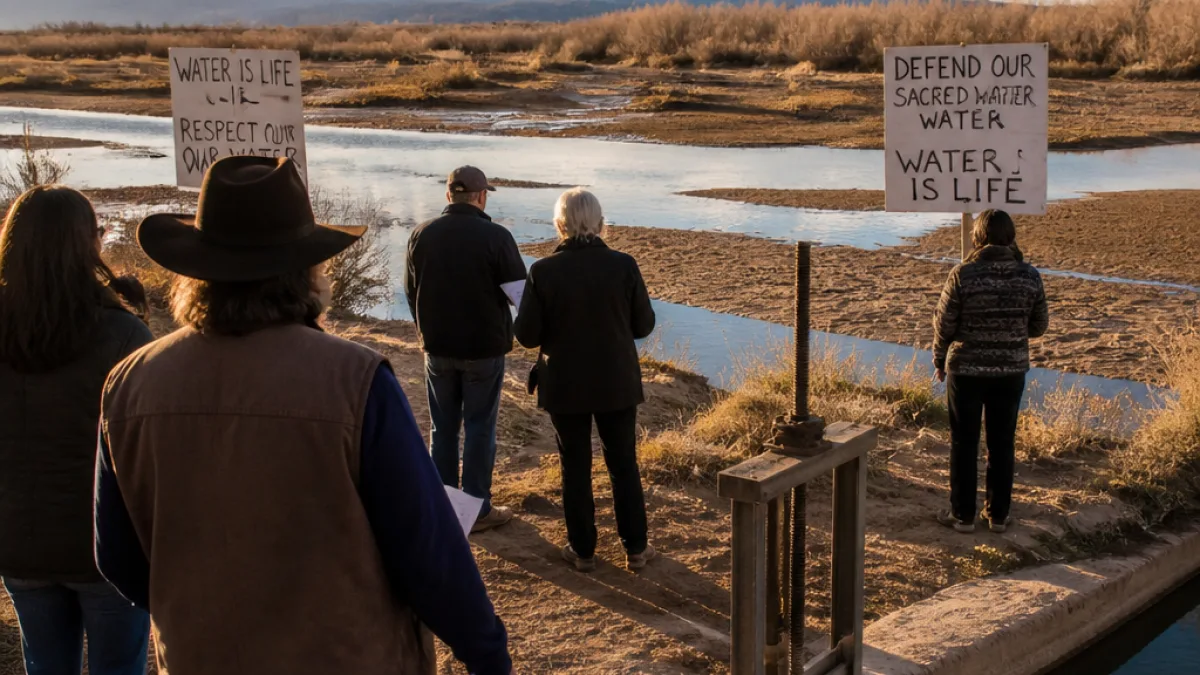
“Here in Albuquerque the Rio Grande looks more like the Rio Nada. There is no doubt we are in a drought here in the Southwest, but even worse we are experiencing a drought in how we care for the precious God given gift of water,” said Wester.
Religious voice joins environmental and community leaders
Local environmental advocates and representatives of the acequia system joined Wester at the event. The gathering highlighted the historical role of acequias—community-operated irrigation ditches—in conserving water and supporting local agriculture, and it emphasized the need to center equity in water policy.
Paula Garcia, executive director of the New Mexico Acequia Association, said at the event that communities should insist on fairness in water decisions so that access is not limited to wealthier areas. “We can speak out for equity and justice in our water policy so that all communities have access to water not just those with more economic wealth,” Garcia said. She also urged protection of water for "restorative and regenerative agriculture" to sustain local food systems.
What organizers say the letter aims to do
The “Uniting for Our Sacred Waters” letter seeks to raise awareness and inspire practical steps among congregations, civic groups and policymakers. Organizers framed the document as a moral and civic appeal rather than a legislative blueprint, asking communities to adopt conservation-minded practices and to advocate for policies that protect water resources and support equitable access.
Speakers framed the issue on multiple levels: the immediate visual cue of low river flows in Albuquerque, broader regional patterns of increased wildfire and reduced snowpack that feed rivers, and persistent infrastructure and access challenges that leave some communities without consistent potable water.
Practical implications for New Mexicans
The archbishop and allied leaders urged a mix of community action and policy focus. While the letter does not prescribe specific regulations, speakers encouraged actions such as supporting acequia-led stewardship, prioritizing water equity in local planning, and increasing public awareness of conservation measures.
- Advocate for equitable distribution of water and infrastructure upgrades in underserved areas.
- Support acequia systems and local agriculture that conserve and reuse water.
- Adopt household water-saving measures and participate in community conservation programs.
Context: drought, wildfire and water access concerns
Speakers connected the call to action with wider environmental trends affecting the Southwest, including more frequent and severe droughts and an elevated wildfire risk. They also pointed to longstanding disparities in access to safe drinking water across New Mexico—issues that community leaders say require both short-term responses and long-term investments.
Event organizers described the letter as an effort to mobilize faith communities and civic organizations to press for changes in local and state policy while also encouraging ordinary residents to rethink water as a shared resource.
| Issue | Concerns Highlighted |
|---|---|
| Low river flows | Visible reductions in the Rio Grande and impacts on river ecosystems |
| Wildfire | Increased risk with drier conditions affecting watersheds |
| Safe drinking water | Unequal access across communities |
| Agriculture | Need to protect water for restorative and local food systems |
Religious leaders’ involvement underscores a trend in which faith organizations play active roles in environmental and social issues. By framing water as a sacred trust, the archbishop and supporting advocates hope to broaden the constituency calling for conservation, infrastructure investment and policies that prioritize vulnerable communities.
Organizers said the letter is intended as the start of a broader conversation. They encouraged residents to attend local meetings, stay informed about water-management decisions and support community groups that work directly on irrigation, watershed restoration and access to potable water.
The event at Tingley Beach focused attention on the Rio Grande’s condition in Albuquerque and on how cultural, agricultural and faith traditions might inform a communal response to a changing climate and ongoing water stress.
Reporting from the gathering shows religious and community leaders pushing for immediate civic engagement and longer-term policy attention to protect New Mexico’s rivers, farms and communities from the compounding effects of drought and inequitable water access.