
Mayor urges shift from scarcity to abundance in policy approach
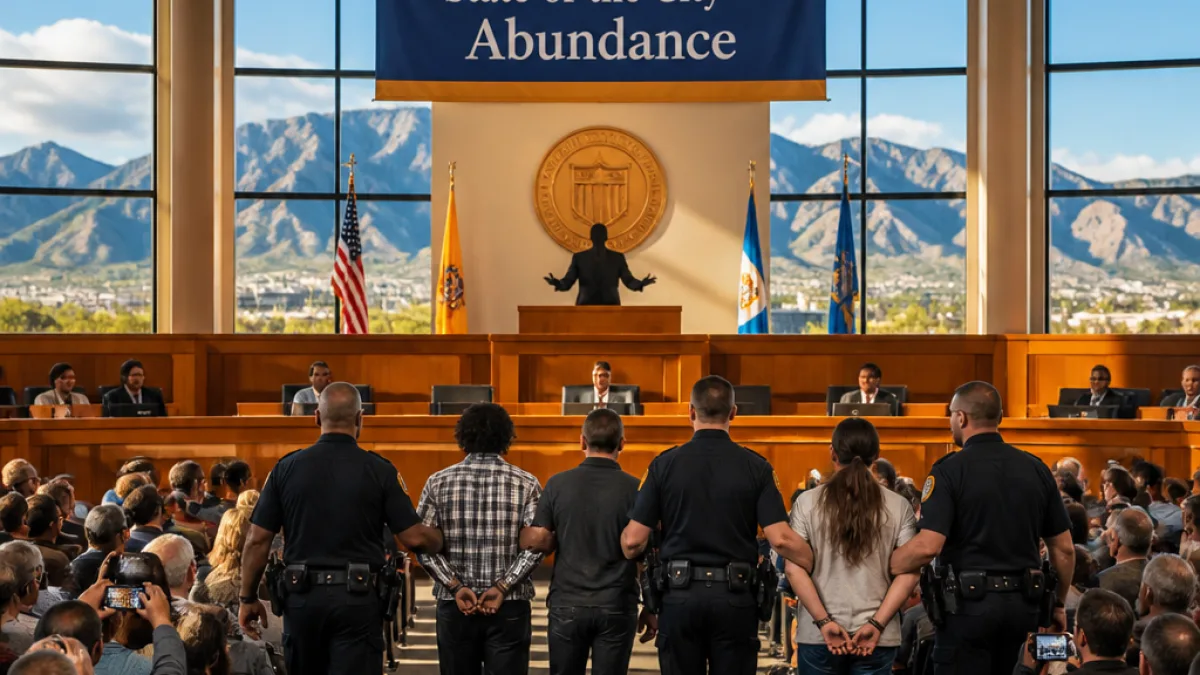
ALBUQUERQUE — In his ninth State of the City address, Mayor Tim Keller asked residents and city officials to adopt what he called an "abundance" agenda to address persistent local challenges including housing affordability, public safety and bureaucratic delays that slow development. About 350 people attended the event, which began with a brief disruption; a mayoral spokesperson said four people were escorted out after interrupting the speech.
Keller framed his remarks as a call to change the city’s mindset when it comes to delivering services and making public land and permitting processes work for residents and businesses. He emphasized using the city’s institutional capacity to remove barriers residents face in daily life — from potholes and speed bumps to access to housing and food.
"During tough times, there is no place I would rather be than New Mexico, because we know how to survive, right? We can do this. This is possible, and I am committing right here with all of you today, the entire remainder of my third term to this issue,"
Keller described a suite of proposals intended to speed up approvals for business permits, make housing more affordable, and expand access to city-owned land for community uses. He said the city has begun rolling out new policies to let residents and groups use municipal land for little cost and suggested the possibility of long-term arrangements such as 99-year leases as an option for community development.
On public safety, the mayor said his goal is to restore a sense of everyday safety that makes routine life easier for Albuquerque residents. He framed the work as reducing the “friction” that complicates daily living in the city, naming public safety alongside housing and public space as central to the plan.
- Housing: Proposals to increase affordability through unspecified city actions and faster approval processes.
- Permitting: A pledge to speed up city permitting for businesses to reduce bureaucratic delay.
- Public land: Opening more city-owned property to community use with low-cost arrangements.
Keller said delivering on these priorities will require municipal government to be able to handle routine infrastructure and service needs — "put your speed bump in or fix whatever’s happening outside your house" — as a baseline for larger reforms. He characterized the shift as using civic muscle to get projects done rather than letting them stall in process.
The mayor also referenced Albuquerque’s history and cultural touchstones in the address, mentioning Route 66 among topics he planned to cover. He acknowledged interruptions at the start of the speech, noting that occasional protest is to be expected while moving forward with the agenda.
| Metric | Value |
|---|---|
| Audience | ~350 |
| People removed after disruption | 4 |
| Address number | 9th State of the City |
| Mayor's term status | Remainder of his third term |
City officials will need to provide details about how the administration plans to implement many of the proposals Keller outlined — including timelines, funding sources and any changes to ordinances or staffing that would accelerate permitting and open city land. The mayor’s office promoted the policy direction as practical, focused on immediate improvements that reduce day-to-day burdens for residents and on longer-term changes to expand housing options.
For Albuquerque residents, the proposals suggest a mix of short-term fixes and potential long-term shifts: faster permitting could benefit small businesses and developers, while expanded access to city land and lease options might create new community spaces or housing opportunities. Restoring public safety in everyday contexts is pitched as a prerequisite to both economic and community life functioning more smoothly.
As city staff and elected leaders parse next steps, the public can expect follow-up proposals and more detailed plans from the mayor’s office to explain how the administration will translate the "abundance" concept into concrete projects across neighborhoods.

















