President Donald Trump’s social media posts suggesting that New Mexico be retitled “New America” touched off immediate criticism from state officials and a reminder of a simple legal fact: the president cannot unilaterally rename a state.
State leaders push back
New Mexico Democrats, including Gov. Michelle Lujan Grisham, and other statewide figures quickly dismissed the proposal as a distraction from pressing issues. The governor posted an image of the state labeled "New Mexico" on X and wrote, "New Mexico’s name isn’t up for debate — it’s been ours since before the United States existed."
"New Mexico’s name isn’t up for debate — it’s been ours since before the United States existed."
Former Interior Secretary Deb Haaland, the Democratic nominee for governor, told supporters at a campaign event that she would "always stand up for what makes New Mexico, New Mexico." Her Democratic rival rejected the idea as a political stunt tied to national partisan fights that have little bearing on daily life in the state.
Constitutional and historical limits
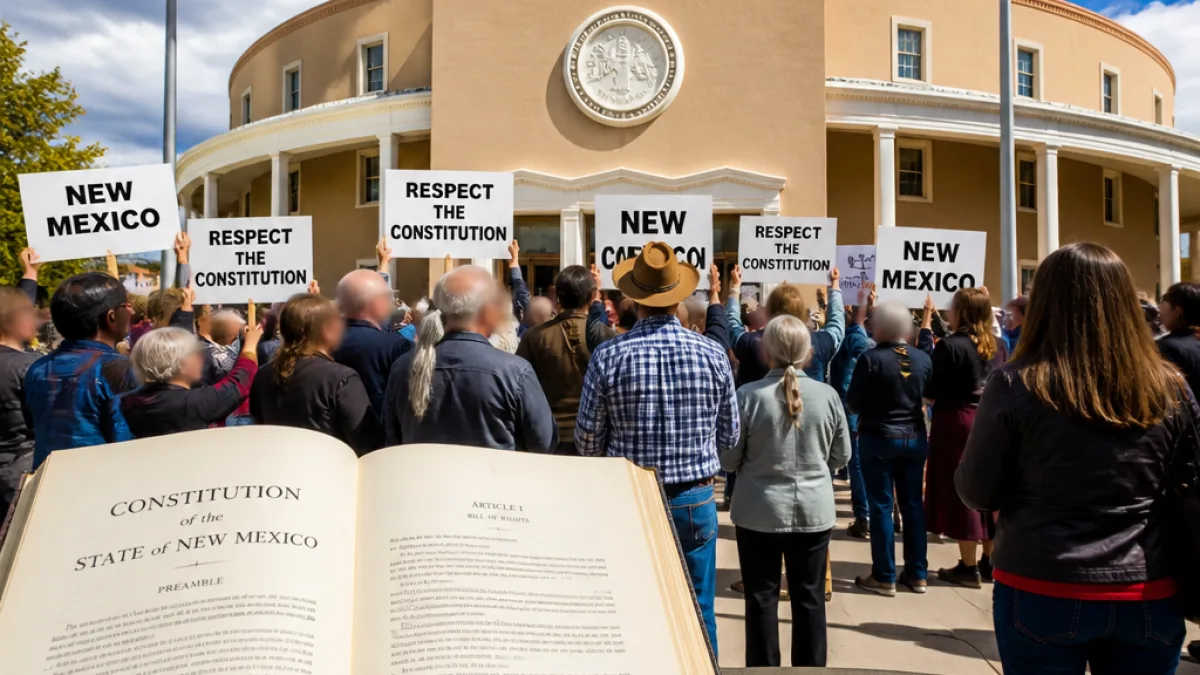
The state's constitution is explicit: Article I begins by naming the state "New Mexico." That provision means any change to the official name would have to follow the state's constitutional amendment procedures, not a presidential pronouncement, social media post, or AI-generated video.
Legal scholars and historians have also noted that the name "New Mexico" dates back centuries and predates the United States itself. The historical use of the name has been rooted in the region's long, complex history involving Indigenous nations, Spanish explorers and later American territorial governance.
Political context and reactions
The suggestion came amid an ongoing national political storm, as Republicans and Democrats traded barbs over policy and conduct at the federal level. The move prompted rebukes from across the political spectrum in New Mexico: both the state's Democratic leaders and at least one Republican candidate for governor publicly rejected the idea. Gregg Hull, Haaland’s GOP opponent, said in a statement that "New Mexico does not need a new name," citing the history of Native nations and Spanish explorers.
Locally, the posts also fed into conversations about political priorities. Gov. Lujan Grisham contrasted state achievements with what she framed as national distractions, writing that while the White House "wastes time coloring on maps, Nuevo México is busy doing the work," and highlighting state efforts on childcare, college access, health care and housing.
What changing a state name would require
Practical and legal steps to alter a state name are onerous. Under New Mexico’s system, the name is part of the constitutional text, so any amendment would need to pass the established state constitutional amendment process. That process typically involves legislative action followed by voter approval in a statewide election.
Experts emphasize that no federal executive action can override a state constitution’s text. The president’s role does not include renaming a sovereign state or altering its constitution unilaterally.
- Immediate response: State leaders across parties publicly rejected the proposal.
- Constitutional reality: New Mexico’s name is written into the state constitution.
- Historical context: The name predates the United States and is rooted in centuries of regional history.
Who said what
Below is a brief summary of public statements and reactions reported in the wake of the posts:
| Person | Position/Context | Reaction |
|---|---|---|
| Michelle Lujan Grisham | Governor of New Mexico | Called the name "not up for debate," contrasted state priorities with federal distractions |
| Deb Haaland | Former Interior Secretary, Democratic nominee for governor | Said she will "always stand up for what makes New Mexico, New Mexico" |
| Gregg Hull | GOP gubernatorial nominee | Rejected the suggestion; defended historical identity of the state |
Those responses reflect both political disagreement with the president’s messaging and a shared assertion that the state’s name and identity are matters for New Mexicans to decide.
Local implications
Beyond the headlines and online reactions, the episode underscores how national political theater can intersect with state identity and governance. For New Mexicans, the immediate consequence is largely rhetorical—public officials have quickly closed ranks to defend the existing name—but the episode also served as a civics reminder about how state constitutions operate and who holds authority over state-level matters.
The debate is likely to remain confined to media coverage and political rhetoric unless state lawmakers or voters choose to pursue a formal amendment process, an unlikely scenario given the swift bipartisan rebukes and the historical significance of the state's name.
Diego Salazar, State Correspondent at WE NEWS.