CASPER — The fate of a contentious gravel-mining proposal at the base of Casper Mountain remains unsettled after Wyoming’s highest court heard roughly an hour of arguments Wednesday in a dispute pitting the state Board of Land Commissioners against Casper-based Prism Logistics.
What was argued
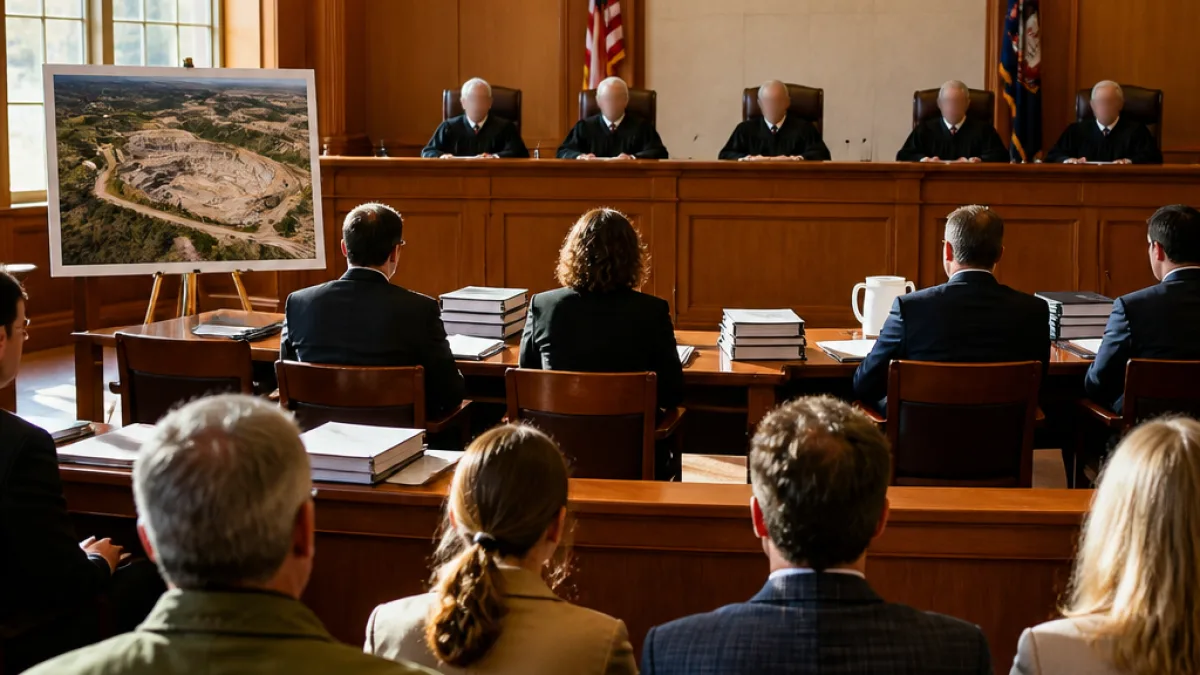
Attorneys for both the State Board of Land Commissioners and Prism Logistics defended their positions before the five justices, fielding extensive questioning on the board’s authority and its handling of lease renewals. The case stems from the board’s decision last year to deny renewal of several mining leases it had previously approved, a reversal that followed sharp public criticism.
The board, comprised of Gov. Mark Gordon, Superintendent of Public Instruction Megan Degenfelder, Secretary of State Chuck Gray, Treasurer Curt Meier and Auditor Kristi Racines, acted amid complaints that it had initially approved the leases without adequately notifying neighboring homeowners or local Natrona County officials.
"state trust lands"
The dispute brings into focus the role of lands granted to Wyoming at statehood — roughly 4.2 million acres originally, with about 3.4 million acres currently managed as state trust lands intended to benefit public schools. The Office of State Lands and Investments commonly leases these parcels for grazing, mining and energy development.
Legal issues and arguments
Prism sued after the board denied the lease renewals; a Natrona County District Court sided with Prism in January. The state immediately appealed to the Wyoming Supreme Court.
During oral arguments, state attorneys urged the justices to consider whether the land board had discretion to deny renewals even when a lessee meets at least one of the statutory qualifying conditions for an "exclusive right" to renew. Wyoming Assistant Attorney General Kate Gamble told the justices the board was operating within both constitutional and statutory authority when it declined to renew Prism’s leases.
Prism’s lawyers argued that the company had satisfied renewal criteria established by statute, and therefore the board’s refusal to renew was improper. The company has faced sustained public opposition in Natrona County as neighbors and local officials objected to the mine’s proposed location and the process by which the initial approvals occurred.
Local political and community fallout
The controversy has drawn criticism in two directions: residents and county officials lambasted the board for what they call a lack of transparency and inadequate local notice when leases were first approved, while opponents of the board’s reversal have accused the panel of bowing to public pressure and reneging on a lawful approval.
Those tensions underscore broader questions about how the state balances its constitutional duty to maximize revenue for public schools with local land-use concerns and environmental considerations.
- Key legal question: whether the land board must renew leases when statutory conditions for an exclusive right to renew are met.
- Public concern: neighbors and Natrona County officials say they were blindsided by the initial approvals.
- State interest: trusteeship over school lands and the board’s discretion in land-management decisions.
Who sits on the board
| Member | Position |
|---|---|
| Mark Gordon | Governor |
| Megan Degenfelder | Superintendent of Public Instruction |
| Chuck Gray | Secretary of State |
| Curt Meier | Treasurer |
| Kristi Racines | Auditor |
What’s next
The Supreme Court has yet to issue a ruling. Its decision will resolve whether the board acted within its authority in reversing prior approvals and refusing Prism’s lease renewals, or whether the district court was correct to order the leases restored. The outcome will shape how the state handles lease renewals and may set precedent for future disputes over state trust lands.
For local residents, the ruling could determine whether a long-disputed industrial operation proceeds near homes at the base of Casper Mountain. For state officials and school districts, the case may influence the management strategy for millions of acres of trust lands whose primary mandate is to generate revenue for public education.
As the court deliberates, stakeholders on all sides — homeowners, county government, the land board and industry — will be watching for a decision that clarifies the balance between statutory rights of lessees and the board’s duty to act as trustee for school lands.