Connecticut officials have taken a formal step toward restoring Old Killingly Pond after an emergency drawdown authorized last fall left the man-made waterbody largely drained and residents scrambling to preserve the site’s habitats and recreational uses.
State files draft order to repair dam, refill pond
The Connecticut Department of Energy and Environmental Protection has sent a draft consent order to Wright Investors' Service Holdings, the company that owns the century-old stone dam that impounds Old Killingly Pond on the Connecticut–Rhode Island border. The order would require the owner to repair the dam and restore the pond to its pre-drawdown levels, agency officials said.
State regulators said their decision was driven by concerns that the ongoing drawdown would harm protected species and sensitive habitats around the pond, including several species of damselflies. The agency did not say whether it is considering taking ownership of the dam.
Community stunned by rapid loss of water
Longtime residents described sudden and dramatic changes after the drawdown began in October. For decades the pond has been central to life in the neighborhood; locals praised its clear water, wildlife sightings and recreational uses.
"I like painting rocks, I never thought I'd have this many to chose from," said Susan Rosenstone Larrow, a former art teacher who had spent about 40 years living on Old Killingly Pond.
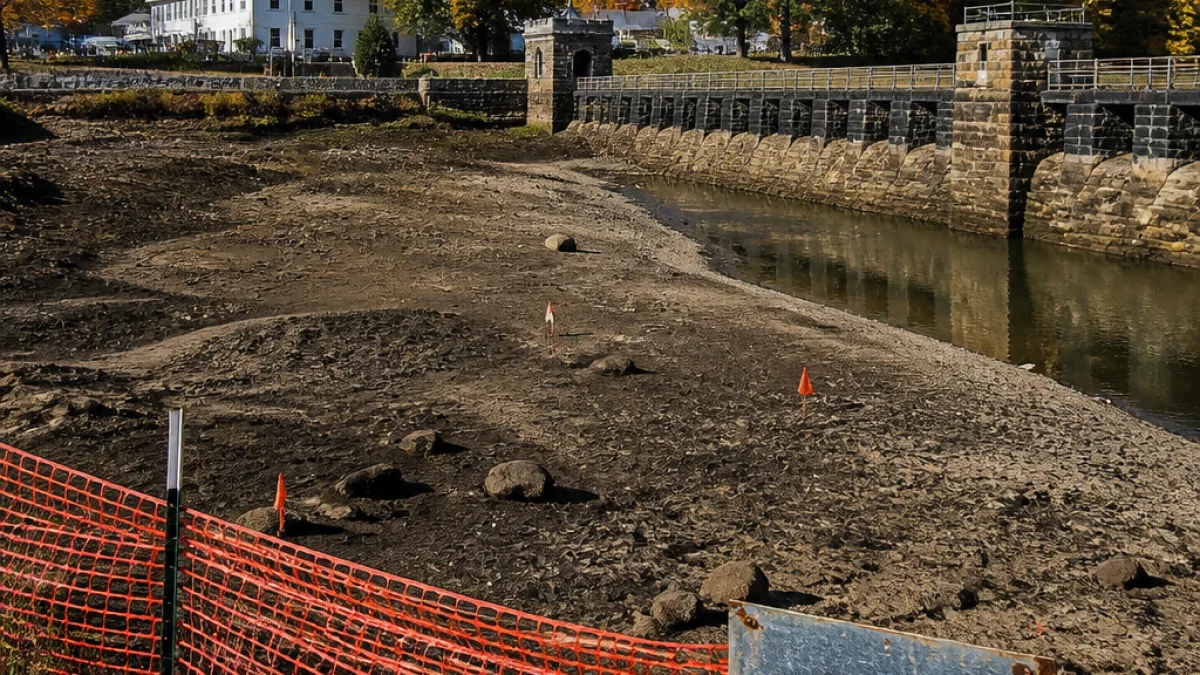
Within months, neighbors watched the pond recede to roughly a quarter of its former size, exposing acres of mud and rock. Boat docks that once served generations were left stranded over dry ground, and the diminished shoreline has alarmed people who rely on the pond for wildlife viewing and informal recreation.
What the draft consent order means
A consent order is a regulatory tool that typically outlines required repairs, timelines and monitoring to resolve violations without immediate litigation. By issuing a draft, the state has signaled both the seriousness of its concerns and a willingness to negotiate remedial steps with the dam owner.
- Agency action: Draft consent order issued to Wright Investors' Service Holdings.
- Required outcome: Repair of the dam and restoration of pond water to pre-drawdown levels.
- Environmental reason: Risk to habitats and protected species, including damselflies.
Officials said the agency’s determination was based on assessments that the drawdown would have an adverse impact on protected plants and animals. The state’s move places pressure on the dam owner to act quickly or face further enforcement.
Local push for long-term solutions
Residents and town officials have called for the state to assume ownership and long-term maintenance of the dam. Advocates argue that state ownership could provide more consistent monitoring and upkeep for aging infrastructure that affects public resources and community safety.
Wright Investors' Service Holdings, known in the reporting as WISH, had been authorized by state officials to conduct the emergency drawdown after safety concerns about the dam’s condition were raised. The state’s newly issued draft consent order seeks to translate those safety measures into a plan for repair and restoration.
Timeline
| Event | Date |
|---|---|
| Emergency drawdown begins | October (previous year) |
| Pond reduced to about a quarter of size | Within months after drawdown |
| Draft consent order issued by DEEP | Most recent action |
Residents say the visual and ecological impacts were immediate. Wildlife that once frequented the shoreline have been displaced, and some aquatic plants and insects that relied on the pond’s deeper waters now confront a changed environment.
What happens next
Under the typical consent-order process, the dam owner would comment on the draft, negotiate terms if necessary and then either sign the order and begin corrective work or contest the state’s findings. The state did not provide a timeline for completion of repairs or for when water levels might be fully restored.
The situation at Old Killingly Pond highlights recurring challenges across New England: many dams are aging, monitoring is uneven, and decisions to modify or remove impoundments can pit public safety and ecological protection against long-standing community uses.
For now, homeowners, anglers and artists who once relied on the pond are waiting to see whether the draft order leads to swift repairs and a return of the water that defined their neighborhood for generations.