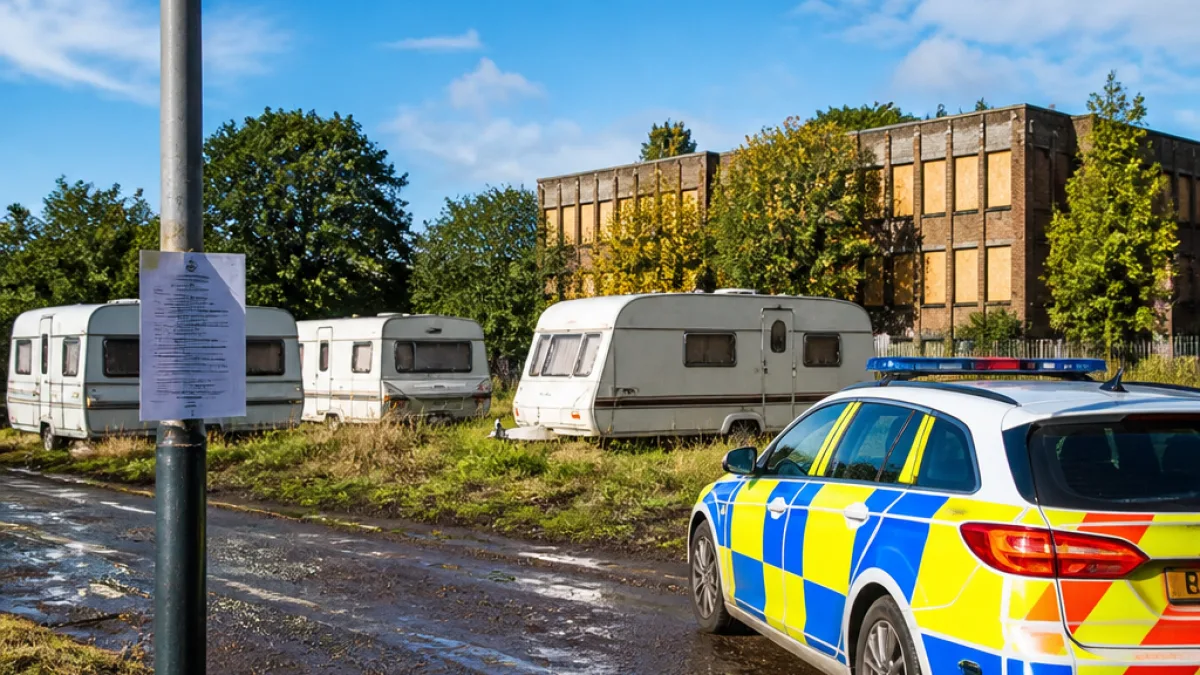
Where Randolph Avenue meets Shepard Road near the Mississippi River in St. Paul, a maze of dirt paths and tents has grown into a sizable homeless encampment. The site, bordered by active railroad tracks and an industrial corridor, sits atop soil that Minnesota environmental regulators say contains dangerous concentrations of heavy metals and other toxic materials.
State agency labels land a permanent priority for cleanup
The Minnesota Pollution Control Agency has posted “no trespassing” warnings around the area, citing contamination by lead, arsenic and mercury. The agency’s records identify the location as one of the state’s permanent environmental priority sites and note it is eligible for state-funded remediation as a state superfund location — a designation separate from the federal Superfund program.
MPCA testing and historical assessments show the land’s contamination traces back to industrial use. Between 1968 and 1989, the parcel served as an automobile salvage yard. The operator reportedly filled low-lying ground with mixed soil and debris — including pieces of asphalt, glass, wood and plastic — to raise elevation and reduce flooding risk. Subsequent investigations in the early 2010s uncovered hotspots of lead and other hazardous substances, with contaminants found alongside automobile fragments and battery casings as deep as 16 feet below grade.
Complicated ownership clouds responsibility and response
Responsibility for the land is unclear. An MPCA assessment completed in 2022 indicates portions of the area are city parkland and public right-of-way owned by the City of St. Paul, while adjacent sections belong to Xcel Energy and Union Pacific Railroad. The encampment itself has no clearly defined boundary, complicating efforts to determine which entity should lead remediation or rehousing actions.
| Parcel holder | Role per MPCA assessment |
|---|---|
| City of St. Paul | Parkland and public right-of-way; portion of the encampment sits on city property |
| Xcel Energy | Adjacent privately owned portion |
| Union Pacific Railroad | Adjacent privately owned portion |
Funding for cleanup has been requested and denied
MPCA officials have included remediation for the site in budget requests, arguing state action is needed to address persistent contamination. Lawmakers, however, have prioritized other projects; the requests for cleanup funds have been turned down in favor of what legislators deemed higher-priority efforts. Because the site carries a state superfund designation, it is eligible for state cleanup dollars, but practical progress depends on legislative allocation and interagency coordination.
People living there face heightened health risks
The situation has created a stark mismatch: land that was never intended for habitation is now a place where hundreds of people sleep, eat and live daily. Health experts warn that exposure to lead, arsenic and mercury can have serious consequences, particularly for children, pregnant people and those with chronic health conditions. Even without immediate statements from public-health officials in this report, the presence of heavy metals in soil is widely associated with long-term health risks.
- Contaminants identified by MPCA: lead, arsenic, mercury.
- Historical industrial use: automobile salvage yard operations, 1968–1989.
- Depth of some buried debris and contaminants: up to 16 feet.
Authorities balance rehousing, enforcement and remediation
St. Paul city officials and Ramsey County authorities face a complex set of decisions: how and when to move people to safer housing, whether to pursue immediate enforcement to remove the encampment, and how to coordinate a cleanup that could take years and require significant funding. The lack of a single clear landowner and the site’s patchwork of public and private parcels complicate legal and logistical paths forward.
For now, signs warning against trespassing and of environmental hazards remain posted around the area, and some have been defaced. Those who live at the encampment say they do so because they have no other option. As state and local leaders weigh where cleanup dollars should go, residents at the riverfront site continue to live amid known contamination.
State-level eligibility for remediation exists, but action will require money and coordination. Until the state, city, county and private owners resolve who will lead and fund cleanup, the risk to people living on the site — and to anyone who might use the area recreationally in the future — remains a pressing local concern.