
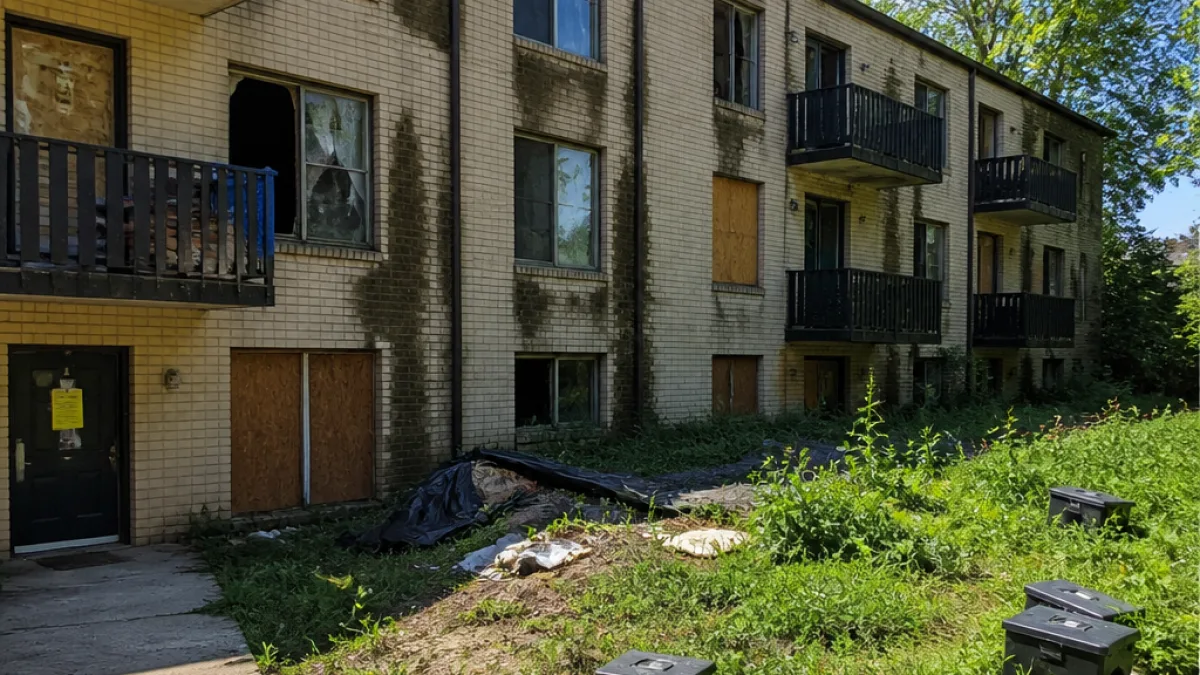
The situation at the Heritage Park apartment complex in north Minneapolis this summer — where tenants reported rodent infestations, mold and extensive disrepair — has reignited debate over how the city should respond when rental units sit empty for long periods. Advocates and housing observers argue the episode exposes gaps in enforcement and calls for a stronger vacancy fee on chronically empty units to hold landlords accountable and fund affordable housing.
Scale of the problem
City and housing advocates say maintenance failures by corporate property managers and insufficient oversight left portions of Heritage Park in a state of neglect. According to reporting on the complex, more than 200 residential units — roughly half the building — were vacant. When units remain out of service for six months or longer, they are considered chronically vacant, removing desperately needed homes from the market in a city where affordable options are already scarce.
- Vacant units reported: more than 200 (about half of Heritage Park)
- Chronically vacant threshold: six months
- Proposed use of fees: earmarked for affordable housing development and support
Why vacancy matters in Minneapolis
Minneapolis faces a declining supply of naturally occurring affordable housing. When large blocks of units are allowed to remain empty, they effectively reduce the city’s available housing stock. Advocates contend that landlords who leave units vacant — whether because they want to avoid maintenance costs, reposition properties for higher rents, or for other reasons — are withholding housing resources from residents who need them most.
"Any corporate property manager or absentee landlord that allows a residential unit to remain chronically vacant for six months or more should pay Minneapolis a robust fee," proponents say.
Supporters of a strengthened vacancy fee say it would create a financial incentive to keep units habitable and occupied. The fee revenue would be directed to affordable housing projects and programs, creating a direct link between penalty and community benefit. They argue the current vacant-building registration and fee structure is insufficient: too small to deter prolonged neglect and too reactive, relying on self-reporting or tips rather than proactive city enforcement.
Policy options and enforcement questions
Advocates propose a vacancy fee charged to landlords or property management companies when units sit empty beyond the chronic vacancy mark. The intended effects are twofold: prompt repairs and quicker re-entry of units into the rental market, and a steady funding stream for affordable housing work. Observers say a meaningful fee would be large enough to change landlord behavior and would be paired with stronger inspection and enforcement mechanisms so fees are applied based on verified vacancy rather than complaints alone.
| Measure | Current state | Proposed change |
|---|---|---|
| Vacancy fee size | Described as too small | Robust fee tied to chronic vacancy |
| Enforcement | Relies on self-reporting and tips | Proactive inspection and automatic earmarking of funds |
City officials will face choices about how to craft any new ordinance: defining chronic vacancy periods, setting fee levels, determining exemptions (for renovations or safety issues), and establishing enforcement processes. Any policy will also need legal vetting to ensure it applies fairly across different types of ownership, including corporate and out-of-state managers.
Local consequences and next steps
For renters and neighborhood groups in north Minneapolis, the Heritage Park episode is a concrete example of how management failures can ripple through communities — exacerbating housing scarcity and undermining neighborhood stability. A stronger vacancy fee, proponents say, would not only penalize neglect but generate funds for affordable housing initiatives that benefit the broader city.
As conversations continue, Minneapolis leaders must balance enforcement capacity, equitable application, and the potential effects on landlords and the rental market. Residents watching the outcome want assurance that units will be brought back into safe, livable condition and that policies will reduce the incentive to leave housing vacant while producing tangible investments in affordability.

















