
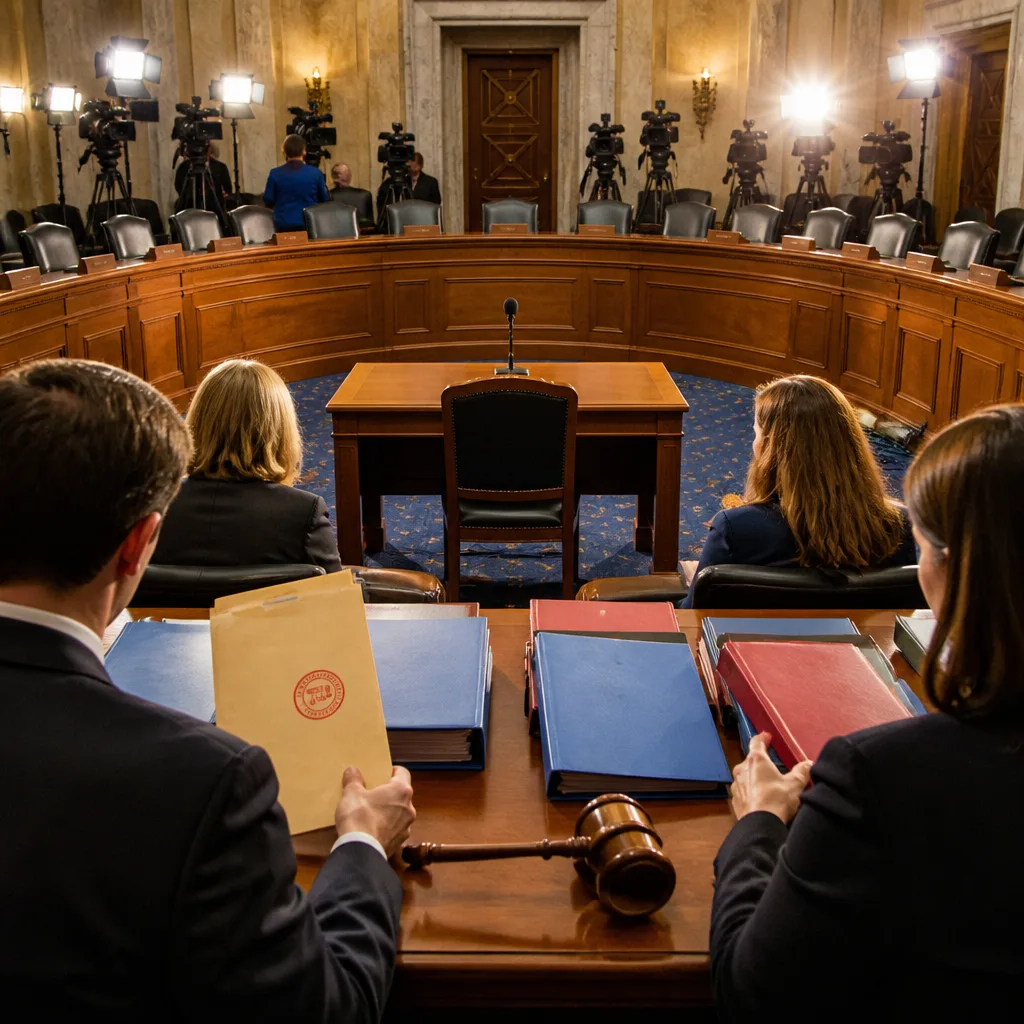
The Senate Homeland Security and Governmental Affairs Committee voted along party lines Thursday to hold Dr. Anthony Fauci in contempt of Congress, a move that Republican members cast as necessary after the government scientist repeatedly declined to answer questions about the federal response to Covid-19.
What the vote means
The 8-7 tally formalizes the panel’s rebuke and opens a pathway to possible criminal charges. Following the vote, Republican Sen. Rand Paul said he will forward a recommendation to the Justice Department urging prosecution, a step that thrusts the matter into the executive branch and sets up a politically charged legal test.
The committee’s action comes after a contentious hearing last week in which Fauci repeatedly invoked his Fifth Amendment right against self-incrimination, declining to answer more than 100 questions, according to committee Republicans. That refusal provoked sharp criticism from GOP members who said his invocation did not justify avoiding testimony.
“It doesn’t have to go to the House, doesn’t have to be signed by the president, and really doesn’t have to go before the Senate,”
The quote above was delivered by Sen. Paul as he described his plan to transmit the referral to federal prosecutors.
Process and next steps
- Referral to DOJ: Paul’s office said it will hand-deliver the contempt recommendation to Justice Department officials shortly after the committee vote.
- Potential bypass of precedent: Paul indicated he may avoid routing the referral through a full Senate vote, a departure from past practice that some legal observers warn could complicate any prosecution.
- Uncertain prosecutorial response: The Justice Department will decide whether to bring criminal charges, a decision that could prompt legal challenges over whether the committee’s procedure suffices to support prosecution.
Under federal law, a conviction for contempt of Congress can carry a sentence of up to one year in prison. Legal experts have previously noted that contempt prosecutions are relatively rare and often complicated by disputes over congressional procedure and the scope of executive privilege or other legal immunities.
| Committee | Vote | Contested issue |
|---|---|---|
| Senate Homeland Security and Governmental Affairs | 8-7 | Fauci’s refusal to answer questions at hearing |
Political and institutional stakes
Republicans on the committee framed the contempt measure as accountability for what they describe as Fauci’s lack of cooperation in a high-profile inquiry. Democrats countered that the move is political theater, arguing that the scientist’s decision to invoke the Fifth Amendment must be respected and that escalation would further inflame partisan tensions.
The resolution the committee passed also outlines additional procedural steps, including language that — by the committee’s account — would require the vice president, identified in the resolution as JD Vance, to sign off to bypass standard rules before the Justice Department could act. That description departs from normal practice and could face immediate legal and constitutional scrutiny if pursued.
Sen. Paul has asserted he can transmit his recommendation directly to law enforcement without a separate full-Senate endorsement, seeking to accelerate the process. Whether prosecutors will pursue charges — and whether a court would sustain them — remains uncertain.
The development sets up a fraught crossroads between congressional oversight and the independence of scientific advisors who served during the pandemic. It also places the Justice Department in the middle of a politically charged decision with potential consequences for oversight powers and the use of contempt as a tool of congressional discipline.
As the matter moves forward, lawmakers, legal scholars and the department will confront questions about precedent, the proper route for contempt referrals and the limits of compelled testimony when a witness asserts a constitutional privilege.