
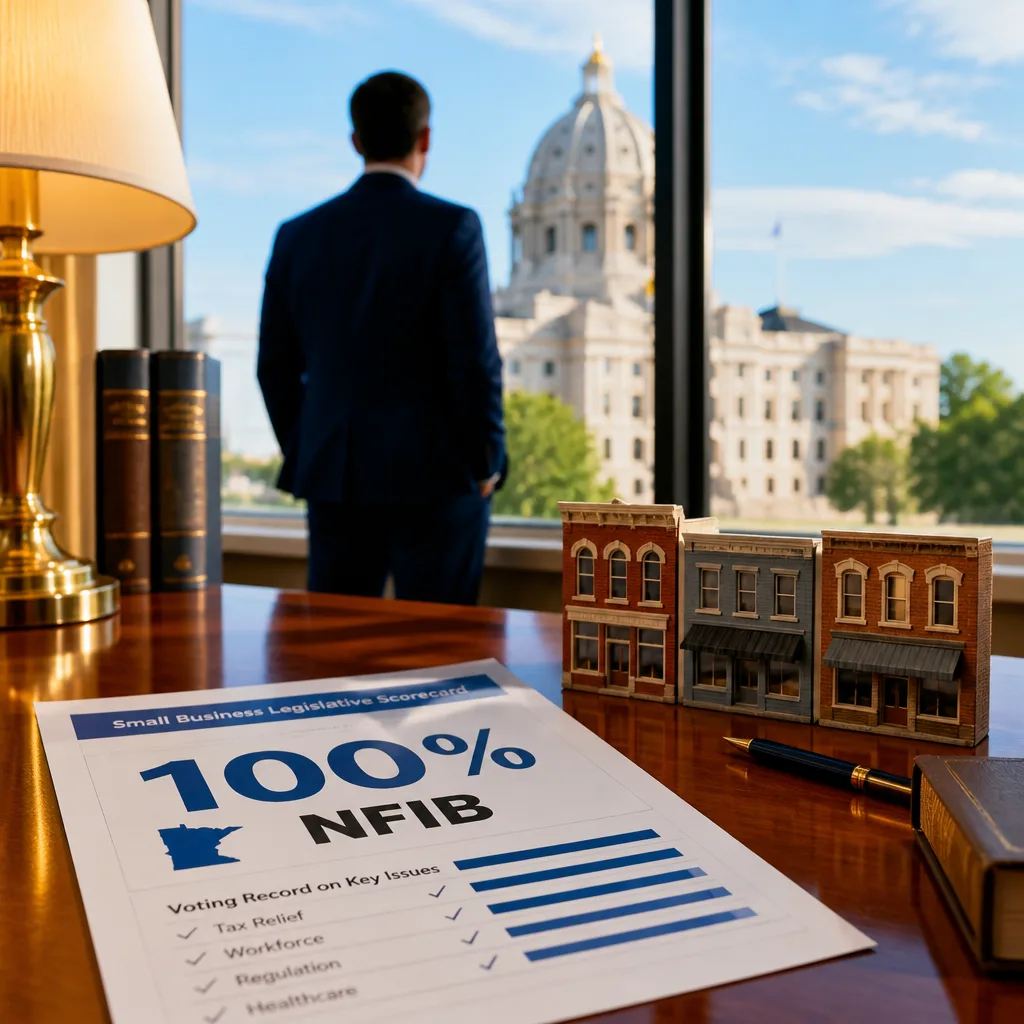
Sen. Carla Nelson received a 100% rating from the National Federation of Independent Business (NFIB) based on her voting record during the 2025-2026 Minnesota legislative session, the national small-business advocacy group reported this month.
Scorecard reflects policy fights over costs for employers
The NFIB scorecard evaluated senators on a set of bills that the organization said were most important to small-business owners. The measure credited Nelson for voting in favor of every item NFIB tracked, making her one of 26 Minnesota senators who earned a perfect mark.
The votes included legislation addressing:
- health insurance costs for employers and employees,
- regulation of sick leave, and
- a proposed workplace seating mandate.
Those topics carry direct financial implications for small employers, who must account for premiums, staffing and compliance expenses when budgeting.
"I am grateful to be recognized again for my support of Minnesota’s incredible local businesses," Sen. Nelson said.
Polarization apparent in voting patterns
NFIB's summary noted a stark distribution of scores among senators: most landed either near the top or the bottom of the ranking, with few in the middle. The group framed the results as a snapshot of how lawmakers voted on priorities identified by small businesses during the two-year legislative cycle.
The organization called attention to the context created earlier this year by a separate paid family and medical leave tax requirement that took effect in January. NFIB Minnesota State Director Jon Boesche argued that the new tax has already complicated daily operations for many small firms, increasing the stakes for subsequent votes on related proposals.
What the scorecard does — and does not — show
NFIB emphasized the scorecard is a tool for constituents and business owners to assess their elected officials’ alignment with the group’s priorities. It does not purport to capture every action an individual senator has taken, but rather provides a focused measure based on specific bills the organization tracked.
Sen. Nelson framed the ranking as part of a broader trend in the Legislature. She said the results mirror increasing division at the Capitol and expressed disappointment that backing small-business measures has become politically polarized:
"That is certainly understandable for some issues, but one would hope that supporting the small businesses that line main streets across Minnesota would have much stronger bipartisan support. It is a concerning trend."
Implications for employers and lawmakers
For small businesses, the scorecard highlights which senators sided with policy positions NFIB views as favoring lower costs and less regulatory burden. For lawmakers, the ratings can influence constituent messaging and campaign communications, particularly in districts where small businesses are a prominent part of the local economy.
Stakeholders on both sides of these debates point to trade-offs: measures to expand worker benefits or protections can increase costs for employers, while rolling back mandates can reduce labor expenses but may limit worker access to benefits. The NFIB scorecard puts those trade-offs in political relief by translating votes into a readily comparable metric.
| Scorecard focus | Examples of issues tracked |
|---|---|
| Employer costs | Health insurance premiums |
| Workplace rules | Sick leave regulations; seating mandate proposals |
| Recent context | Paid family and medical leave tax effective January |
As the next election cycle approaches, business groups and labor advocates alike are likely to use scorecards such as NFIB’s to sharpen outreach and messaging. For now, the report underscores how policy choices made at the state level can have immediate effects on small businesses’ operating costs and planning horizons.
Readers seeking more detail can consult the NFIB materials for a breakdown of individual votes and the specific bills included in the 2025-2026 scorecard.
















