
ROME — Italian Prime Minister Giorgia Meloni has altered more than her policy tone since taking office; her clothing has shifted in tandem with a political trajectory from combative outsider to a pragmatic leader who now projects a less confrontational image.
From hard-edged to measured presentation
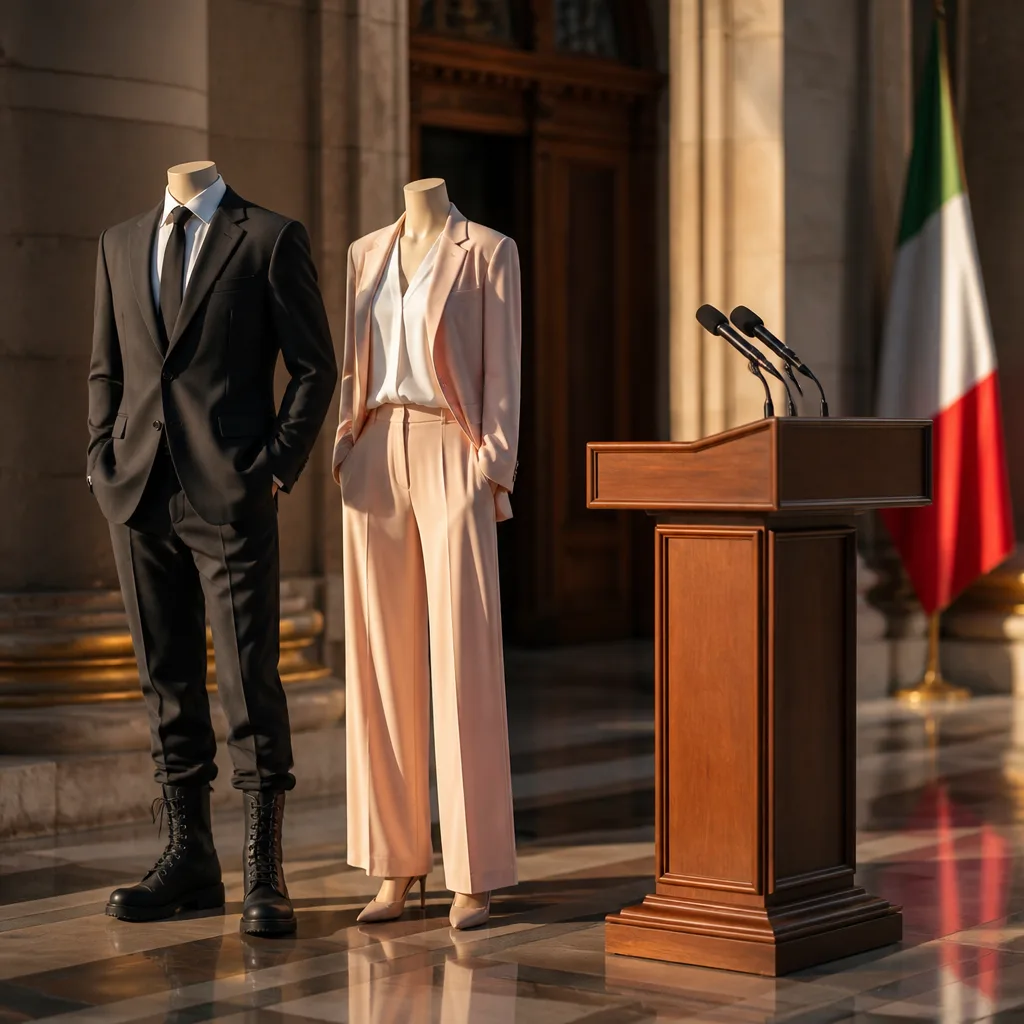
When Meloni became prime minister in October 2022, she often favored a dark-suited look paired with chunky black boots — a style observers tied to her rise from the margins of the country’s right. In recent months, however, her public appearances have increasingly featured lighter, pastel-colored suits and wide-legged trousers worn over heels, a wardrobe that commentators say communicates authority without the earlier edge.
Fashion analysts and political observers alike see the change as part of a broader repositioning: Meloni now governs less radically than many had feared when she first took power. That evolution in presentation comes as she approaches a milestone that could make her one of Italy’s longest-serving postwar leaders.
“She understands how important clothing is in nonverbal communication in politics,” said Antonio Mancinelli, who teaches at Rome’s Costume and Fashion Academy.
The alteration of style is not merely cosmetic, analysts say. Clothing operates as a form of nonverbal messaging, signaling temperament, accessibility and governing intent. In Meloni’s case, the softer palette and tailored shapes aim to emphasize steadiness and competence as much as to deflect fears of extremist governance.
Political stakes and visual rhetoric
Meloni’s wardrobe evolution comes at a politically sensitive moment. According to reporting, she is contending with a growing challenge from a right-wing rival inside Italy’s broader conservative movement — a rivalry that underscores tensions about how far the government should shift from its earlier posture.
Observers point to a wider trend in which leaders use attire to signal political identity or intent. The AP story compared Meloni’s sartorial shift to other contemporary leaders who deliberately adopt distinctive looks to convey policy or persona:
- Volodymyr Zelenskyy — military-style clothing amid war
- Andy Burnham — more casual dress to emphasize connection to working-class voters
- Claudia Sheinbaum — garments celebrating Indigenous textile traditions
These examples illustrate how nonverbal cues, including clothing, are increasingly a calculated element of political communication across democracies.
| Earlier | More recent |
|---|---|
| Dark suits, black boots | Pastel suits, wide-legged trousers over heels |
Fashion experts say that such a transition can have tangible effects on public perception. Moving away from harsher visual cues may make a leader appear more moderate without requiring substantive policy shifts — an appeal to voters wary of instability while maintaining core political commitments.
Consequences for governance and party dynamics
The shift in Meloni’s image could help her broaden appeal among centrists and international partners who were initially skeptical of her rise. At the same time, it risks alienating elements of her base who were energized by the more combative persona that helped mobilize support in earlier campaigns.
Her evolving presentation also frames the internal contest within Italy’s right; clothing is one of many signals competitors and supporters will read as they gauge whether she is consolidating a stable governing identity or drifting toward the center to sustain broader support.
Whatever the intention, Meloni’s sartorial choices underscore a long-standing truth of politics: visual presentation is part of the toolbox for leaders who seek both authority and acceptance at home and abroad.
(This article is based on reporting from The Associated Press.)