A San Diego County man faces both state and federal charges after authorities say he mailed a threatening letter to a mosque in Temecula that contained explicit threats of a mass killing of Muslim worshippers.
Arrest and charges
Warner Springs resident Louis White, 60, was arrested last week by Riverside County deputies, court filings show. He was arraigned Wednesday in Riverside Superior Court on felony counts alleging he made a threat and unlawfully possessed assault weapons. He remained in custody in a Murrieta jail Friday on $70,000 bail.
Federal prosecutors in the U.S. District Court for the Central District of California also filed a charge Thursday accusing White of mailing threatening communications, a federal offense that carries a maximum penalty of five years in prison. Prosecutors filed a request to keep him detained while the federal case is pending.
Alleged evidence recovered
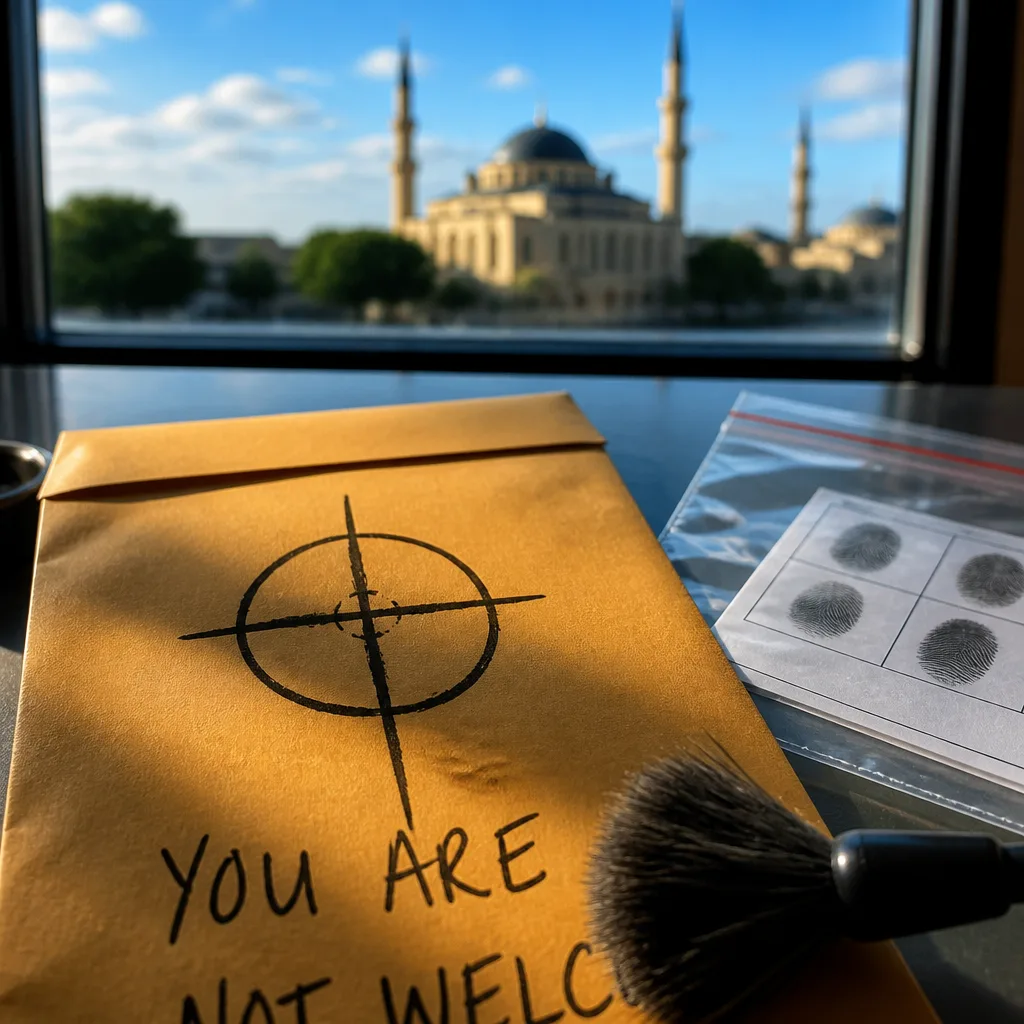
According to a federal warrant affidavit, the Islamic Center of Temecula Valley reported receiving a letter around Aug. 26 that contained threats directed at Muslims and included a drawing with a crosshair. The affidavit says investigators found White’s fingerprint on the back of the letter.
“cannot wait for the day to kill every one of you. It cannot come soon enough.”
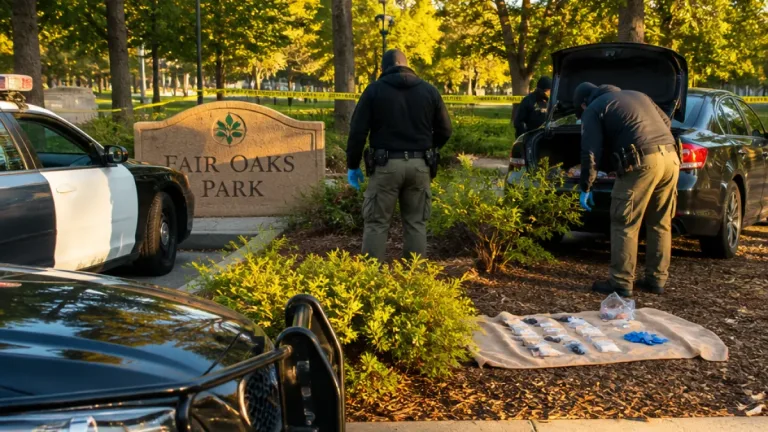
During a subsequent search of White’s home, authorities allege they recovered several firearms and a large quantity of ammunition. The affidavit states agents seized 15 firearms, including what is believed to be a short‑barreled AR-15–style rifle without a serial number — described as a suspected ghost gun — which the filing says was loaded. The affidavit also notes White has several firearms registered to him.
Context and legal stakes
The federal count of mailing threatening communications can result in up to five years in prison if convicted. The state felony counts include accusations of making a criminal threat and possessing assault weapons; those state penalties vary depending on the specific statutes under which prosecutors pursue convictions.
- Arraigned on state felony charges alleging a criminal threat and possession of assault weapons.
- Held on $70,000 bail at the county jail.
- Federal charge for mailing threatening communications carries up to five years in prison.
| Charge | Details |
|---|---|
| State | Felony counts alleging making a threat and possession of assault weapons; arraignment held in Riverside Superior Court; bail set at $70,000 |
| Federal | Mailing threatening communications; maximum sentence cited as five years; prosecutors asked to keep defendant detained |
Broader implications
Federal involvement reflects the potential national scope of crimes that target religious communities, and it can bring stiffer penalties and additional investigative resources. The allegation that the letter threatened “a mass killing of Muslims” comes amid heightened concern about violent attacks on houses of worship and faith-based communities.
Authorities noted the incident unfolded less than four months after a deadly attack at the Islamic Center of San Diego in May, when two teenage gunmen killed three congregants while livestreaming the assault. That episode intensified scrutiny of extremist threats and efforts to prevent violence against Muslim communities in the region.
Prosecutors requested continued detention in the federal case. Court records indicate White remained in custody on the county charges and federal prosecutors moved to keep him detained as the investigation and charging decisions proceed.
Further court dates and filings are expected as both the Riverside County and federal cases move forward. The affidavits and charging documents filed by law enforcement and prosecutors provide the basis for the accusations; as with all defendants, the allegations in charging papers are not proof of guilt and must be proven in court.