
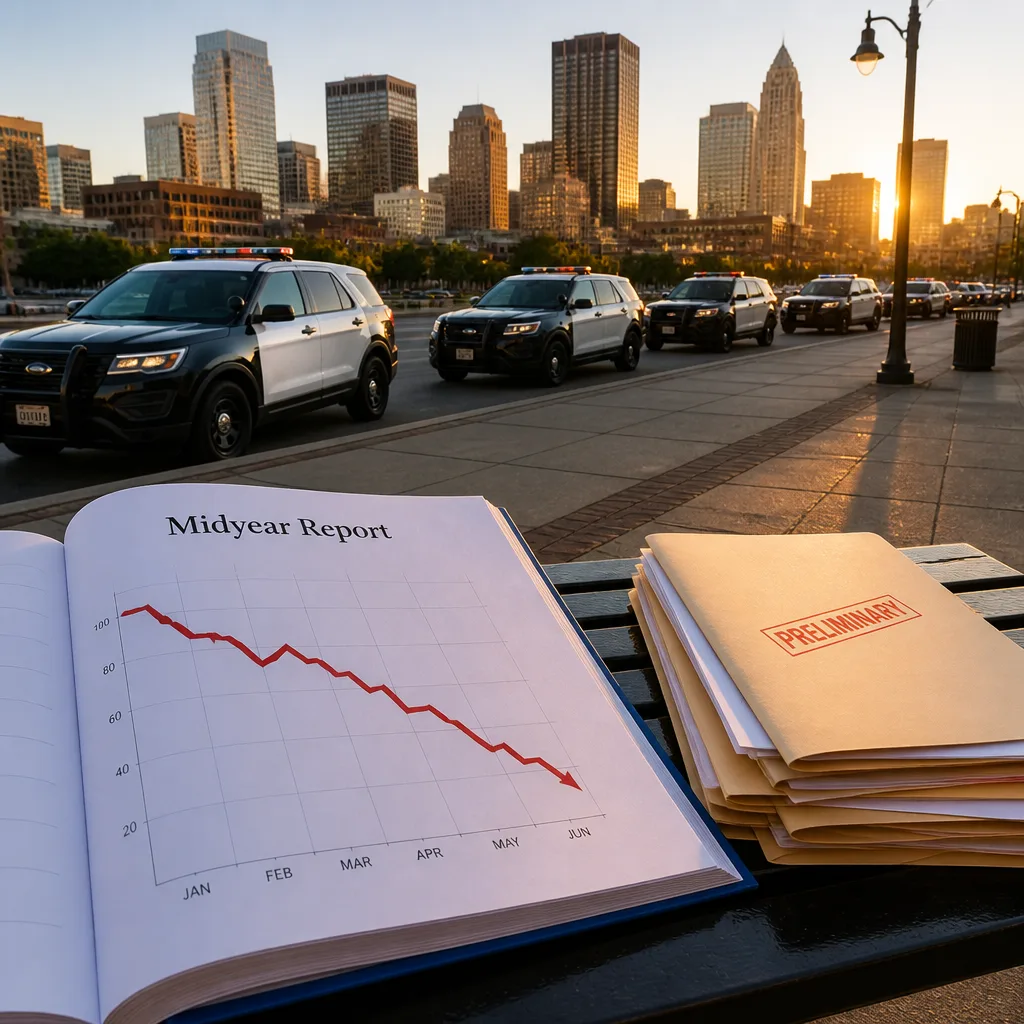
The Major Cities Chiefs Association and federal crime data show significant declines in violent crime across many large U.S. jurisdictions during the first half of the year, a reversal that law enforcement officials say mirrors a broader multi-year trend.
Reported drops in key violent-crime categories
The MCCA’s midyear report, released Sunday, reviewed data from 66 U.S. law enforcement agencies and found reductions in homicide, rape, robbery and aggravated assault compared with the same period last year. According to the association, the preliminary changes from January through June include:
- Homicide: down 17.2%
- Rape: down 6.2%
- Robbery: down 16.6%
- Aggravated assault: down 5.7%
| Offense | Change (Jan–Jun) |
|---|---|
| Homicide | −17.2% |
| Rape | −6.2% |
| Robbery | −16.6% |
| Aggravated assault | −5.7% |
The MCCA cautioned the figures are preliminary. The association’s findings align with a midyear update from the Council on Criminal Justice, which said the decline has continued since mid-2022 after a peak of violence during the pandemic and the protests following George Floyd’s death.
“There is no single or easy explanation for these historic lows,” the Council on Criminal Justice wrote, while citing changes in operations, technology and broader social shifts as possible contributors.
Federal data and enforcement actions
Federal statistics and agency actions provide further context to the trend. The FBI reported that overall violent crime fell about 9.3% in 2025, marking what it said was the largest year-over-year decrease since 1937. The bureau’s data showed rape fell nearly 8% and robbery decreased roughly 18.5% last year.
Since last year, the federal government has also moved to bolster operations in several cities, deploying the National Guard and federal law-enforcement teams to assist local authorities. FBI Director Kash Patel pointed to enforcement achievements this year in remarks to the public, saying federal efforts have contributed to large-scale reductions and drug interdictions.
"Under President Trump’s leadership, we’ve been able to help deliver the most historic run of crime reduction in American history – 20% decline in the murder rate, 184% increase in violent gang takedowns, 2,700 kilos of fentanyl seized (up 56% and enough to kill 203 million Americans), and more," Patel said in June.
Technology, tactics and unanswered questions
Law enforcement officials have cited several possible drivers of the decline without offering a single definitive cause. The Council on Criminal Justice highlighted operational changes, technological advances and cultural shifts. At the same time, homeland security and immigration agencies have rolled out new technology intended to identify and interdict criminal activity, including facial-recognition systems and mobile biometric tools used by U.S. Immigration and Customs Enforcement, and expanded use of automated license-plate readers developed by private vendors.
Researchers and policy specialists caution that preliminary data require careful analysis. Crime trends are influenced by local conditions, resource allocations, prosecutorial and court practices, economic factors, and community policing strategies. Analysts also note that year-to-year fluctuations can mask long-term patterns and that comprehensive conclusions require finalized, audited statistics.
For now, the convergence of the MCCA report, the CCJ update and FBI data points to a national movement toward lower recorded violent crime in recent periods. How law enforcement agencies will adapt strategy, allocate resources and evaluate the role of new technologies will shape public policy debates in state capitals and in Washington, D.C., in the months ahead.















