
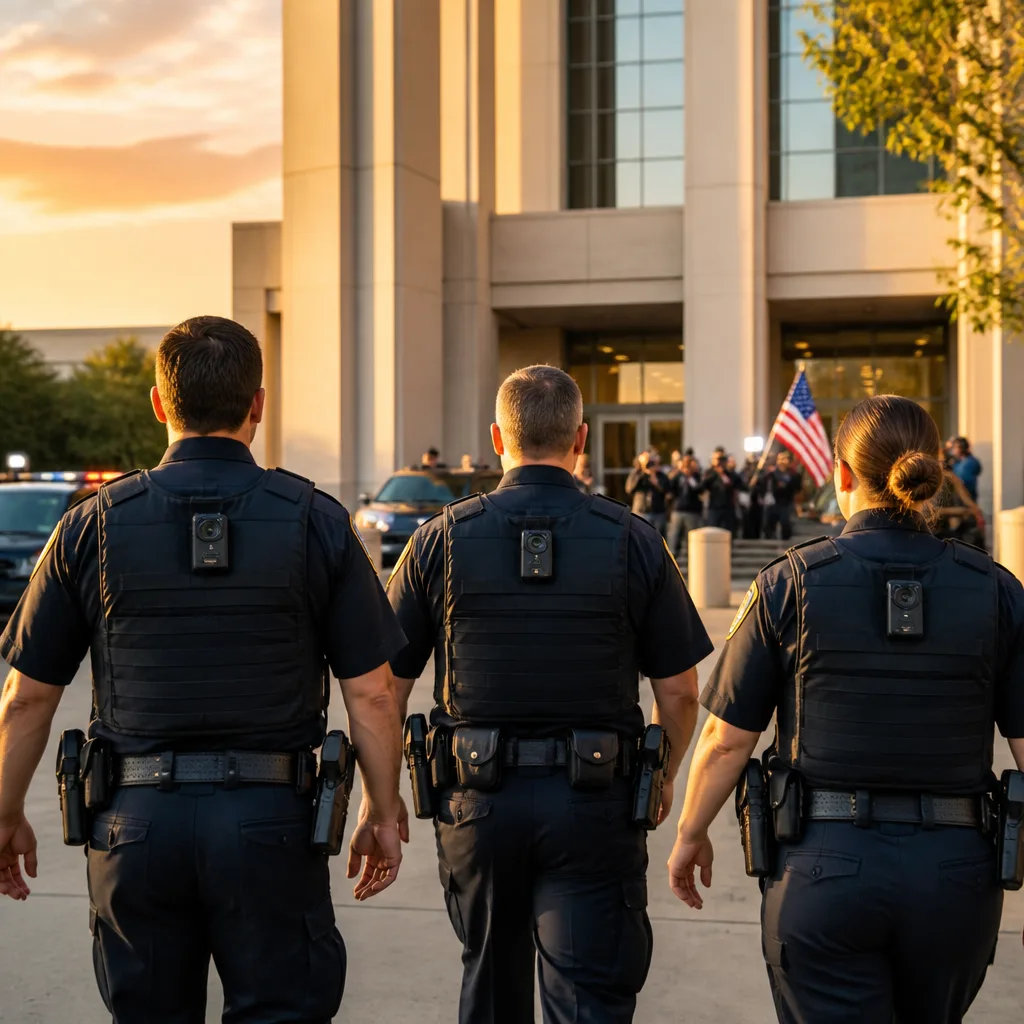
The Department of Homeland Security agency that enforces immigration law told reporters it expects to have body-worn cameras in use by all field officers and agents by the end of August, a timetable the agency says is ahead of an earlier schedule and is being announced as questions mount about when footage will be released to the public.
Agency defends release policy after AP report
U.S. Immigration and Customs Enforcement issued the timeline in a statement responding to a recent Associated Press report about the agency’s rules for making body-worn camera footage public. ICE said it is "on track to equip every officer and agent in the field with body-worn cameras by the end of August," and stressed that the rollout is occurring sooner than originally planned.
That statement came after the AP account raised concerns about the breadth of the agency’s authority to withhold footage, noting that the policy gives ICE wide discretion to disclose video only when it is in the agency’s "best interests." In its response, ICE’s acting director said that the AP had mischaracterized the policy and conflated two distinct aspects of footage release.
“It’s disappointing, though not surprising, to see yet another misleading and sensationalized Associated Press report about ICE operations and policy. The AP fundamentally mischaracterized ICE’s body-worn camera policy by conflating the expedited release of footage following a serious bodily injury or death in custody with ICE’s broader authority to release body-worn camera footage. Those are distinct issues, and here is the truth: ICE policy permits expedited release when appropriate — and clarifies that it’s not appropriate to release footage when doing so could compromise investigations or privacy. This approach mirrors other federal law enforcement agencies’ policies and is fully consistent with the Freedom of Information”
The comment, attributed to Acting Director David J. Venturella, emphasized that the policy allows for expedited disclosure in cases involving serious bodily injury or death but reserves broader release decisions to the agency when releasing footage could jeopardize investigations or privacy protections.
Context: incidents and policy questions
The announcement comes in a climate of heightened scrutiny after multiple shootings this year involving ICE agents who were not wearing body-worn cameras. Those incidents prompted criticism from immigrant-rights groups, civil liberties organizations and some lawmakers, who have pushed for clearer and faster public access to footage to ensure accountability.
ICE framed its policy as consistent with other federal law enforcement agencies, pointing to standard exceptions in disclosure practices tied to ongoing probes and privacy concerns. The agency did not provide further detail in the released statement about how often it would grant expedited access or what specific criteria would govern such decisions.
- Deployment goal: Equip every field officer and agent with body cameras by the end of August.
- Agency position: Says rollout is ahead of original schedule and policy mirrors other federal agencies.
- Public concern: Questions remain over when and how footage will be released, particularly after incidents resulting in serious injury or death.
What’s next
ICE’s statement did not include a public timeline for when footage from specific incidents would be made available, nor did it detail any independent oversight or auditing mechanisms tied to camera use or footage release. That gap leaves open questions for lawmakers and advocates who have called for stricter transparency rules and for policies that ensure footage is preserved and shared promptly after serious incidents.
As the agency moves toward full deployment, Congress and advocacy groups may press for clearer standards that determine when footage is released and whether third-party review or independent oversight will play a role in assessing agency decisions. For now, ICE maintains that its policy strikes a balance between transparency and protecting investigations and privacy.
| Milestone | Status |
|---|---|
| Full field deployment of body cameras | On track — by end of August |
| Previous schedule | Not specified; agency says current pace is ahead of original timeline |
The unfolding deployment and the contours of ICE’s disclosure policy are likely to remain a focal point of debate in the weeks ahead as the agency prepares to place cameras on agents operating across the country.