
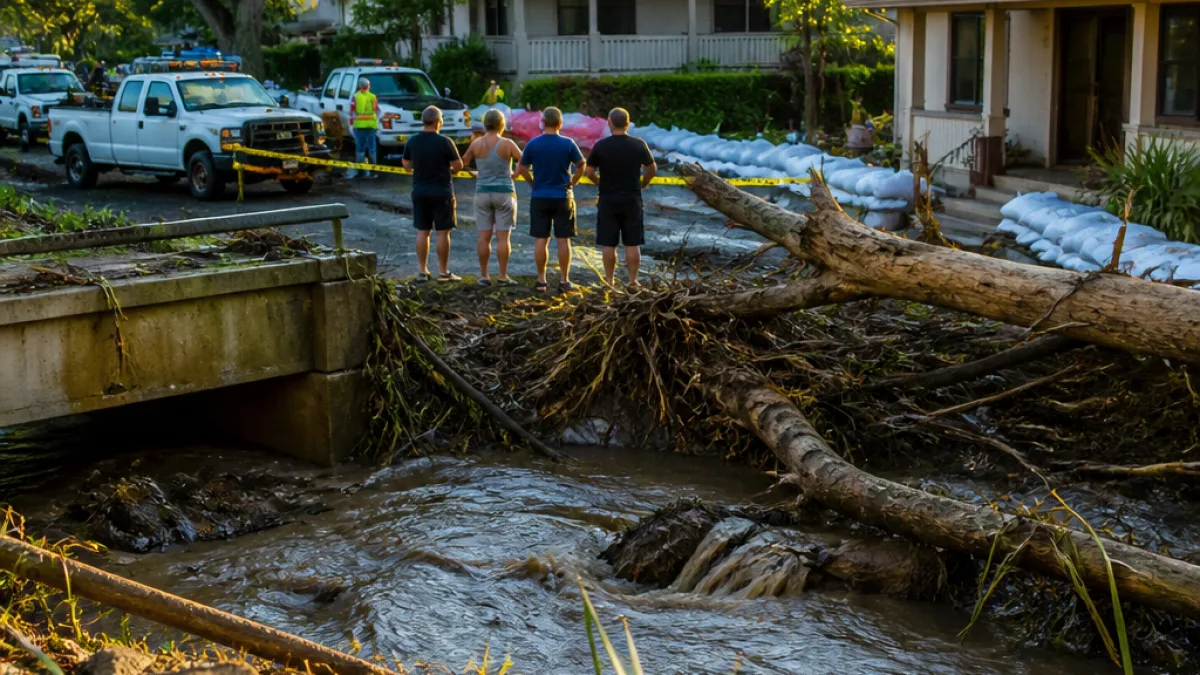
Twenty residents of Haona Street on Oʻahu’s North Shore filed a negligence lawsuit Wednesday against the City and County of Honolulu and former owners of Lake Wilson and the Wahiawā Dam, claiming years of inadequate maintenance of the Kaukonahua Stream and insufficient drainage contributed to widespread home flooding during the historic Kona low storm in March.
Residents say warnings went unheeded
Plaintiffs — homeowners and renters who were forced to evacuate their properties in the middle of the night as the stream surged — contend city-owned sections of the waterway were left clogged with mud, silt, debris and large trees despite repeated complaints. The stream was reportedly cleared only after the March flooding.
The complaint names Rafe Maldonado as lead plaintiff. Maldonado and his parents escaped their Haona Street home as the swollen Kaukonahua Stream overflowed following relentless rain. According to court filings and reporting on the suit, the stream’s failure to convey storm waters swept away a house, undermined parts of Farrington Highway, buried agricultural land in mud and inundated nearby residences.
Claims and requested remedies
The plaintiffs are asking a court to require the city to implement a comprehensive maintenance program for Kaukonahua Stream. Their proposed program would include an inspection schedule, routine maintenance and formalized procedures for responding to residents’ maintenance concerns — steps they say the county has declined or failed to implement for decades.
“Without a court-ordered maintenance program, the county’s decades-long pattern of failing to maintain the stream despite repeated warnings … will continue,” the lawsuit said.
Court documents cited by plaintiffs indicate the city had considered dredging and had spent more than $450,000 on stream studies over the years, but did not carry out the projects. Civil Beat reporting noted Kaukonahua was among multiple flood-prone streams on Oʻahu that had mitigation studies that were not acted upon.
Local impact and infrastructure damage
The March storm left visible scars on the landscape and local infrastructure. In addition to homes flooded and displaced residents, the lawsuit and related reporting describe a house that was washed away and segments of a highway that were damaged or made impassable. Farms in the stream’s floodplain were reportedly buried under several feet of mud.
For Haona Street residents, the personal toll has extended beyond property loss: many recount the trauma of having to flee at night and the uncertainty about whether municipal authorities would act to prevent repeat events.
- Who sued: 20 residents of Haona Street (homeowners and renters)
- Defendants named: City and County of Honolulu and prior owners of Lake Wilson and the Wahiawā Dam
- Relief sought: Court-ordered, comprehensive stream maintenance program (inspections, routine upkeep and response procedures)
| Issue | Reported detail |
|---|---|
| Studies paid by city | More than $450,000 spent on stream studies but projects not pursued |
| Physical damage | House swept away; Farrington Highway damage; farms buried in mud; homes flooded |
Broader questions about flood mitigation
The case highlights wider concerns about flood mitigation across Oʻahu. Civil Beat reporting that accompanied the lawsuit said Kaukonahua was the most damaging among several streams that had been left without sustained maintenance, even as agencies accumulated studies recommending action. The plaintiffs’ legal effort seeks not only compensation for losses but structural changes in how the county manages its waterways.
City officials have historically balanced competing priorities, including environmental protections, permitting challenges and budgeting constraints, when deciding whether to clear or alter streams. The lawsuit frames the choice differently, arguing that inaction after repeated resident warnings amounted to negligence that directly produced property damage and safety risks.
As the case proceeds, Honolulu residents and officials will be watching whether the court will order specific operational changes for Kaukonahua Stream — a decision that could influence future policy on flood-prone waterways across the island.
Legal filings in the case and further statements from the city or the other named defendants were not immediately available. The suit places local flood control practices under scrutiny at a moment when communities across Hawai‘i are increasingly focused on resilience and infrastructure preparedness in the face of more extreme weather.


















