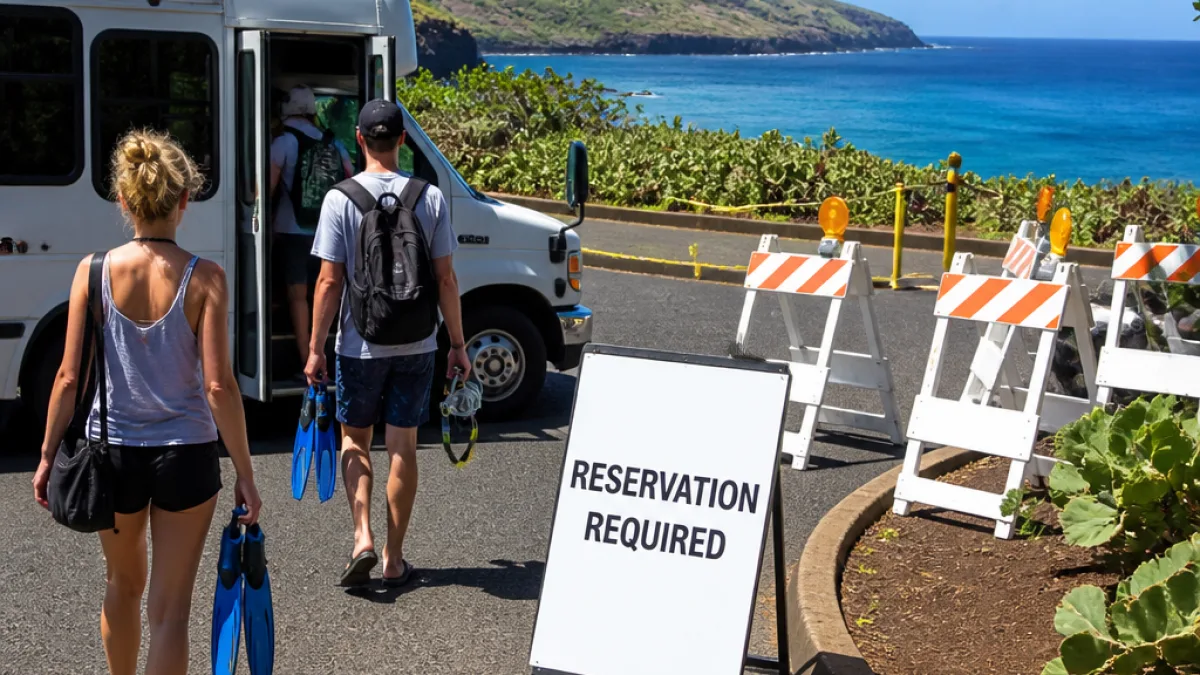
The Hawaiʻi Tourism Authority is preparing to roll out a reservation and shuttle system at Honolua Bay in West Maui as part of a broader effort to manage visitor impacts at heavily visited sites across the state. The measure, included in the agency’s Destination Management Action Plan and recently approved by Gov. Josh Green, aims to curb overcrowding, dangerous roadside parking and pressure on natural and cultural resources.
Why Honolua Bay is being targeted
Honolua Bay is one of the island’s most popular surf and snorkeling spots, drawing residents and visitors alike. In recent years the site has become synonymous with long lines of parked cars, people stopping unsafely on narrow roadways and concentrated use of fragile coastal habitats.
HTA officials say the plan seeks to balance visitor experiences with the needs of local communities and the environment. As drafted, the system would ask visitors to park at designated sites away from the bay and use shuttle services to reach the shoreline, plus make reservations to limit daily numbers.
“I think they want to be able to control our visitors. And that’s what we want, right?”
That comment came from John Pele, executive director of the Maui Hotel and Lodging Association, who has participated in conversations about the proposal. Pele told Hawai‘i News Now that industry members have been discussing how to reduce the impacts of tourism on local communities and the environment.
Community partners and concerns
The HTA spent several years developing the Destination Management Action Plan with input from state and community partners, including the Save Honolua Coalition and area residents. The coalition provided a statement to media acknowledging the plan but warning that a parking-based solution may not address deeper issues.
Local leaders and advocacy groups have expressed mixed reactions. Some residents and businesses support controls that will reduce traffic, unsafe stopping and erosion of cultural sites. Others worry a reservation system focused on parking could shift impacts elsewhere or fail to address root causes such as visitor behavior, infrastructure capacity and enforcement.
What the plan proposes
HTA’s DMAP does not lay out every operational detail in public materials, but the proposal as described includes:
- Requiring reservations for access to Honolua Bay
- Directing visitors to park at offsite locations
- Providing shuttles to ferry visitors between parking areas and the bay
Supporters say these measures will reduce roadside stopping and concentrated parking, while enabling better stewardship of the bay. Critics say they want assurances that local residents will retain access and that cultural and ecological protections come first.
| Primary issue | How DMAP addresses it |
|---|---|
| Crowding at bay | Reservations to limit daily access |
| Unsafe roadside parking | Offsite parking with shuttle service |
| Strain on natural/cultural resources | Managed visitor numbers and community input |
Residents’ access and enforcement
HTA representatives say the plan intends to prioritize residents, but the public materials do not yet specify how that preference would be implemented. Pele noted the industry’s interest in protecting resident experiences while offering visitors a respectful introduction to Hawai‘i’s places.
Questions remain about enforcement, operating hours, shuttle logistics and fees. Advocates for the Save Honolua Coalition stressed in their statement that a parking system alone will not solve underlying issues, an argument that underscores the need for a comprehensive approach that combines education, enforcement and investment in infrastructure.
Next steps
The HTA and state partners will continue community engagement as they refine the plan and work out operational details. If implemented, the Honolua Bay pilot could become a model for other sensitive sites listed in the DMAP, including portions of the Road to Hana, where similar crowding and roadside safety issues have been documented.
For residents and frequent visitors, the prospect of a reservation-and-shuttle model raises pragmatic questions: how to obtain reservations, whether shuttles will run at convenient times, and whether resident exemptions will be available. HTA officials say those specifics will be developed in consultation with the community.
As the plan moves from framework to implementation, stakeholders from hospitality, conservation and neighborhood groups will be watching closely to see whether the measures reduce harm without unduly restricting access to one of Maui’s most cherished natural places.