
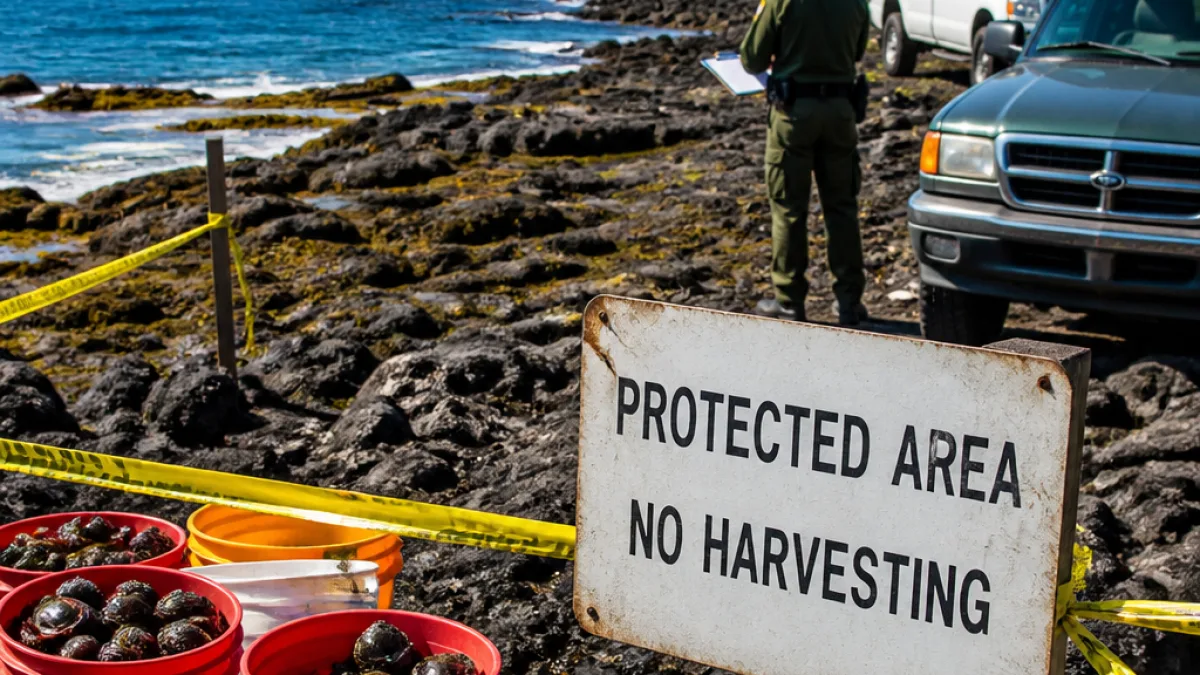
The Board of Land and Natural Resources is still working to reach a settlement in a case stemming from the seizure of more than 4,000 opihi from a protected area on the north Kona coast, officials said, nearly a year after three men were apprehended.
Case remains unresolved a year later
The incident, which drew attention from resource managers and coastal communities, involved the collection of thousands of the once-common native limpets known as opihi from an area designated for protection. State officials say the matter remains under negotiation between the department, its attorneys and the parties involved as they seek an acceptable resolution.
While specifics of the proposed settlement have not been released, the extended talks reflect the legal and administrative steps the Board of Land and Natural Resources — commonly called BLNR — takes when alleged violations involve significant numbers of protected marine life and community concerns about long-term impacts.
Why the case matters locally
For many residents on Hawaii Island, opihi are more than food; they carry cultural, subsistence and economic significance. The depletion of local opihi stocks contributes to community anxiety about access to traditional resources and the health of nearshore ecosystems.
State managers and conservation advocates say protecting harvesting sites and enforcing closures are crucial to allowing populations to recover. The BLNR’s handling of this case will be watched as an indicator of how vigorously state authorities will pursue enforcement and remediation when large-scale takes occur in protected zones.
What is known about the enforcement process
The BLNR oversees state lands and resources and can pursue administrative penalties, civil settlements or recommend criminal charges when laws or regulations are violated. Negotiations in cases like this often include discussions about:
- restitution or fines to address the unauthorized take;
- requirements to support restoration or conservation efforts;
- conditions limiting future access or harvesting in sensitive areas;
- possible community service or education components aimed at preventing repeat violations.
Because the agency also must consider legal precedent, cultural issues and conservation outcomes, reaching a settlement can take months.
Local voices and enforcement challenges
Community members often express frustration at both poaching and the slow pace of legal resolution. Resource managers say enforcement on rugged coastlines poses practical challenges: remote locations, weather conditions and the need for specialized patrols all complicate monitoring.
At the same time, advocates for traditional harvests emphasize the need for clear rules, communication and collaboration so that communities understand protected-area boundaries and the reasons behind them. The BLNR frequently points to education and signage, combined with enforcement, as tools for long-term compliance.
Timeline of the case
| Event | Status |
|---|---|
| Collection of opihi from protected north Kona site | Occurred prior to arrests; over 4,000 taken |
| Apprehension of three men | Happened about a year ago |
| BLNR settlement negotiations | Ongoing |
Broader implications for resource management
The outcome of the BLNR’s negotiations could influence how future cases are handled, including whether settlements include stronger restorative measures or enhanced monitoring requirements. Resource advocates say robust outcomes can deter large-scale unlawful takes and help rebuild vulnerable populations.
At the same time, litigants and their legal representatives may seek settlements that avoid protracted court battles. Administrative settlements can resolve resource damage claims more quickly, but they also raise questions about transparency and the sufficiency of penalties to deter future offenses.
What residents should know
Residents seeking guidance on harvesting rules and protected areas can consult the Department of Land and Natural Resources for maps, advisories and regulations. Reporting suspected illegal takes to local authorities helps enforcement prioritize hot spots and allocate patrols.
As negotiations continue, the BLNR has not announced a timeline for concluding the case. The board’s eventual decision will be of interest to coastal communities, resource managers and anyone concerned with the stewardship of Hawaii’s nearshore marine life.
This story will be updated as officials provide more details on the settlement and any conditions it may include.


















