
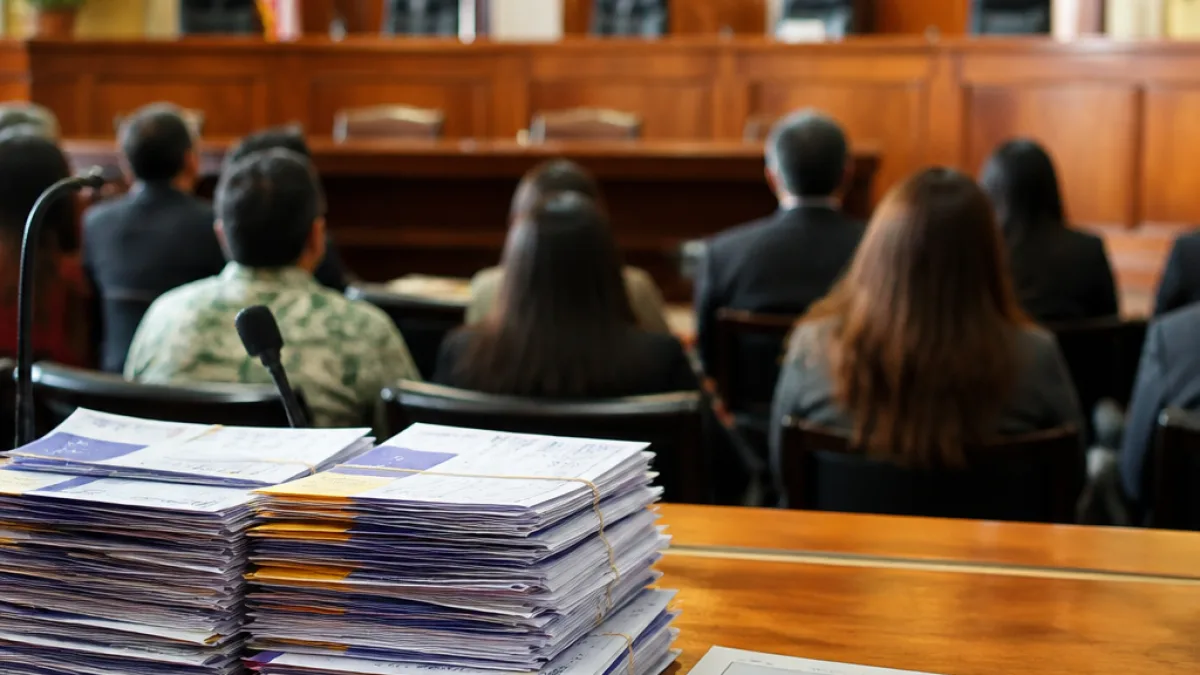
HONOLULU — The Hawaiʻi Supreme Court on Tuesday grappled with a contested legal question that could determine who appears on the East Honolulu City Council ballot this fall and whether thousands of primary votes will be voided.
The case centers on Council Chair Tommy Waters, who was declared ineligible to run for another term under the county’s two-term limit. Waters, who has served nearly eight years on the council, contends his first term began late because of an earlier election challenge and therefore he has not completed two full four-year terms.
How the dispute started
The case reached the state’s highest court after conflicting rulings and the complication of already-mailed ballots. The city clerk initially allowed Waters to run, but a Honolulu Circuit Court judge later sided with his opponent, Trevor Ozawa, ruling Waters ineligible. Because the decision came after mail ballots had been distributed, Waters was disqualified but his name remained on the primary ballot.
In the primary held earlier, Ozawa received the most votes, with Waters finishing second. Candidates Tara Gregory and Joseph Liang trailed behind. Waters and a group of 40 District 4 voters petitioned the Hawaiʻi Supreme Court seeking restoration of Waters’ eligibility in time for the general election.
Arguments before the court
Attorneys for Ozawa argued the interpretation of term limits is straightforward and governed by fixed statutory start dates. Deirdre Marie-Iha, representing Ozawa, told the justices term start dates are prescribed by law and do not shift based on an individual’s date of assumption.
“Standing here today, I can tell you the exact start dates of every City Council election for the next 100 years if they don’t change the law. Those terms do not move,”
Marie-Iha emphasized the distinction, saying the dispute concerns Waters’ tenure, not the duration or legal start of council terms.
Opposing counsel framed the issue as one of voter rights. Thomas Otake, representing the 40 community members backing Waters, argued that disqualifying Waters after ballots were cast disenfranchised thousands of voters.
“How can anybody think that’s okay? That this process, that 8,654 people, votes didn’t count. How can anybody in this building think that’s okay?”
Otake urged the court to consider the practical impact on the electorate if votes for a candidate are effectively discarded after ballots have been distributed.
What the court must decide
The Supreme Court faces two questions: whether Waters is legally eligible to run, and if so, how the general election ballot should be composed. If Waters is reinstated, the court will determine which candidates — potentially all four — should appear in November.
The justices indicated they would issue a ruling by Friday, according to court filings.
Local implications and timelines
The case raises broader issues for Hawaiʻi elections administration, including how post-ballot-distribution eligibility rulings should be handled and the balance between strict adherence to term-limit statutes and safeguarding voters’ choices.
- Primary result order: Trevor Ozawa (1st), Tommy Waters (2nd), Tara Gregory (3rd), Joseph Liang (4th).
- Petitioners: Tommy Waters and 40 District 4 voters seeking reinstatement.
- Expected decision: The Hawaiʻi Supreme Court signaled a ruling by Friday.
| Candidate | Primary placement |
|---|---|
| Trevor Ozawa | 1st |
| Tommy Waters | 2nd |
| Tara Gregory | 3rd |
| Joseph Liang | 4th |
Legal experts and election observers say the court’s ruling could set a precedent for how eligibility disputes are resolved when they intersect with already-distributed ballots. The decision also has immediate practical consequences for campaign strategies and voter information campaigns leading up to the general election.
Until the court issues its ruling, county election officials face uncertainty about preparing final ballots and informing voters about who will be eligible to appear in November. Candidates and their campaigns must also decide how to proceed depending on whether Waters is reinstated.
As the clock ticks toward the general election, the Hawaiʻi Supreme Court’s resolution will determine not only the fate of a single candidate but also how the state balances statutory term limits with the integrity of voters’ decisions cast in good faith.
Reporting from Aliʻiōlani Hale.

















