
The Bill & Melinda Gates Foundation announced a multiyear commitment to channel at least $1 billion into artificial intelligence tools aimed at supporting teachers, health workers and farmers in low-income countries, framing the investment as an effort to expand access to services that markets have largely ignored.
The funding, disclosed Monday alongside the foundation’s Goalkeepers report and comments from Bill Gates and CEO Mark Suzman, targets an array of AI applications meant to accelerate progress against child mortality, poverty and disease — areas where gains have slowed amid cuts to global health budgets.
Allocation and immediate priorities
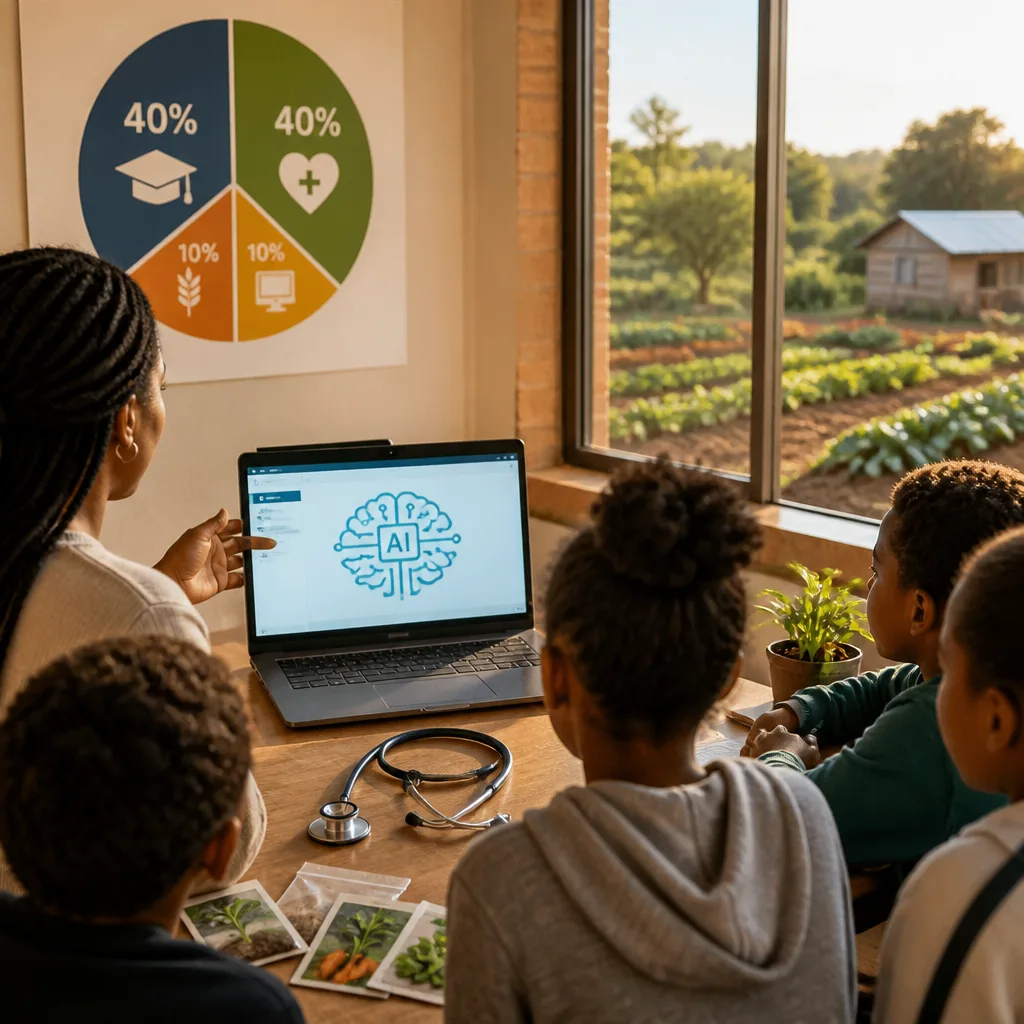
The foundation said it will distribute the initial tranche over two years with a stated split among sectors:
- 40% to education
- 40% to health care
- 10% to agriculture
- 10% to digital infrastructure
A foundation spokesperson and the report emphasize that the amount should be seen as a starting point. Mark Suzman described the commitment as a “
down payment,” indicating the organization expects the investment to grow after the initial two-year period.
| Sector | Share of initial $1B |
|---|---|
| Education | 40% |
| Health care | 40% |
| Agriculture | 10% |
| Digital infrastructure | 10% |
Equity and the narrow window for influence
Bill Gates framed the foundation’s approach as a choice with immediate consequences for global equity. In the report he warned that artificial intelligence today could either broaden opportunities or exacerbate existing disparities.
“AI could be a great equalizer — or widen the gap,”
The report notes that early large language models were trained predominantly on English-language material and that leading AI speech-recognition systems underperform for many languages. To counteract these biases, part of the foundation’s digital infrastructure funding will support the development of datasets in languages that current models inadequately handle.
Gates and the foundation argue policy and funding decisions made in the coming year to 18 months will be decisive in determining whether AI primarily benefits those already advantaged or can be steered to reach underserved populations.
What the commitment aims to change
The foundation’s investment targets AI tools that would otherwise be unprofitable for commercial firms to build for low-resource contexts. In education, that could include adaptive learning platforms, teacher-support tools, or materials in languages and dialects not currently served by commercial models. In health, planned funding aims at clinical decision support and tools for community health workers in regions with critical staffing and funding shortages.
Foundation leaders stressed the limitations of technology alone. The announcement comes amid concerns that governmental spending cuts have slowed progress against global health threats; the foundation said AI efficiencies cannot substitute for reductions in public-sector investments.
Implications for U.S. education and international aid
For U.S. educators and policymakers, the Gates Foundation’s move underscores how private philanthropy is shaping innovation priorities in global education. The funding could spur the creation and testing of AI-powered instructional tools that, if effective, might be adapted for U.S. classrooms or inform state and federal strategies around AI in education.
At the same time, the foundation’s emphasis on language data and digital infrastructure highlights persistent access gaps that go beyond device availability: algorithmic bias and dataset representation remain central obstacles to equitable AI deployment.
Mark Suzman’s characterization of the $1 billion as a beginning suggests the foundation plans sustained engagement in the space. How that spending interacts with public funding decisions, regulatory developments and commercial AI investments will shape whether the initiative reduces global inequities or reinforces existing divides.
As the foundation moves from announcement to implementation, observers will watch for specifics on grant recipients, criteria for evaluating impact, and mechanisms to ensure local ownership of tools deployed in schools, clinics and farms.














