
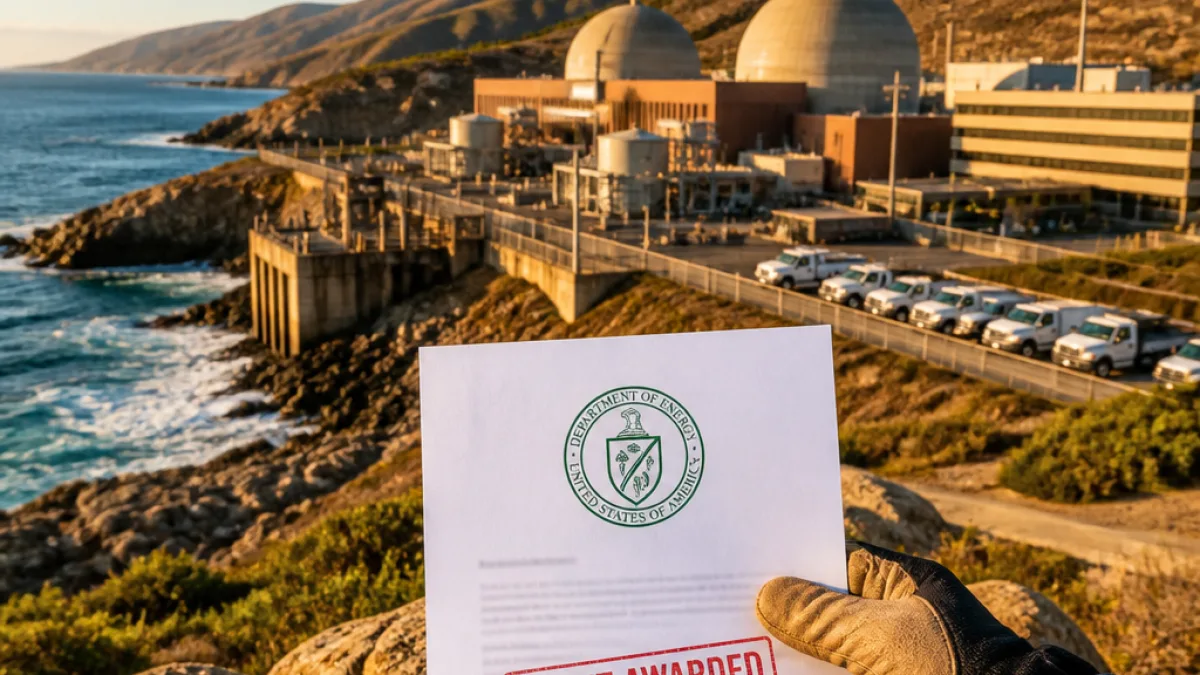
The U.S. Department of Energy on Friday issued a $271 million payment to Pacific Gas and Electric to support continued operations at the Diablo Canyon Power Plant, a move that the agency says will help maintain a significant portion of the state's electricity supply and protect thousands of regional jobs.
Why the payment matters
Diablo Canyon provides a substantial share of California’s generation; the DOE described the plant as producing nearly 10 percent of the state’s power. The plant’s two reactors were approved in April by the U.S. Nuclear Regulatory Commission for 20-year license extensions, and the DOE award is intended to help underwrite the costs of keeping the facility online beyond its previously scheduled retirement date in 2025.
Under the Civil Nuclear Credit Program, Pacific Gas and Electric is eligible for up to $1.1 billion to cover activities tied to extended operations. The initial payment can be used for items such as reactor component replacements, equipment upgrades, fuel procurement and other expenditures related to prolonging the plant’s service life.
"Keeping Diablo Canyon online is critical to meeting California’s growing demand for affordable, reliable, and secure electricity," said Ted Garrish, assistant secretary for nuclear energy at the Department of Energy.
Federal program and local impact
The Civil Nuclear Credit Program was created to provide targeted investments to preserve the existing U.S. nuclear fleet and protect high-paying jobs tied to those facilities. The DOE framed the payment as part of a broader effort to sustain U.S. nuclear energy capacity and avoid premature retirements of large baseload generators.
For local communities and the electricity grid, the payment carries several practical implications:
- It helps ensure continued availability of a large, dispatchable source of low-carbon electricity.
- It supports employment associated with plant operations, maintenance and supply chains.
- It can reduce near-term pressure on the grid to replace output that could otherwise have required rapid, potentially expensive additions of other generation or imports.
How the funds may be used
According to DOE statements, funds from the Civil Nuclear Credit can be applied to a range of needs related to extending plant life and sustaining reliable service. Those categories include:
| Type of expense | Purpose |
|---|---|
| Reactor component replacements | Maintain and replace aging systems that are critical to safe operations |
| Equipment upgrades | Modernize infrastructure to meet extended licensing requirements |
| Fuel procurement | Secure reactor fuel supplies needed for continued generation |
| Unforeseen costs | Address unexpected expenditures related to extending service |
Political and energy-policy context
The award comes amid ongoing national debates about the role of nuclear power in meeting climate goals and the trade-offs between different resources. Federal officials framed the payment as aligning with efforts to "unleash" American nuclear energy while emphasizing safety and reliability.
Locally, the decision to keep Diablo Canyon operating intersects with California’s clean-energy objectives, capacity planning and efforts to ensure grid reliability during heat waves and periods of high demand. Keeping a large baseload plant online can reduce immediate reliance on fossil-fuel generation to fill gaps, but the move also prompts discussions about long-term strategy for a decarbonized grid.
What comes next
Pacific Gas and Electric remains eligible for further payments under the program up to the $1.1 billion ceiling if additional needs arise during the plant’s extended operating period. Any future disbursements would likely hinge on documented expenditures associated with maintaining safe, reliable service and meeting regulatory obligations tied to extended licenses.
State and local officials, labor groups and environmental stakeholders will be watching how funds are deployed and how extended operations affect electricity costs, job retention and California’s emission-reduction trajectory.
This is a developing story with significant implications for state energy planning and local economies; further reporting will follow as more details on fund use and operational plans become available.


















