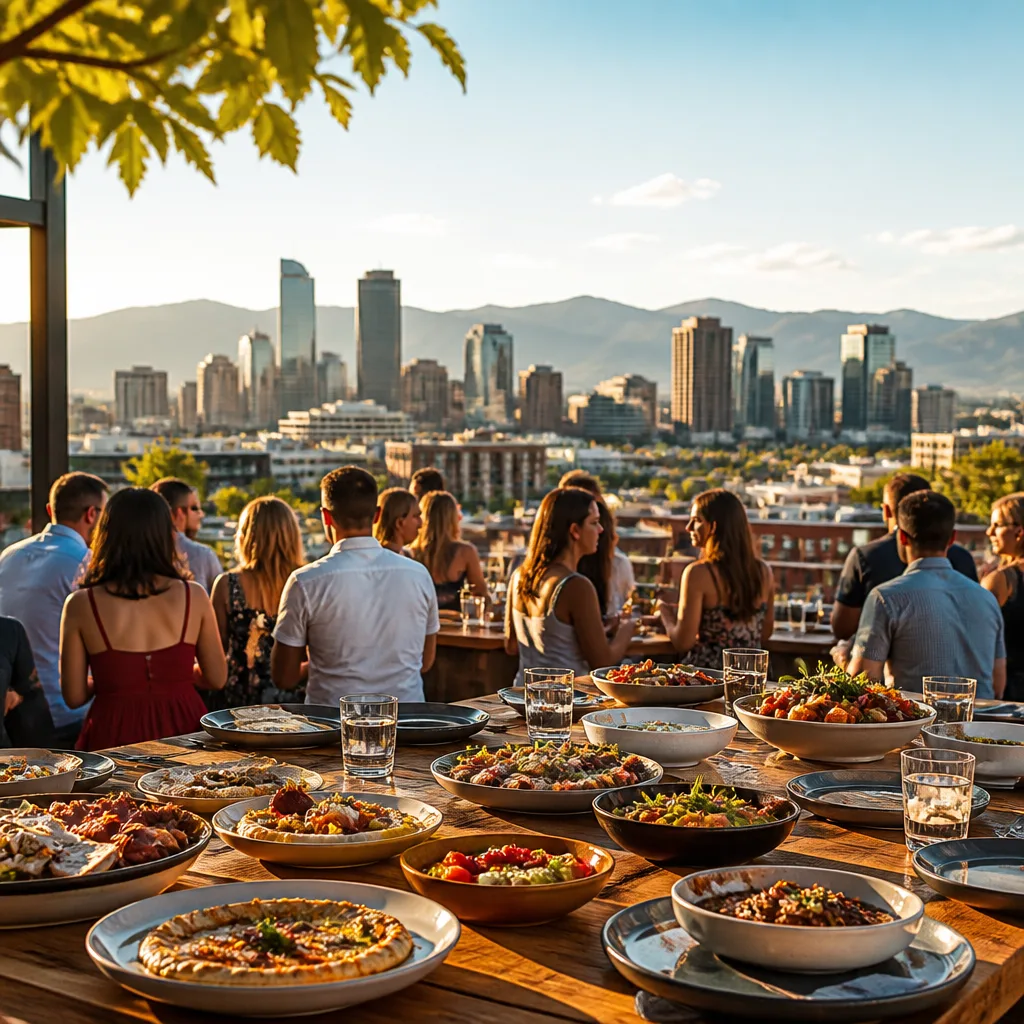
Denver is showing off. From the rooftop terrace of tapas bar El Five, the city stretches beneath a late afternoon light with the hazy outline of the Rocky Mountains on the horizon, while plates of Mediterranean food arrive and the bar fills with people.
Not just mountains: a layered cityscape
Visitors and residents alike describe a city that resists tidy definitions. In the neighborhood known as LoHi (Lower Highlands), the skyline and mountain vista combine with dense urban life to create a feel that is at once young, energetic and decidedly metropolitan. At street level, Denver’s character is revealed in public areas that operate like oversized living rooms: hotel lobbies, restored train stations and mixed-use precincts where people gather to work, socialize and linger.
Staying at the Maven Hotel, for example, guests find a lobby that flows into restaurants, bars and shops and displays more than 700 works by Colorado artists. The hotel’s rooms suggest a hybrid of loft and gallery; downstairs, coffee is served from an Airstream—a detail that underscores the playful, neighborhood-oriented approach to hospitality.
Buildings as communal places
Denver’s redevelopment of older structures into public gathering hubs is a recurring theme. A few blocks from the Maven, the beaux-arts Union Station — which has greeted travelers since 1914 and sits on a site with a station dating to 1881 — anchors a precinct where commuters, visitors and locals intersect. Nearby, the Dairy Block and Union Station areas similarly emphasize shared space with sofas and armchairs occupied by people who may or may not be hotel guests or rail passengers.
That ambiguity is part of the city’s appeal: these are places where residents meet friends, work on laptops, drink coffee or simply sit. The blending of private commerce and public life contributes to a sense that Denver is not sharply segregated into tourist and local zones.
- El Five (LoHi) — rooftop tapas bar with mountain views.
- The Maven Hotel — 172 rooms; lobby integrates restaurants, bars and retail; displays over 700 works by Colorado artists; coffee served from an Airstream.
- Union Station — beaux-arts train station active since 1914; long-standing transit site since 1881.
- Dairy Block — mixed-use precinct emphasizing communal seating and public use.
| Place | Notable Feature |
|---|---|
| El Five | Rooftop terrace with mountain views |
| The Maven Hotel | 172 rooms; >700 Colorado artworks; integrated public spaces |
| Union Station | Beaux-arts building in continuous transit use since 1881/1914 |
Visitors even report an unexpected social effect: despite traveling with children and moving through the city like outsiders, some say locals assume they live in Denver. That perception points to the city’s ability to project an authentic, everyday vibrancy. Rather than presenting a curated, tourist-only face, many Denver spaces function as day-to-day civic rooms.
For lifestyle observers and travelers, Denver’s model raises questions about how urban design influences perceptions of belonging. The city’s investment in hybrid public-private spaces and its celebration of local art and commerce make it feel less like a destination that temporarily welcomes outsiders and more like a place where community and hospitality naturally overlap.
As cities nationwide rethink downtown life, Denver’s blend of historic anchors and inventive reinterpretations of common space offers a case study: renew transit hubs, encourage mixed-use hotels and retail, and design public areas that invite lingering, and residents may begin to see their city in a different light—and visitors may start to feel at home more easily.