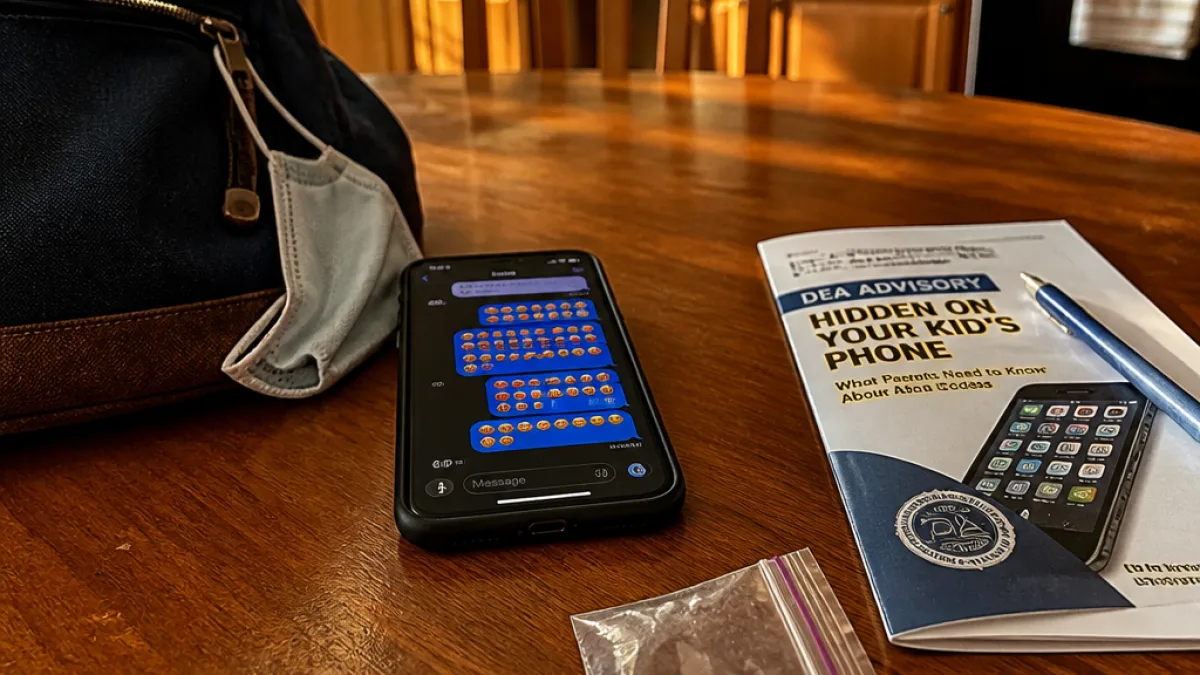
As classrooms reopen across Iowa, federal agents are urging parents to be vigilant about another threat that increasingly travels with students: illegal drugs marketed and sold through smartphones. The U.S. Drug Enforcement Administration’s Omaha Field Division is launching a short video series aimed at showing families how traffickers use social media platforms, encrypted messaging and cash apps to move deadly substances to teens.
How the trade moves from a post to a pill
Emily Murray, a spokeswoman for the DEA’s Omaha Field Division, said the new series, titled "Hidden on Your Kid’s Phone," consists of brief clips under five minutes designed for families to watch together. The goal, she said, is to explain in simple terms how transactions start and where parents should look if they are concerned.
“The little videos are five minutes or less, so it’s easy to watch, quick to watch. It’s something families can watch together,” Murray said.
Murray described a common pattern: an initial contact on widely used social platforms such as Facebook, Instagram or TikTok, followed by a shift into direct messages on apps like WhatsApp or Signal. Payments often happen through peer-to-peer services such as Venmo or Zelle, she said. In one installment of the series, a father recounts that his son could order a pill through an app with the same ease as ordering a pizza.
Risk of fentanyl and why online purchases are dangerous
The DEA warns that medications or other substances purchased online or through social channels are unlikely to be legitimate pharmaceutical products. Murray told parents that many of these pills contain fentanyl, a synthetic opioid that can be fatal in very small amounts. She emphasized that drug experimentation can have lethal consequences.
National surveys and industry data show smartphone access among teenagers is widespread; Murray cited an estimate that about 95% of American teens ages 13 to 17 have access to a smartphone, underscoring why traffickers target young people on those devices.
What parents should look for and do
Murray urged caregivers to stay engaged in conversations and to periodically check the content and messages on their children’s devices. She acknowledged the tension between giving kids independence and protecting them from harm, but said attentive, informed parental involvement can make a difference.
- Talk with children about the dangers of buying drugs online and the specific risks of fentanyl contamination.
- Be alert for messages with unusual emoji use, coded language or offers that don’t fit a typical conversation.
- Know which apps your child uses and review privacy settings, friends lists and message histories when appropriate.
- Watch the DEA’s "Hidden on Your Kid’s Phone" videos together to learn how transactions typically unfold.
- If you suspect illegal activity, contact local law enforcement or the DEA for guidance; do not attempt to confront sellers online.
Signs of a dangerous message
While each situation is different, Murray said parents should ask questions when digital conversations feel off. Common red flags include:
| Indicator | Why it matters |
|---|---|
| Unexpected emojis or code words | Traffickers use symbols to obscure intent and avoid detection |
| Rapid move to private messaging | Shifts discussion away from public view to complete transactions |
| Requests to pay through peer-to-peer apps | These services can be used to quickly transfer funds with limited traceability |
Local impact and practical next steps
For Iowa families, the message is timely as students prepare to return to school and social circles expand. Schools, community groups and law enforcement in recent years have increased outreach about opioids and fentanyl, but the DEA’s new short-format videos add a practical, device-focused angle aimed at a tech-savvy generation of buyers and sellers.
Parents who want to act now should start with a calm conversation, set clear rules about phone use, and jointly view the DEA materials so children understand the risks without feeling ambushed. If you encounter evidence of illicit sales or believe a young person’s safety is at risk, contact local law enforcement or the DEA’s Omaha Field Division for guidance.
Federal agents say awareness and open communication are the first line of defense as traffickers increasingly use the same platforms children use every day.