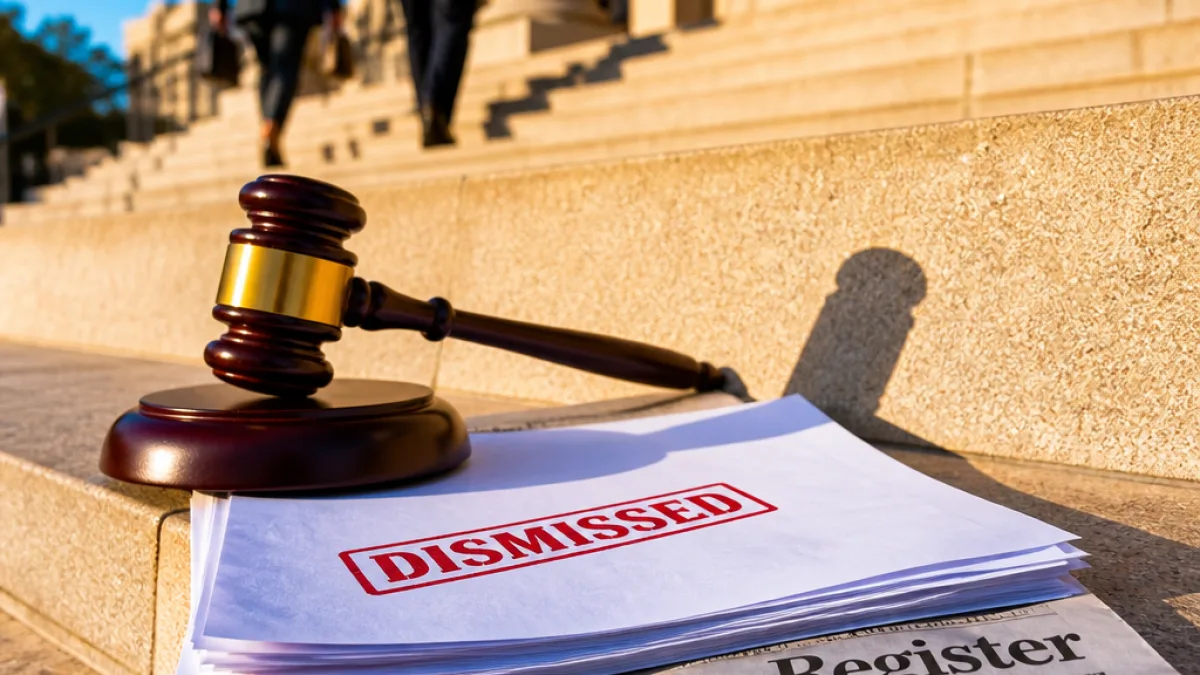
An Iowa judge has dismissed the lawsuit filed by former President Donald Trump and two Iowa Republicans against the Des Moines Register, pollster J. Ann Selzer and related organizations, finding the disputed poll and its reporting fell within the protections of political speech and failed to satisfy state-law requirements.
Ruling and legal basis
Judge Scott Beattie of Iowa’s Fifth Judicial District issued a written decision on Wednesday that threw out the case brought by Trump, Rep. Mariannette Miller-Meeks and former state senator Brad Zaun. The dismissal was entered with prejudice, meaning the plaintiffs cannot revive the same claims by refiling the suit.
“The Iowa Poll and its reporting are fully protected political speech,”
Beattie also found that the plaintiffs' efforts to use the Iowa Consumer Fraud Act did not meet the statute's requirements. The judge wrote that the consumer fraud law applies to consumer transactions, and he determined plaintiffs had not shown any representation made to induce them to act or any reliance on the poll results that would satisfy a claim for fraudulent misrepresentation.
Parties and allegations
The lawsuit targeted the registered poll and the Register’s reporting about a 2024 poll published days before the presidential election that showed Vice President Kamala Harris ahead in Iowa, a result that did not match the final election outcome. The plaintiffs alleged the poll and coverage were knowingly false or, at minimum, negligently published, and they argued the reporting improperly gave Democrats an advantage in the final week of the campaign.
- Plaintiffs: Donald Trump, Mariannette Miller-Meeks, Brad Zaun
- Defendants: J. Ann Selzer, Selzer & Co., the Des Moines Register, Gannett
- Judge: Scott Beattie, Iowa Fifth Judicial District
- Disposition: Case dismissed with prejudice
Free speech implications and local context
The ruling represents a setback for the plaintiffs and a vindication for the defendants and their supporters who framed the case as a threat to newsrooms and independent polling in Iowa. The Foundation for Individual Rights and Expression, a nonprofit that provided Selzer’s defense, issued a statement welcoming the decision.
For Des Moines residents, the decision underscores legal protections around political reporting and public-opinion research conducted by local institutions. The Des Moines Register is one of the state’s largest news organizations and frequently publishes polling and election coverage that informs voters across Iowa; the court’s analysis reinforces the idea that such coverage lies at the heart of political discourse the First Amendment aims to protect.
Broader litigation and next steps
The ruling is part of a wider set of legal actions involving Trump and multiple news organizations. CNN reported that the president has continuing lawsuits against other outlets, though the attorneys who represented him in this personal action did not immediately say whether they would appeal Beattie’s decision. The judge also addressed, and rejected, the plaintiffs’ alternative arguments under Iowa law, finding they failed to meet basic statutory elements even if constitutional concerns were not dispositive.
| Item | Detail |
|---|---|
| Case focus | 2024 poll published days before presidential election |
| Court | Iowa Fifth Judicial District |
| Decision date | Wednesday (written ruling) |
| Outcome | Dismissed with prejudice |
Local leaders in journalism and civic groups watching the case said the outcome could influence how pollsters and newsrooms approach pre-election polling and reporting in future cycles, especially in Iowa, which holds outsized influence in presidential politics. The court’s reasoning emphasizes both constitutional protections and the limits of consumer-protection statutes when applied to political speech and publicly reported polling.
As of the ruling, it remains unclear whether the plaintiffs will pursue an appeal. For now, the decision leaves intact the Register’s ability to publish and report on polling without facing the particular legal theory advanced in this lawsuit, a matter of consequence for voters who rely on such reporting in Des Moines and across the state.