
City consolidates homeless services under new multi-department team
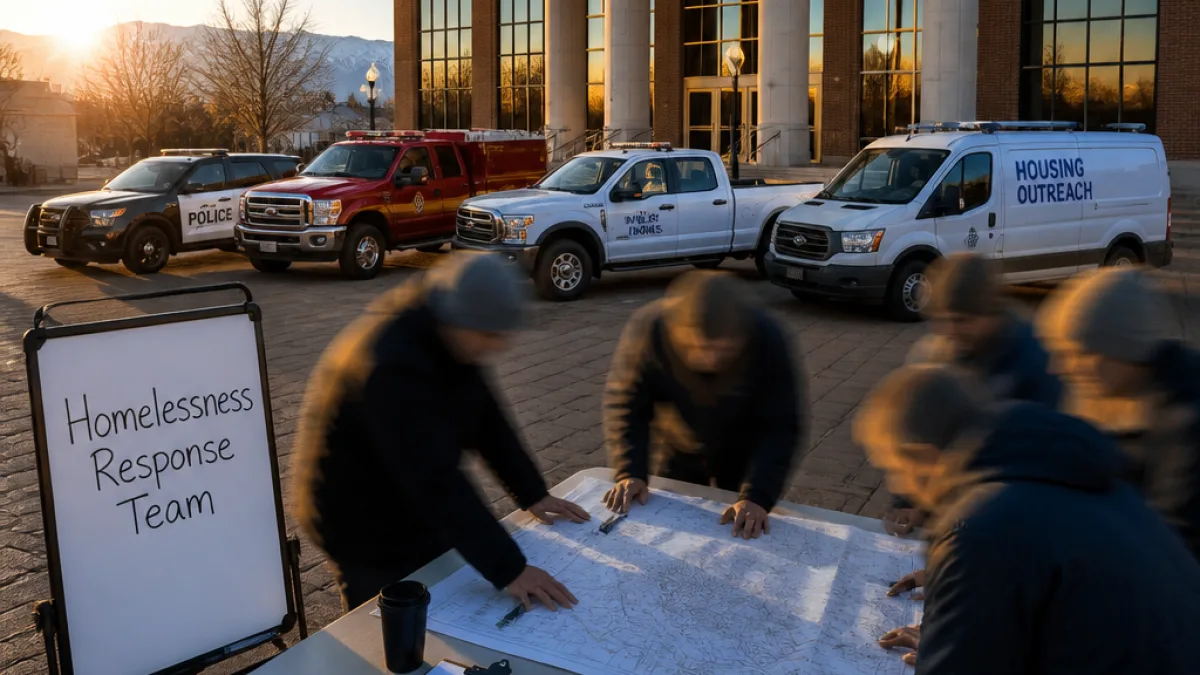
Colorado Springs on Wednesday announced a new Homelessness Response Team intended to bring greater coordination to how the city responds to people living outdoors and to complaints from residents and businesses. Mayor Yemi Mobolade said the team includes roughly 12 to 15 city departments and divisions that already touch homelessness in some way — police, fire, housing, outreach and cleanup crews among them.
Until now, different city units have handled separate pieces of the response: police may handle enforcement, the fire department carries out outreach, crews remove encampments and housing staff work to connect people with services. City leaders say the new team aims to replace that fractured approach with one that shares information and deploys the most appropriate resources more quickly when someone reports a concern.
Early stage, existing plan guides work
City officials emphasize the new team is still in its early stages. Aimee Cox, the city’s chief housing and homelessness response officer, told local news outlets the team has been working together for only a couple of weeks. Many operational details remain under development, including formal protocols for responding to complaints about encampments.
Cox said an increasing number of encampment calls are coming directly to her office. The city plans to track the source and location of those calls, identify repeat problem areas and decide which combination of city resources should respond in each situation.
“So how do you get the consent of people that need help but are not going to give you that consent?” Mayor Mobolade said. “And that still remains a challenge.”
Where the action plan stands
The Homelessness Response Team builds on the city’s five-year Homelessness Response Action Plan, released in November 2024. City officials reported progress on the plan’s 61 action items:
| Metric | Count / Percent |
|---|---|
| Completed action items | 36 (59%) |
| Action items in progress | 15 (25%) |
Mayor Mobolade and city staff acknowledge coordination alone will not resolve every aspect of homelessness. They point to the persistent challenge of connecting with people who have behavioral health, mental health or substance use needs but decline help — a barrier that complicates outreach and housing placement.
Operational goals and next steps
Officials described several immediate aims for the new team:
- Improve interdepartmental communication so responses are less fragmented and more predictable.
- Centralize intake and tracking of public complaints and encampment reports to spot repeat locations and patterns.
- Allocate the most suitable mix of enforcement, outreach, cleanup and housing supports depending on circumstances.
City leaders also said the team will work to develop clear response protocols. At present, there is not yet a final procedure for how the team will handle a complaint about an encampment. That work will include deciding which office takes the lead on different kinds of calls and how to document and evaluate outcomes.
Community implications
For residents and businesses, the reorganization aims to provide a more consistent point of contact and a faster, better-coordinated response to neighborhood concerns. For people living without shelter, it could mean quicker referrals to services when someone is willing to accept help — though city leaders acknowledge the limits of voluntary engagement.
As the Homelessness Response Team moves from concept to routine, officials said they will be monitoring how the changes affect response times, the number of repeat problem locations and progress on outstanding action items in the five-year plan.
The city has not announced a public timeline for finishing formal protocols or for a full rollout of the team’s operational procedures.

















