
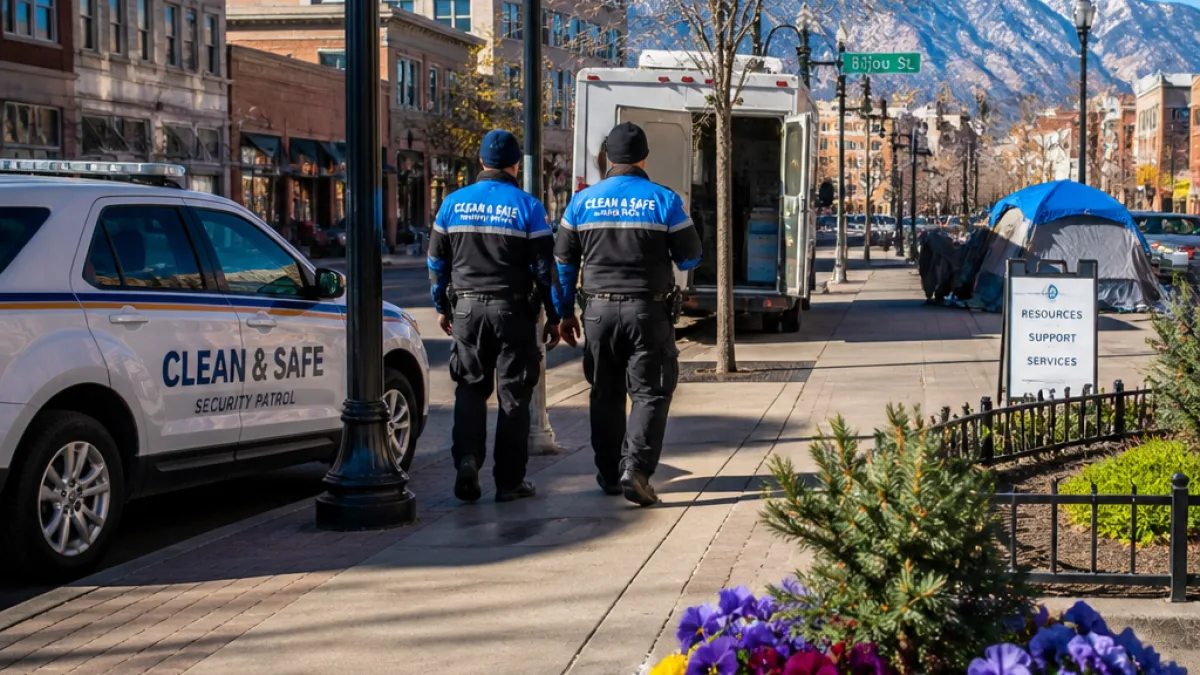
The Downtown Partnership and city officials marked one year of the "Clean and Safe" pilot program Monday with progress to tout and problems still to solve. Business owners and program leaders said downtown Colorado Springs is showing signs of improvement — cleaner sidewalks, fewer visible disturbances and a reduced dependence on the Colorado Springs Police Department for low-level calls — but elected officials and providers say gaps remain in outreach and enforcement.
What the pilot set out to do
The initiative launched as a pilot to make downtown more welcoming, walkable and safe for visitors, employees and local businesses. Instead of relying primarily on police for public-order issues, the Downtown Partnership expanded private security patrols and on-the-ground rapid response to quality-of-life problems.
Early wins and continuing struggles
Officials presented a one-year report to the City Council that emphasized qualitative improvements. Program leaders said their security teams have addressed most incidents without involving the Colorado Springs Police Department, which they said was contacted only "a handful of times" since the program began.
"We launched this as a pilot program to figure out what makes sense for our city and... we've seen some successes to date,"
The comment was offered by Downtown Partnership CEO Chelsea Gondeck, who told councilmembers the first year was a learning experience. "We've seen some challenges, and we're really looking at what is the opportunity to carry this forward to make sure that downtown is clean, safe, welcoming, and walkable," she said.
Questions from council and community
Despite positive anecdotes from businesses, the program has attracted scrutiny. Councilmembers Dave Donelson and Brandy Williams questioned whether the penalties and interventions available for low-level offenses are sufficient to deter repeat behavior.
Both council critics and frontline providers pointed to a persistent obstacle: connecting people experiencing homelessness or behavioral health crises with long-term services. Program leaders acknowledged this remains an ongoing challenge and said a single approach will not address every downtown issue.
- Reported improvements: cleaner streets, fewer observable disturbances, reduced police involvement
- Ongoing issues: service connection for unhoused residents, appropriate enforcement for low-level offenses
- Program stance: pilot status intended to test approaches and refine responses
Local business reaction and next steps
Business owners who use downtown daily reported noticing cleaner sidewalks and a less chaotic street environment, which they said has helped create a more inviting atmosphere for customers. The Downtown Partnership described those responses as early indicators of progress while stressing the need for collaboration across civic agencies, nonprofits and business leaders.
| Area | Status after one year |
|---|---|
| Street cleanliness | Improved (anecdotally reported by businesses) |
| Police involvement | Reduced (security teams handling most incidents) |
| Service connections for unhoused residents | Unresolved / ongoing effort |
As the pilot moves toward a possible extension or broader implementation, city leaders will weigh public feedback, enforcement outcomes and the ability of social service providers to reach individuals in crisis. The Downtown Partnership emphasized that the program is not a one-size-fits-all solution and that sustaining progress will require coordination across multiple agencies and community partners.
For Colorado Springs residents and business owners, the coming months are likely to determine whether the pilot becomes a permanent model, is adjusted, or is replaced by a different strategy to address downtown quality-of-life challenges.

















